


Abzena’s Dr. Jeffrey C. Mocny and Cellares’ Anna McMahon discuss how biopharmaceutical risk-based standards accelerate innovation and speed-to-market by leveraging data for better patient outcomes and safety.
Feliza Mirasol is the science editor for BioPharm International.
Abzena’s Dr. Jeffrey C. Mocny and Cellares’ Anna McMahon discuss how biopharmaceutical risk-based standards accelerate innovation and speed-to-market by leveraging data for better patient outcomes and safety.

Bristol Myers Squibb and Hengrui Pharma’s strategic collaboration supports development of investigational oncology, hematology, and immunology therapies targeting unmet patient needs.

Today’s podcast recaps news centered on FcRn modulation, biomarker-guided therapies, and accelerated ADC pathways, which all highlight precision-focused strategies for high-unmet-need diseases.

The approval of zenocutuzumab-zbco for NRG1 fusion-positive cholangiocarcinoma expands precision oncology options for patients with rare molecularly defined cancers.

AI and PAT have been shown to reduce manufacturing variability in advanced therapies, which leads to improved process control and accelerated patient access to lifesaving treatments.

FDA’s extended review of a subcutaneous formulation of lecanemab highlights ongoing regulatory evaluation of alternative anti-amyloid delivery approaches for early Alzheimer’s disease.
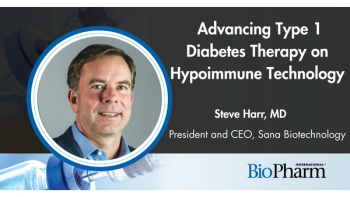
Hypoimmune cell engineering may enable scalable type 1 diabetes therapies without immunosuppression, advancing regenerative medicine approaches, according to Dr. Steve Harr, president and CEO of Sana Biotechnology.

GSK’s licensing agreement for SiranBio’s ALK7-targeting siRNA candidate expands development efforts aimed at reducing cardiometabolic risk in chronic inflammatory diseases.

LTZ Therapeutics’ $38 million financing supports phase 1 development of myeloid engager therapies targeting oncology and autoimmune diseases.

Data from a phase 3 study show statistically significant improvements in proptosis and diplopia, along with favorable tolerability, which support regulatory advancement of elegrobart, a subcutaneous IGF-1R–targeting therapy for chronic autoimmune disease.

The opening plenary session at this year’s AAPS National Biotechnology Conference will spotlight AI and NAMs as tools that advance predictive toxicology and human-relevant models to improve drug safety and translational research.

According to phase 2/3 trial data, Takeda’s TAK-881 demonstrates reduced infusion volume and shorter administration time while maintaining protective IgG levels in primary immunodeficiency patients.

MRM Health’s MH002 gains FDA fast track, advancing microbiome-based therapy targeting immune modulation in ulcerative colitis patients.
In today’s podcast, we see clinical durability, targeted combination strategies, and domestic production investment highlighting integrated approaches to meeting rising global demand for complex therapies.
Highlights at INTERPHEX 2026 include digital integration and supply chain innovation to improve scalability, resilience, and efficiency in biomanufacturing.

BeOne Medicines’ tislelizumab and zanidatamab show improved survival in HER2+ GEA, highlighting combination immunotherapy advances in gastroesophageal cancer.

Henlius and Organon have secured approval in Europe for its pertuzumab (POHERDY) biosimilar, expanding biosimilar access for HER2-positive breast cancer treatment across oncology settings.
Ligand’s acquisition of XOMA Royalty expands the royalty model, supporting late-stage drug development and diversifying access to oncology and rare disease therapies.
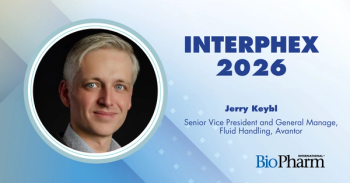
In the second half of an interview at the close of INTERPHEX 2026, Avantor’s Jerry Keybl explains that digital integration and AI-driven analytics enable predictive bioprocess control and can thus improve consistency, scalability, and data-driven manufacturing decisions.
Consistent fluid management across scales supports efficient bioproduction and reduces risk during scale-up of complex therapeutic modalities, says Avantor’s Jerry Keybl at INTERPHEX 2026.

FDA has granted priority review to Johnson & Johnson's nipocalimab for warm autoimmune hemolytic anemia, a rare disorder with no approved US therapies.
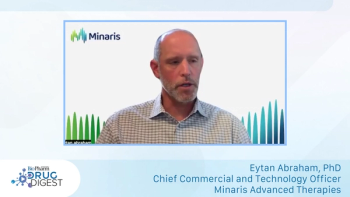
Minaris Advanced Therapies’ Dr. Eytan Abraham joins the discussion on how the biopharmaceutical industry is revolutionizing the design, durability, and global scalability of new biotherapeutic modalities through innovations in molecule design and next-generation delivery platforms.

CHMP has supported intrathecal onasemnogene abeparvovec, Novartis' gene therapy for 5q SMA in patients aged 2 years and older in the EU.

AI and automation may streamline cell and gene therapy manufacturing by reducing labor demands while improving efficiency and supporting scalable production, says Dr. Alan Smith of Charles River Laboratories.
A2 Biotherapeutics will present early A2B694 and EVEREST-2 updates at ASCO 2026 in HLA-A*02 LOH solid tumors.
Dr. Alan Smith of Charles River Laboratories explains why early manufacturing planning and scalable processes are critical to ensure successful commercialization of complex cell and gene therapies as part of his panel discussion at INTERPHEX 2026.

Amneal’s acquisition of Kashiv is expected to advance biosimilar development capacity, which in turn would support access to biologics amid an anticipated wave of loss-of-exclusivity patents globally.
ADC cleaning validation requires risk-based strategies to manage degradation and ensure safe limits for highly potent, dual-modality therapeutics, says Paul Lopolito, STERIS’ director of Technical Services, at INTERPHEX 2026.

Boehringer Ingelheim is expanding its investment in AI for R&D in London to advance computational approaches to disease biology and drug discovery in biopharmaceuticals.
Long-term survival data, scalable cell engineering approaches, and perioperative immunotherapy strategies are highlighted in today’s podcast, which explores how these efforts are leading to evolving endpoints and access-focused oncology development.