


FDA has granted priority review to obinutuzumab (Gazyva) for primary membranous nephropathy after phase 3 MAJESTY trial results showed superior remission versus tacrolimus.
Feliza Mirasol is the science editor for BioPharm International.
FDA has granted priority review to obinutuzumab (Gazyva) for primary membranous nephropathy after phase 3 MAJESTY trial results showed superior remission versus tacrolimus.
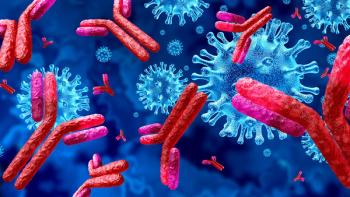
Innovent Biologics and Spero Therapeutics have signed a $1.1 billion licensing deal for IBI355, a phase 2-ready Fc-silent anti-CD40L antibody planned for testing in IgG4-related disease and Sjögren's disease.
Speaking at BIO 2026, Novartis Contract Manufacturing's Carrie Bracco explains how capacity pressures and biotech flexibility needs are reshaping CMO partnerships.

GSK reports that dostarlimab (Jemperli) monotherapy achieved sustained clinical complete responses in the phase 2 AZUR-1 trial for dMMR/MSI-H locally advanced rectal cancer, with data to be submitted for regulatory review.

BIO 2026 highlighted biotech's resurgence through M&A dealmaking, CDMO diversification, and renewed investor confidence in biopharma development.
Speaking at BIO 2026, Kasper Øland, Samsung Biologics' vice president of sales execution, emphasizes how complex molecules now exceed 55% of the company’s pipeline as biotechs demand faster, more flexible CDMO partnerships.
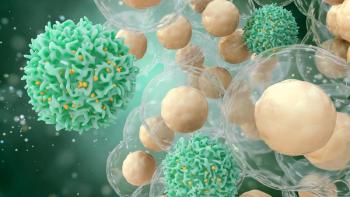
FDA reported that the PRECISION-T trial showed 78% chronic GVHD-free survival at 1 year versus 38.4% with standard transplant and granted the approval to Orca Biosystems, making the therapy the first Treg cell–based therapy in blood cancers.

The European Investment Bank-backed investment establishes a new single-use GMP facility with which Icosagen can support complex protein therapeutics from early discovery through phase 1/2 clinical manufacturing.
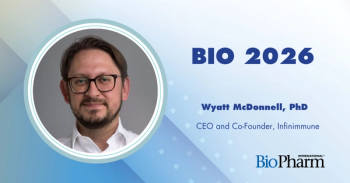
From his presentation at BIO 2026, Infinimune CEO Dr Wyatt McDonnell makes the case for how human-derived antibodies and human-trained AI models eliminate species translation failure and compress time to IND.
Dr Wyatt McDonnell, Infinimune CEO, details how FDA's non-animal model guidances are reshaping non-clinical safety strategies for mAb developers in his talk at BIO 2026.

Lumvoa gains FDA approval for thyroid eye disease, adding an IGF-1R antagonist supported by phase 3 active and chronic TED trials.
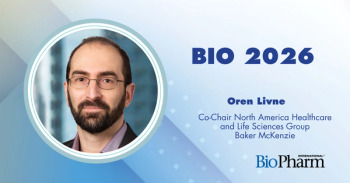
At BIO 2026, Baker McKenzie's Oren Livne explains how MFN pricing, tariffs, and geopolitical risk are driving demand for flexible deal structures in biopharma licensing.
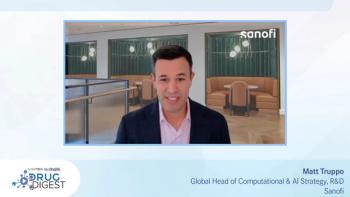
Industry experts from Sanofi, GxP Frame, and Open Biopharma outline how AI is transforming drug discovery, manufacturing, and workforce strategy through biopharma partnerships in the latest episode of Drug Digest.
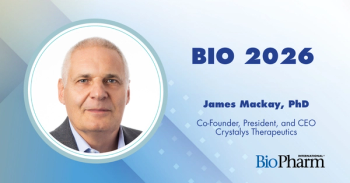
Crystalys Therapeutics CEO Dr James Mackay explains at BIO 2026 that gout remains an underserved therapeutic are and represents a compelling drug development target due to its unmet need and simple biology.
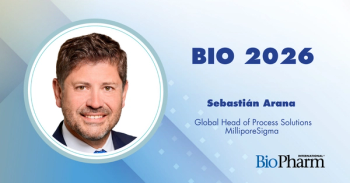
MilliporeSigma's Sebastian Arana identifies process characterization gaps, tech transfer complexity, and analytical lag as top CGT manufacturing scale-up barriers at BIO 2026.

Speaking from the show floor at BIO 2026, Dr Anil Kane, Thermo Fisher Scientific's global head of technical and scientific affairs, details how AI partnerships are accelerating drug development decisions across the CDMO continuum.
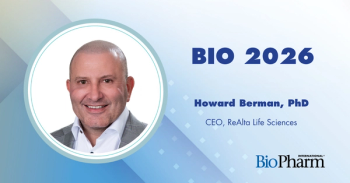
At BIO 2026, Dr Howard Berman, ReAlta Life Sciences’ CEO, explains how an astrovirus-derived anti-inflammatory peptide targets multiple pathways that drive neonatal hypoxic-ischemic encephalopathy (HIE).
MilliporeSigma Global Head of Process Solutions Sebastián Arana outlines why manufacturing flexibility, not just capacity, is now the strategic priority for biomanufacturers at BIO 2026.
Dr Wyatt McDonnell, Infinimune CEO and co-founder, posits that translatable, decision-linked single-cell data, and not data volume, are what drive effective therapeutic antibody development in this second segment of an interview at BIO 2026.
Speaking at BIO 2026, Infinimune's Dr Wyatt McDonnell explains how the company’s human-derived antibody platform enables multi-objective optimization that AI alone and transgenic models cannot replicate.

The deal, announced at BIO 2026, carries total potential value exceeding $2.5 billion and will use Insilico's Pharma.AI platform to drive target-to-candidate discovery across neuroinflammatory, neurodegenerative, and rare neurological indications.
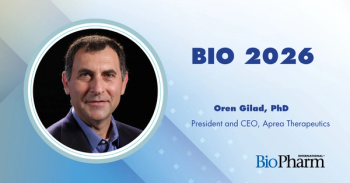
Speaking prior to the start of BIO 2026, Aprea Therapeutics CEO Dr Oren Gilad explains how biomarker-driven oncology strategies are advancing targeted therapies designed to improve efficacy while reducing treatment-related toxicity.

Takeda will use Boltz biomolecular AI models to support structure prediction, affinity estimation, and molecular design in preclinical research.
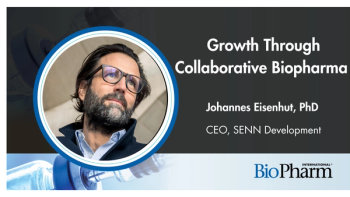
Basel’s innovation campus is expanding with new research institutes, laboratories, and collaborative infrastructure for life sciences growth.

The supplemental approval is based on immunogenicity data from the STRIDE-13 phase 3 trial and, according to Merck, makes the vaccine the only one of its type specifically indicated for this at-risk pediatric population in the United States.
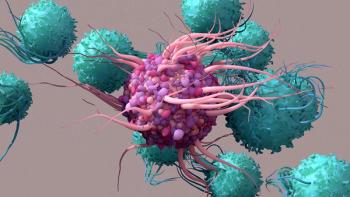
The company reported that phase I data show approximately 40% of patients remained cancer-free at 10 years, while 2 phase 2 trials are ongoing.

Cytiva’s Pierre-Alain Ruffieux discusses standardization, regionalization, talent gaps, and regulatory pathways shaping advanced biomanufacturing’s future ahead of BIO 2026.

The company reported that all three participants in the 3 µg/kg dose cohort achieved a ≥25% SALT score reduction following single-dose subcutaneous administration, with dose escalation ongoing toward a recommended phase 2 dose.
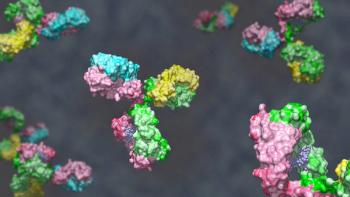
Johnson & Johnson reported that the MonumenTAL-3 trial showed 24-month progression-free survival up to 81.3% and overall survival up to 89.2% with the GPRC5D bispecific combination versus standard of care.
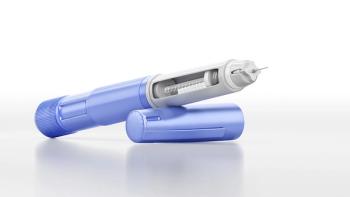
Gan & Lee has reported positive topline trial results for insulin ludefen in type 2 diabetes and the GLP-1 bofanglutide in obesity.