
Conference Coverage
Latest

Oct 27, 2026 | News
Adalvo Acquires Enzene’s Romiplostim Biosimilar Program for ITP

Thermo Fisher Pairs In Silico Modeling With an Expanded ASD Toolbox at AAPS PharmSci 360
Oct 27, 2026
Platform Formulations Shift Risk Downstream, Pfizer’s Dr Stephanie Johnson Says
Oct 27, 2026
The BioPharm Brief: Two Phase 3 ADC Wins and a TCR Bispecific in PRAME-High Tumors
Oct 27, 2026

Immatics’ PRAME-Targeted TCR Bispecific IMA402 Shows 32% Response Rate in PRAME-High Tumors
Oct 27, 2026





Advertisement
Shorts

0:37
The Future of AI-Guided Formulations at Pfizer
3 hours ago
by
Stephanie Johnson(+2 more)

0:50
Cutting the Cost of Monoclonal Antibody Manufacturing
a day ago
by
Emily Schoenthaler(+1 more)
0:43
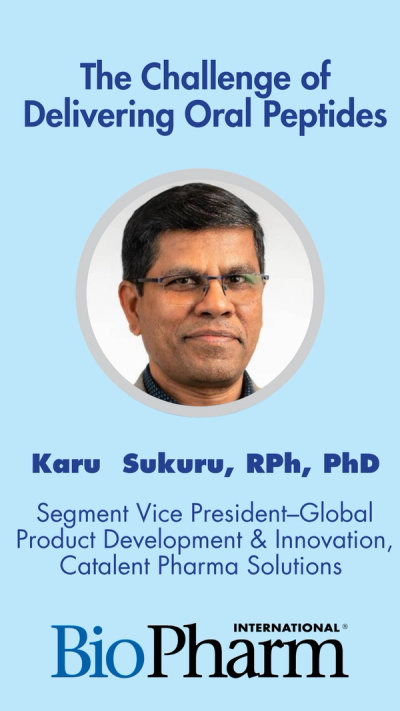
The Challenge of Delivering Oral Peptides
a day ago
by
Feliza Mirasol(+1 more)

0:49
Breakthrough Personalized mRNA Cancer Vaccine Results
4 days ago
by
Emily Schoenthaler

0:48
FDA Approves First-of-its-Kind Chronic Hepatitis B Treatment
5 days ago
by
Emily Schoenthaler
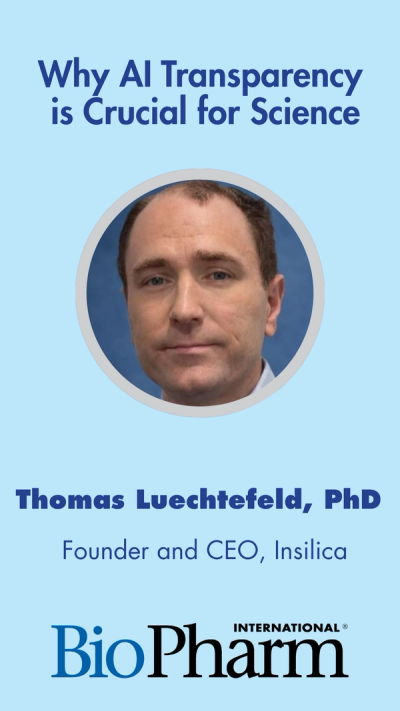
0:35
Why AI Transparency is Crucial for Science
6 days ago
by
Feliza Mirasol(+1 more)

0:50
The Future of Cancer Treatment: Why Biomarkers Matter
8 days ago
by
Emily Schoenthaler(+2 more)
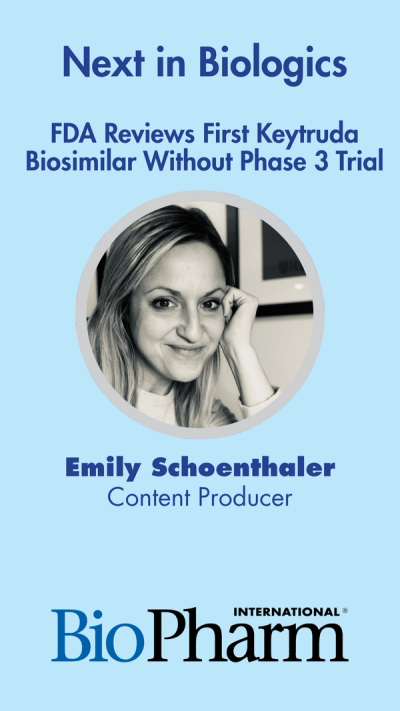
1:11
Next in Biologics: FDA Reviews First Keytruda Biosimilar Without Phase 3 Trial
13 days ago
by
Emily Schoenthaler

0:48
How Surrogate Endpoints Accelerate Patient Access to Innovation
18 days ago
by
Emily Schoenthaler(+2 more)

0:36
Why Amino-Acid Counting Decides Regulatory Fate
25 days ago
by
Feliza Mirasol(+1 more)
Analytics for Bispecific Antibody Product Release
Planning the analytical strategy for product release should be started as early as possible to ensure product quality and regulatory success.

FAQ: What You Need to Know About Analytical Method Validation
We answer readers’ top questions on limit of blank, limit of detection, limit of quantitation, acceptance criteria, and equivalence testing in analytical method validation.

Digital Standards Aim to Modernize Quality Assurance Without Compromising Confidence
As quality control labs move toward more connected, data-driven operations, digital technologies must be adopted in a way that upholds patient safety.

What FDA's AI Warning Letter Tells Us About GMP Accountability
An FDA warning letter to Purolea Cosmetics Lab shows that AI-assisted drafting can support documentation work only when the resulting document is subject to quality-system controls.

Expedited Regulatory Pathways for Biologics
This episode of the BioPharm Drug Digest will examine strategic triggers that have thus far won expedited regulatory review for biologics in development.

Videos

Advertisement
All News
Advertisement

In two small phase 1b trials, the half-life-extended bispecific antibody improved skin disease and reduced airway inflammation. Aclaris will move next into a Phase 2b trial in eosinophilic esophagitis.

Risvutatug rezetecan extended median progression-free survival to 5.5 months vs 1.4 months with chemotherapy in pretreated osteosarcoma.
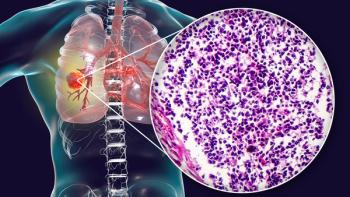
Izalontamab brengitecan extended median progression-free survival to 11.1 months vs 5.7 months with chemotherapy after EGFR TKI failure.
Merck and Kelun’s sac-TMT extends overall survival in pretreated endometrial cancer, Bristol Myers Squibb reports interim data and a patient death in its phase 1 CAR-T trial in multiple sclerosis, and BioNTech and DualityBio’s HER2 ADC meets its phase 3 goal but with limited expected benefit.

This year's PharmSci 360 will close with a plenary on fixing drug development economics given by Averin's Dr Berry.
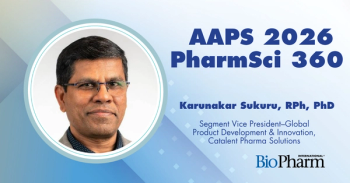
Dr Karunakar Sukuru of Catalent explains how lipid-based softgels address physiological barriers to oral peptide delivery as approvals increase.

Full Phase 3 TroFuse-005 data presented at ESMO 2026 show the TROP2-directed ADC sacituzumab tirumotecan cut the risk of death by 32% vs chemotherapy, and an FDA decision is expected by June 2027.

A patient with relapsing MS died of septic pneumonia 44 days after zola-cel CAR T infusion, as all 60 dose level 2 patients stayed off DMTs.

BioNTech and DualityBio's HER2-directed ADC modestly improved progression-free survival over chemotherapy in DYNASTY-Breast02, but higher interstitial lung disease rates and an established competitor limit its potential in this setting.

Anurag Rathore, PhD, professor of chemical engineering at IIT Delhi, explains how his team is making antibody manufacturing more efficient and replacing costly raw materials to cut monoclonal antibody costs to about $10 per gram.
Advertisement

The Skyrizi approval pairs an interleukin-23 antibody with an on-body injector for 720 mg subcutaneous induction in adults, per phase 3 AFFIRM data.
Gilead agrees to acquire PepStar’s oral IL-23R peptide program for $1.275 billion, Zymeworks licenses its DLL3-targeted trispecific T-cell engager ZW209 to Roche, and the US Treasury proposes adding biotechnology to its outbound investment restrictions.

FNIH CEO Dr Julie Gerberding will open the October 25-28 meeting with a talk on using AI, adaptive trials, and alternative methods in drug development.
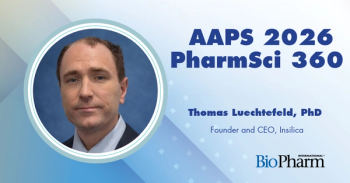
Insilica's Dr Thomas Luechtefeld argues process traceability, not benchmark accuracy alone, determines whether AI toxicology decisions can be trusted.

Phase 1 HCXT-2001, an oral macrocyclic IL-23R peptide, could be paired with emvistegrast as a daily oral IBD treatment, according to Gilead.
Advertisement
Advertisement
Trending on BioPharm International
1
Merck and Kelun’s Sac-TMT Extends Survival by Nearly 7 Months in Pretreated Endometrial Cancer
2
BMS Reports Death in Phase 1 Zolacabtagene Autoleucel MS Study
3
The BioPharm Brief: Survival Gains, a Modest ADC Win, and CAR-T in Multiple Sclerosis
4
BioNTech’s HER2 ADC Hits Phase 3 Goal, but Companies See Limited Benefit
5