

Feature|Videos|August 5, 2026
What Makes a Best-in-Class Antibody Drug Conjugate
Key Takeaways
- Recognize why best-in-class ADC design depends on integrating multiple attributes rather than a single innovation.
- Understand how real-time MS monitoring supports faster conjugation process decisions.
Understand why a best-in-class antibody drug conjugate (ADC) depends on balancing antibody, linker, conjugation chemistry, and payload together.
Episodes in this series

Sponsored by Waters Corporation
Identifying what separates a best-in-class ADC from an adequate one is complicated by the fact that no single technique or innovation determines success. Zhengqi Zhang, Associate Principal Scientist at Merck & Co., explains that achieving a best-in-class molecule requires integrating the antibody, conjugation chemistry, linker, and payload as a coordinated system. He describes how his team uses real-time mass spectrometry (MS) based methods—high-throughput size exclusion mass spectrometry (SEC-MS) and hydrophobic interaction chromatography mass spectrometry (HIC-MS)—to monitor conjugation and reduction reactions as they happen, supporting faster decision-making during process development. Linker stability and payload potency must be balanced against each other; a linker that is too stable can create payload-release issues, while one that is too labile can raise off-target toxicity. Determining the drug-to-antibody ratio (DAR), or DAR distribution requires weighing potency, pharmacokinetics, and linker and payload stability together rather than applying a fixed rule.
Related to this article

mAbxience will develop and manufacture the antibody for ONC001, a CD64-targeting ADC aimed at monocytic AML and chronic myelomonocytic leukemia.

Verismo will pair Stanford's PACK-IT lentiviral technology with its KIR-CAR platform to pursue off-the-shelf, in vivo CAR T therapies for cancer.
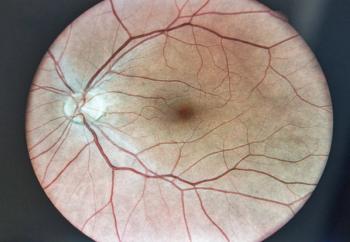
Visara has dosed the first patient in ASCEND, a roughly 244-patient, head-to-head phase 2b trial comparing two doses of its tetravalent VEGF-A/ANG-2 bispecific VIS-101 with aflibercept in treatment-naïve wet AMD. The study will test dosing intervals of up to seven months and select the dose for a global phase 3 program planned as early as 2027.

The European Commission has authorized Biocon’s pertuzumab biosimilar Pebrilzo as a HER2-positive breast cancer treatment, the first biosimilar cleared under EMA’s tailored clinical approach, which relies on analytical and pharmacokinetic data in place of a comparative efficacy trial. The EU biosimilar approval follows FDA approval of Pebrilzo two days earlier.
FDA approves Novartis’ Cosentyx as the first anti-IL-17 biologic for polymyalgia rheumatica, SELLAS Life Sciences’ WT1-targeted peptide vaccine galinpepimut-S meets its overall survival primary endpoint in the phase 3 REGAL trial in AML, and Marrow Therapeutics launches with $173 million to develop bone marrow-targeted genetic medicines.
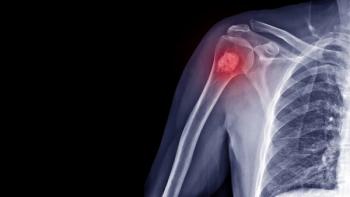
Marrow's lead candidate MAR-101 aims to reactivate fetal hemoglobin in sickle cell disease and beta thalassemia through in vivo bone marrow targeting.
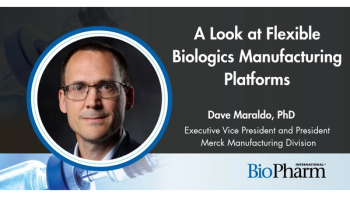
Merck's Dr Dave Maraldo explains that small-molecule platform agility and flexible conjugation capacity can help biologics manufacturing respond to research needs.
Commit Biologics Raises $60 Million to Take Complement-Powered Immune Engager COM002 Into the Clinic
Danish biotech Commit Biologics closed a $60 million seed round led by Ackermans & van Haaren, with AbbVie Ventures and M Ventures joining, to advance COM002, a bispecific antibody that recruits complement rather than T cells to eliminate diseased cells.
Trending on BioPharm International
1
FDA Approves Cosentyx as First Anti-IL-17 Biologic for Polymyalgia Rheumatica
2
The BioPharm Brief: Cosentyx Approved in Polymyalgia Rheumatica, a Phase 3 Survival Win for an AML Vaccine, and $173 Million for In Vivo Bone Marrow Editing
3
SELLAS Cancer Vaccine Improves Overall Survival in Phase 3 AML Trial
4
One Injection a Month: Efimosfermin Takes Aim at Cirrhosis in MASH
5