
Feature|Videos|August 5, 2026
Meet the Panelists of the Next-Generation Bioconjugation Panel
Key Takeaways
- Meet the panel of bioconjugate analytical experts.
- Gain insight into each of the panelists' backgrounds and expertise.
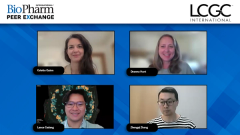
Bioconjugate analytical experts set up for a discussion on next-generation antibody drug conjugate (ADC) characterization.
Episodes in this series

Sponsored by Waters Corporation
Colette Quinn, Senior Director and Portfolio Owner at Waters Corporation, frames the growing complexity of the bioconjugate landscape, from antibody-drug conjugates to antibody-oligonucleotide conjugates and bioconjugate vaccines. She introduces the panel of subject matter experts joining the discussion: Deanna Hunt, Senior Director of Business Development at KBI Biopharma, Lance Cadang, a scientist in Genentech’s Synthetic Molecule Analytical Chemistry division and Zhengqi Zhang, Associate Principal Scientist at Merck & Co.
Related to this article

Shilpa CDMO's $50 million plan adds 10 kL of SPPS reactor capacity in Raichur, India, with its first commercial peptide line opening in December 2026.

Today’s BioPharm Brief covers FDA’s final potency assurance guidance for cell and gene therapies, Lonza’s deal to acquire Merck KGaA’s US CDMO business, and Phase 2a data for Tiziana’s intranasal anti-CD3 antibody foralumab in progressive multiple sclerosis.

At AAPS PharmSci 360 2026, University of Iowa PhD candidate Siddhanth Hejmady explains how adding a payload or radiolabel to trastuzumab changes its behavior in bulk solution and at interfaces, and why developability teams should pair DLS with QCM-D.
Final FDA guidance replaces 2011 potency testing advice, asking CGT makers to build potency assurance from IND filing through postmarket monitoring.

Teva will commercialize etanercept-ykro (Eticovo) and infliximab-abda, adding 2 TNF inhibitor biosimilars to US options for inflammatory diseases.

In the Phase 2a INFORM-MS trial, Tiziana’s nasal foralumab reduced microglial activation on PET imaging at 50 µg in non-active secondary progressive MS, while the 100-µg dose showed no significant effect.

The deal adds five US sites and about 1,100 employees, more than doubling Lonza’s US network and filling a gap in US bioconjugation capacity the company flagged weeks earlier.
CAR-T transformed blood cancer care, but solid and brain tumors demand different delivery, manufacturing, and safety strategies to work.
Trending on BioPharm International
1
FDA Finalizes Potency Assurance Guidance for Cell and Gene Therapies
2
Lonza to Acquire Merck KGaA’s US CDMO Business, Adding ADC, Viral Vector, and LNP Capacity
3
Shilpa CDMO Commits $50 Million to Scale Peptide Capacity in India
4
Teva Licenses US Rights to Samsung Bioepis TNF Inhibitor Biosimilars
5