
FDA has reinforced OS as the primary endpoint for cancer drug development, a position he describes as appropriate but practically challenging to fund. Investors typically seek near-term catalysts, such as tumor response data, which do not always translate into survival benefit.
News|Videos|July 15, 2026
Funding Gap Between Overall Survival Data and Investor Near-Term Expectations Is Stalling Oncology Drug Development, Says Oncolytics Biotech CEO Jared Kelly
Oncolytics Biotech CEO Jared Kelly warns that investor demand for near-term tumor response data is blocking funding for trials with proven overall survival benefits.
Advertisement
At the 2026
Kelly notes that
How does trial indication selection affect the ability to attract investment for OS endpoints?
Kelly emphasizes the funding challenge through indication-specific timelines. In second-line colorectal cancer, OS data may be achievable within approximately 11 months. In breast cancer, OS endpoints can require 4–7 years of follow-up, indicating a timeline that demands investor conviction. Kelly points to Oncolytics' own pancreatic cancer program, which has been effectively paused despite demonstrating survival benefit roughly double the expected standard of care, because tumor response data have not matched that of competitors.
"You need bigger trials to convince people, but you need the money to get the bigger trials, so it's a chicken and egg problem," Kelly states.
On the broader immunotherapy landscape, Kelly notes that checkpoint inhibitors are past their peak and the field is actively searching for the next dominant modality, whether chimeric antigen receptor T cell (CAR-T) therapy, T cell engagers, or viral vectors. He explains that viral vectors can access tumor environments that monoclonal antibodies and small molecules cannot, and that a single high-profile success in that space could catalyze broader investor and large pharma interest in the modality.
BIO 2026 occurred June 22–25 in San Diego. To view more conference coverage,
About the speaker
Jared Kelly, CEO, Oncolytics Biotech
Kelly is an accomplished lawyer and executive with a distinguished career in corporate law, particularly within the biotechnology sector. He previously served as head of legal and corporate strategy at Ambrx and has managed numerous transactions in the biotech space for companies at various stages of development. He has also served as an advisor to multiple public and private drug development and pharmaceutical companies. Prior to becoming a biotech executive, Kelly was a public company lawyer at Kirkland & Ellis, where he represented various public companies in securities offerings, IPOs and merger transactions. He also served as a partner at Lowenstein Sandler focused on representing biotechnology companies in financing transactions, mergers and acquisitions, and other complex transactions.
Advertisement
Related to this article
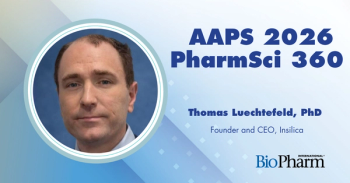
At PharmSci 360, Insilica CEO Thomas Luechtefeld will present on auditable agentic AI systems and how they are expanding computational toxicology beyond single predictive models.

FNIH CEO Dr Julie Gerberding will open the October 25-28 meeting with a talk on using AI, adaptive trials, and alternative methods in drug development.
Insilica's Dr Thomas Luechtefeld argues process traceability, not benchmark accuracy alone, determines whether AI toxicology decisions can be trusted.

Dr Julie Gerberding and Dr David Berry will headline the October 25-28 New Orleans meeting, which adds a USP standards workshop and AI, organoid tracks.
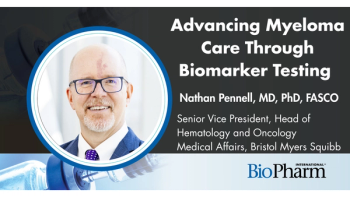
BMS's Dr Nathan Pennell outlines how biomarker testing barriers and trial diversity affect patient access to targeted oncology drugs.

Phase 1 HCXT-2001, an oral macrocyclic IL-23R peptide, could be paired with emvistegrast as a daily oral IBD treatment, according to Gilead.

Roche gains exclusive global rights to ZW209, a DLL3×CD3×CD28 trispecific T-cell engager designed for CD28 co-stimulation. A phase 1 study in small cell lung cancer and other neuroendocrine tumors is underway.

Zylidac will test whether optogenetic cell lines that hit 21 g/L in small-scale CHO runs can deliver higher-yield complex biologics at GMP scale.
Advertisement
Advertisement
Trending on BioPharm International
1
Treasury Proposes Adding Biotech to Outbound Investment Restrictions Under COINS Act
2
FDA Approves On-Body Injector Induction for Skyrizi in Crohn's Disease
3
Zymeworks Licenses DLL3-Targeted Trispecific T-Cell Engager ZW209 to Roche in Deal Worth Up to $813 Million
4
Rare Pediatric PRVs: Manufacturing Strategies for Expedited Approval, Part 2: CMC and Regulations
5