
“We’re effectively creating a digital object that represents that patient’s characteristics.” — Eron Kelly
News|Videos|August 19, 2026
Can AI Help Find the Right Patients for Clinical Trials?
AI tools that extract information from unstructured medical records could help oncology practices identify eligible clinical trial patients, surface care gaps, and compare treatment outcomes across real-world cohorts, according to Shaalan Beg and Eron Kelly of ConcertAI.
Advertisement
Identifying patients who may benefit from a clinical trial can require physicians to piece together information scattered across electronic medical records, including biomarkers, prior treatments, disease characteristics, and clinical notes. Shaalan Beg and Eron Kelly of ConcertAI sat down with BioPharm International for a four-part interview to discuss how artificial intelligence could help bring those data points together while also giving physicians a way to examine treatment patterns among real-world patient cohorts.
How can AI help physicians identify eligible patients and inform treatment decisions?
For oncology practices, finding the right patients for a clinical trial can involve more than searching structured fields in an electronic medical record. Physicians may need to determine a patient's biomarker status, previous lines of therapy, and other clinical characteristics, much of which can be contained in unstructured clinical notes.
According to Shaalan Beg, AI tools can help extract those details and synthesize them into a more comprehensive view of the patient.
“It's only the development in technology because of these LLMs and SLMs that we've developed internally that are allowing us to extract that information and tell the physician at the point of care that this is a person who meets these criteria,” Beg said.
Using a HER2 example, Beg described how the technology can identify patients who have a particular biomarker status, prior treatment history, and other characteristics that could make them eligible for a specific therapy or clinical trial. The approach is designed to look beyond structured medical record fields and extract relevant information from clinical notes.
The technology can also help surface potential care gaps. By synthesizing information on biomarkers, treatment history, and other patient characteristics, the system can identify areas where additional testing or treatment options may need to be considered.
A second application involves patients for whom clinical trial evidence may not provide a clear treatment path. Beg noted that real-world patients do not always resemble the populations enrolled in clinical trials, leaving physicians with situations where there may be limited level-one evidence to guide treatment decisions.
For these patients, Beg described a cohort matching tool that allows physicians within the CancerLinQ network to identify other patients with similar disease and treatment characteristics. Physicians can then examine which treatments those patients received and how they fared.
The approach can provide another layer of decision support, including information on whether treatments used in comparable patients were categorized as NCCN category 1 recommendations.
Kelly described the technology underpinning these applications as a digital representation of a patient's characteristics. That same representation can be used both to identify comparable patient cohorts and to evaluate whether a patient meets the inclusion and exclusion criteria for a clinical trial.
“The underpinning there is we're effectively creating a digital object that represents that patient's characteristics,” Kelly said.
The same technology can also connect clinical trial sponsors and sites. According to Kelly, using a common technology platform across both sides could make communication and collaboration more efficient, while helping sponsors identify patients who are appropriate for their trials.
For clinical trials, that alignment could serve two purposes, helping patients access potentially appropriate care while also helping sponsors enroll the patients needed to generate meaningful trial evidence.
Advertisement
Related to this article

Rohit Tripathi, vice president of industry strategy, consumer packaged goods, and manufacturing at RELEX Solutions, explains where cold-chain planning still breaks down and why biopharma supply chain leaders should use AI to act on data sooner, with humans making the final call.

BioNTech and Bristol Myers Squibb will replace chemotherapy with Gilead’s TROP2-directed ADC sacituzumab govitecan in the Phase 3 ROSETTA Breast-01 trial of PD-L1×VEGF-A bispecific pumitamig in PD-L1-low or -negative TNBC.

Alexion’s ravulizumab won accelerated approval to reduce proteinuria in adults with IgA nephropathy after the Phase 3 I CAN trial showed a 43.4% placebo-adjusted reduction at Week 34.

Rohit Tripathi, vice president of industry strategy, consumer packaged goods, and manufacturing at RELEX Solutions, explains what is driving biopharma reshoring, how USMCA uncertainty complicates sourcing for biologics, and where cold-chain visibility still breaks down.
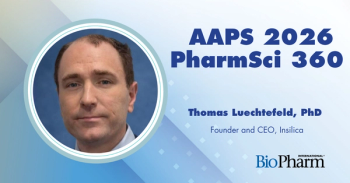
At PharmSci 360, Insilica CEO Thomas Luechtefeld will present on auditable agentic AI systems and how they are expanding computational toxicology beyond single predictive models.

Phase 1 data presented at IDWeek 2026 show TaiMed Biologics’ host-directed antibody TMB-365 lowered HIV-1 RNA without resistance, as the company advances an antibody-only maintenance regimen with TMB-380.

Geneos Therapeutics has initiated a 90-patient randomized phase 2 trial comparing its personalized neoantigen DNA vaccine GNOS-PV02 with active surveillance in patients with high-risk hepatocellular carcinoma after surgery.

EA2251, the 7th registrational trial of ivonescimab, will test it plus chemotherapy vs pembrolizumab or durvalumab regimens in first-line BTC.
Advertisement
Advertisement
Trending on BioPharm International
1
BioNTech, BMS to Pair Pumitamig With Trodelvy in Phase 3 First-Line TNBC Trial
2
Zylidac Bio to Scale Prolific's Optogenetic Cell Line Platform to GMP
3
FDA Grants Accelerated Approval to Ultomiris as First C5 Inhibitor for IgA Nephropathy
4
Sanofi Begins Construction of EU-Backed Insulin Plant in Frankfurt
5