
“G6B is a highly differentiated target with compelling human data supporting its role.” —Maxwell DeNies, RA Capital
News|Articles|November 6, 2026
Alethio Raises $90 Million to Advance First-in-Class G6B Antibody for Essential Thrombocythemia
Author(s)Emily Schoenthaler
Oxford spinout Alethio Therapeutics closed a $90 million Series A to take ATX-011, a monoclonal antibody against the G6B receptor, into Phase 1/2a studies in essential thrombocythemia. It is also developing a G6B-targeted ADC for myelofibrosis.
Advertisement
Alethio Therapeutics, a University of Oxford spinout, has raised $90 million (£67 million) in an oversubscribed Series A financing to advance ATX-011, a first-in-class monoclonal antibody targeting G6B, through phase 1/2a studies in essential thrombocythemia (ET) and toward phase 3 readiness.¹ Sofinnova Partners and RA Capital co-led the round with founding investor Oxford Science Enterprises, and Cancer Research Horizons and the University of Oxford also participated.¹ Graziano Seghezzi, managing partner at Sofinnova Partners, and Maxwell DeNies of RA Capital will join the company’s board.¹
“If you can selectively eliminate the cells driving disease, you can redefine what is possible for patients,” said Dr. Rohit Batta, chief executive officer of Alethio.¹
Why target G6B?
ET is a myeloproliferative neoplasm (MPN) marked by excessive platelet production that can cause clotting and bleeding and, in some patients, progress to myelofibrosis or acute leukemia.³ Current treatments, including hydroxyurea, interferon, and anagrelide, control blood counts but do not address the abnormal cells driving the disease, according to the company’s founders.³
G6B is a protein found on platelets and megakaryocytes, the bone marrow cells that produce platelets.¹ It is also aberrantly expressed on the stem cells that initiate MPNs and on megakaryocytes linked to bone marrow fibrosis, but not on healthy stem cells.¹ Alethio believes that pattern could allow ATX-011 to benefit patients regardless of which driver mutation they carry.¹
The target grew out of research by founders Adam Mead and Beth Psaila at the MRC Weatherall Institute of Molecular Medicine.³ A 2020 single-cell study led by Psaila found that mutant stem and progenitor cells in myelofibrosis were biased toward megakaryocyte production and provided “early validation of G6B as a potential immunotherapy target.”² Alethio’s ARTEMIS discovery platform later validated G6B using samples from more than 100 patients with CALR- or JAK2-mutant MPNs, along with matched healthy donors.³
“G6B is a highly differentiated target with compelling human data supporting its role,” DeNies said.¹
How is ATX-011 designed?
ATX-011 is an unconjugated antibody with a modified Fc region intended to reduce unwanted activity while keeping some ability to promote clearance of target cells.³ In laboratory studies to be presented at the American Society of Hematology (ASH) 2026 Annual Meeting, the antibody did not directly activate platelets or cause aggregation and did not disrupt megakaryocyte maturation.¹˒³
In two nonhuman primates, platelet counts fell by 80% after 96 hours and recovered as the antibody cleared, with no effect on hemoglobin or white blood cell counts.³ Modeling predicts that dosing every 3 to 4 weeks could maintain normal platelet counts in patients with ET, though that has not yet been tested in humans.³
How well animal data predict clinical results remains a key question for any first-in-class drug. In a
What else is in the pipeline?
Alethio also plans to advance additional MPN programs toward investigational new drug (IND) submissions.¹ When the company emerged from stealth in October 2025, it highlighted two antibody-drug conjugates (ADCs). One has since become a G6B-targeted ADC for myelofibrosis, and the other has evolved into a program targeting mutant CALR.³
Investor interest in MPNs has grown this year. In April, Eli Lilly agreed to acquire Ajax Therapeutics, which is developing a JAK2 inhibitor for myelofibrosis, for up to $2.3 billion.⁴ Oxford Science Enterprises cited that deal as one factor that helped build investor conviction in Alethio.³
What happens next?
ATX-011 is currently in IND-enabling studies.¹ Alethio expects to begin enrolling patients in the first half of 2028, subject to regulatory processes.³ The first part of the phase 1/2a trial will assess safety, exposure-response relationships, and proof of mechanism through platelet control, and the second part will evaluate the depth and durability of response, with platelet normalization at Week 12 as an early proof-of-concept readout.³
References
Alethio Therapeutics raises $90 million (£67 million) in oversubscribed Series A financing to advance a new generation of therapies for myeloproliferative neoplasms . News release. Alethio Therapeutics; November 5, 2026. Accessed November 6, 2026.- Psaila B, Wang G, Rodriguez-Meira A, et al.
Single-cell analyses reveal megakaryocyte-biased hematopoiesis in myelofibrosis and identify mutant clone-specific targets . Mol Cell. 2020;78(3):477-492.e8. doi: 10.1016/j.molcel.2020.04.008. - Eeckhout J.
Oxford spinout Alethio raises $90M Series A for chronic blood cancer trials . European Biotechnology. Published November 5, 2026. Accessed November 6, 2026. Lilly to acquire Ajax Therapeutics for $2.3 bn . DCAT Value Chain Insights. Published April 30, 2026. Accessed November 6, 2026.
Advertisement
Related to this article
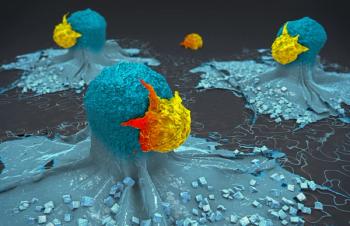
T-Therapeutics closed an oversubscribed $133 million Series B backed by Eli Lilly, JJDC, and others. The funding will take its first T-cell receptor bispecifics in cancer and autoimmune disease into clinical trials.

Shilpa CDMO's $50 million plan adds 10 kL of SPPS reactor capacity in Raichur, India, with its first commercial peptide line opening in December 2026.
FDA’s draft framework would let sponsors add patient-specific genome editing variants to an approved BLA using in vitro data. Here is what the guidance proposes, what evidence it asks for, and what remains unresolved.

Healthy-volunteer data show sustained TL1A suppression and a profile supporting infrequent subcutaneous dosing. Caldera also licensed a second bispecific, targeting IL-17 and TL1A, from Qyuns Therapeutics.

Akeso won NMPA priority review for ivonescimab plus chemotherapy in first-line biliary tract cancer after a phase 3 win over durvalumab plus chemo.

VG801 gene therapy improved vision through 12 months in a Stargardt disease trial as VeonGen aligned with FDA on its pivotal phase 3 design.

UCB will use Cradle’s AI-driven protein design platform in selected discovery projects, from hit generation through preclinical readiness, expanding its digital antibody engineering program.

Matt Trupo, Richard Jaenisch, and Brian Drapeau explore how AI advances biological insights, drug-target discovery, and supply chains.
Advertisement
Advertisement
Trending on BioPharm International
1
Caldera’s IL-23p19×TL1A Bispecific CLD-423 Shows 40-Day Half-Life in Phase 1a, Supporting Dosing Every 8 to 12 Weeks
2
China Grants Ivonescimab Priority Review in Biliary Tract Cancer
3
VeonGen Aligns with FDA on Phase 3 Design for Stargardt Gene Therapy
4
The BioPharm Brief: Ivonescimab Priority Review in China, Stargardt Gene Therapy Moves Toward Phase 3, and Longer Dosing Intervals for an IBD Bispecific
5