


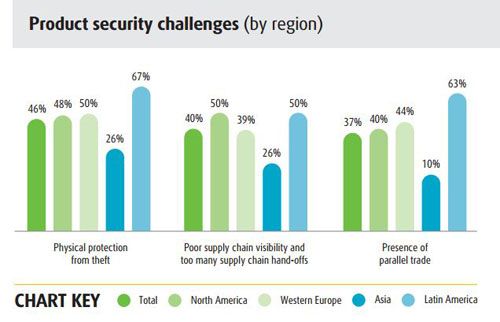

The new IVIG products boast improvements in purity, safety, and yield.
The new IVIG products boast improvements in purity, safety, and yield.
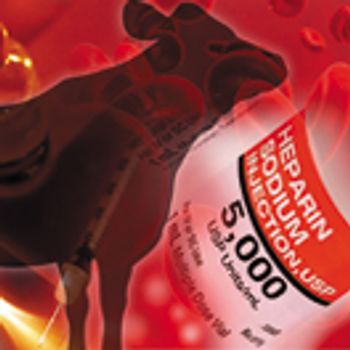
The global supply chain for bovine and porcine heparin and regulatory considerations are examined.

Virtual pilot programs examine scenarios that may occur while implementing serialization requirements for the US Drug Supply Chain Security Act.
The challenge of achieving zero visible defects (i.e., particulates) in parenteral drugs will require a coordinated effort at all stages of the supply chain, particularly in the production and filling of primary containers.
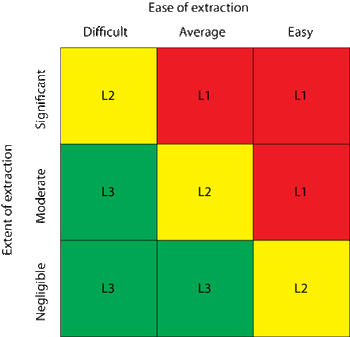
The author explores a dual-supplier sourcing strategy for single-use products and its ability to mitigate business continuity risk.

China’s emergence as a significant commercial market is forcing manufacturers to re-evaluate their overall business model.
UPS joins the Global Health Supply Chain Technical Assistance program to help secure the drug supply chain.

Adents’ Pharma Suite serialization software features track-and-trace capabilities.
World Courier receives pharmaceutical storage and transportation accreditation in the United Kingdom.
CSafe and AES will support controlled-temperature shipping through the Basel, Switzerland airport from their new service center.
The agency requires early notification of potential drug shortages.
The agency gives a limited reprieve to dispensers but requires other trading partners to provide product tracing information.
Pharmacy associates say more education regarding the transactional requirements of DSCSA is needed.
The agency takes action against websites that illegally sell unapproved medications.

Manufacturer supply chain needs are changing in response to widening product temperature ranges.
Agency teams work together to encourage manufacturers to seek approval for previously unapproved drugs.
As an affiliate member, TraceLink brings serialization expertise to the Pharma & Biopharma Outsourcing Association.
A consensus-based standard issued by NSF International incorporates regulatory and industry requirements into a single standard for the manufacturing and distribution of pharmaceutical excipients.

Market changes are driving pharmaceutical companies to consider new ways to mitigate risk in the cold chain.

Enterprise quality management systems can help shift the quality emphasis from corrective to preventive actions.
A new technical report guides bio/pharma companies in establishing a risk-based approach for prevention and management of drug shortages.
Manufacturers face new rules for tracing drugs through the supply chain and compounders face stricter standards.
A guidance document published just before the Jan. 1, 2015 deadline adds a four-month grace period.
Dual sourcing is one of many possible solutions to securing the supply chain.
For cellular therapies to become a viable treatment for large-sized patient groups, steps need to be taken to develop an efficient manufacturing and supply system to minimise the cost of goods.