





Manufacturing, Cell Therapies
Latest News

July 30th 2026
J&J Partners With Sail Biomedicines on In Vivo CAR-T for Autoimmune Disease, Holds Option to Acquire
Johnson & Johnson has entered a collaboration and equity investment agreement with Sail Biomedicines to advance in vivo CAR-T therapies for immune-mediated diseases, securing an exclusive option to acquire the company for $2.58 billion.
Advertisement
Latest Videos





Advertisement
More News

Allogene Therapeutics has published complete phase 1 data in the Journal of Clinical Oncology for ALLO-316, a CD70-targeted allogeneic CAR T therapy, showing a 31% confirmed response rate and durable remissions in patients with high CD70-expressing metastatic renal cell carcinoma.

The FDA has granted Regenerative Medicine Advanced Therapy designation to Allocetra, Enlivex's macrophage-reprogramming cell therapy, for age-related symptomatic knee osteoarthritis in patients 64 and older, based on Phase I/IIa data showing durable pain and function improvements.

Fate Therapeutics Wins FDA IND Clearance for FT839, a Dual-CAR T-Cell Therapy for Autoimmune Disease
FT839, Fate Therapeutics' off-the-shelf, iPSC-derived CAR T-cell candidate co-targeting CD19 and CD38, has received FDA IND clearance and will advance into a phase 1/2 basket trial designed to treat multiple autoimmune diseases without conditioning chemotherapy.

Speaking at BIO 2026, Kasper Øland, Samsung Biologics' vice president of sales execution, emphasizes how complex molecules now exceed 55% of the company’s pipeline as biotechs demand faster, more flexible CDMO partnerships.

MilliporeSigma's Sebastian Arana identifies process characterization gaps, tech transfer complexity, and analytical lag as top CGT manufacturing scale-up barriers at BIO 2026.
MilliporeSigma Global Head of Process Solutions Sebastián Arana outlines why manufacturing flexibility, not just capacity, is now the strategic priority for biomanufacturers at BIO 2026.

Q&A: Cytiva’s Pierre-Alain Ruffieux on Scaling Cell and Gene Therapy Manufacturing for Global Access
Cytiva’s Pierre-Alain Ruffieux discusses standardization, regionalization, talent gaps, and regulatory pathways shaping advanced biomanufacturing’s future ahead of BIO 2026.

Made Scientific and Pluristyx will integrate iPSC starting materials with CDMO services for cell therapy development.

Subcutaneous Infliximab Shows Promise for Durable, Patient-Centered IBD Care
Published: | Updated:
Celltrion’s Dr. Juby Jacob-Nara discussed how subcutaneous infliximab may improve convenience, adherence, and sustained remission for patients with inflammatory bowel disease, while reducing reliance on infusion centers and supporting broader patient-centered treatment goals.
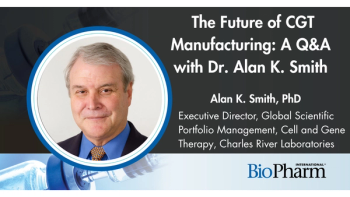
Charles River Laboratories’ Dr. Alan K. Smith explains how early commercial planning, modular manufacturing, and AI-driven automation may accelerate scalable manufacturing for cell and gene therapies.
Subcutaneous infliximab may help improve treatment convenience, dosing consistency, and long-term adherence for patients with inflammatory bowel disease, according to discussions at DDW 2026. Clinicians highlighted the potential for self-administered infliximab to support sustained remission while reducing infusion-center burden and improving patient-centered care.

AI and PAT have been shown to reduce manufacturing variability in advanced therapies, which leads to improved process control and accelerated patient access to lifesaving treatments.

The hub will integrate the company’s manufacturing and R&D in China to streamline CAR-T development while addressing scalability and accelerating regional access to advanced therapies.

A new Cellares–Stanford collaboration aims to demonstrate how automated platforms could standardize gene-edited stem cell manufacturing and accelerate clinical translation.

Cellares’ $257M Series D signals growing industry urgency to industrialize cell therapy manufacturing through automation and scalable production models.

Single-use technologies provide efficiency and flexibility while reducing risk in the manufacture of cell and gene therapies.

The company hopes the rebranding effort will better align with its work in cell culture media manufacturing.

Key 2025 FDA draft and final guidances emphasize the modernization of biotech regulations, acceleration of rare-disease therapies, and streamlining of biosimilar pathways.

Charles River has launched a second cohort to speed CGT innovation with technical guidance and scalable manufacturing support.
Flexible manufacturing processes and facilities support the pipeline of allogeneic cell therapies.

How is the biopharma industry solving manufacturing and scale-up bottlenecks for cell and gene therapies? Read on to find out.

A new Cue Biopharma–ImmunoScape partnership seeks to advance targeted TCR-T expansion for solid tumors, supporting broader access and improved clinical durability.

As cell and gene therapy is poised to play a major role in the future of medicine, it’s important to know the basics.

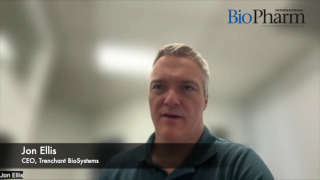
Jon Ellis, CEO, shares his thoughts on Trenchant BioSystems’ new technology, its reception within the cell and gene therapy sector, and the future nature of industry partnerships.

In a session at the Cell and Gene Meeting on the Mesa, Prime Medicine CEO Allan Reine discussed how prime editing offers versatile, safe gene correction, but that delivery to target cells remains a major hurdle.
Advertisement
Advertisement
Trending on BioPharm International
1
Policy Leaders Urge Treasury to Narrow Biotech Outbound Investment Rule
2
Shilpa CDMO Commits $50 Million to Scale Peptide Capacity in India
3
Spyre’s Anti-TL1A Antibody SPY072 Misses in Psoriatic Arthritis and Axial Spondyloarthritis, Shifts Focus to Hidradenitis Suppurativa
4
Boehringer Ingelheim Licenses Six Preclinical ADC and T-Cell Engager Programs From SBP Group in Deal Worth Up to $7 Billion
5