Next, Spyre Therapeutics says it will no longer develop its anti-TL1A antibody SPY072 in rheumatic diseases. In the company’s phase 2 SKYWAY basket trial, SPY072 missed its primary endpoints in psoriatic arthritis and axial spondyloarthritis, although the drug was well tolerated. Spyre did not disclose response rates for either sub-study. Earlier rheumatoid arthritis results were mixed: the low dose met its primary endpoint, but the high dose did not, and Spyre said the effect size fell short of its internal bar. The company is now focusing on hai·dra·duh·nai·tuhs suh·pyur·uh·tai·vuh hidradenitis suppurativa, (hai·dra·duh·nai·tuhs suh·pyur·uh·tai·vuh) where Merck’s anti-TL1A antibody tulisokibart (too-lis-OH-kee-bart) recently posted positive phase 2b data. Spyre’s phase 2 SKYLIGHT trial is testing SPY072 in combination with the IL-17A/F inhibitor bimekizumab, and the company plans to move an anti-TL1A monotherapy into pivotal hidradenitis suppurativa studies in 2027.
And finally, Biora Therapeutics has received approval from an Australian Human Research Ethics Committee for a first-in-human trial of its BioJet ingestible capsule. The capsule uses liquid jet technology to deliver adalimumab into the small intestine. The study will enroll healthy volunteers and compare oral delivery with subcutaneous injection, looking at safety, tolerability, and pharmacokinetics. Dosing is planned for December, with data expected in early 2027. More than 800 capsules have been dosed in animal studies so far, but no human data have been reported yet.
That’s today’s BioPharm Brief. For analysis and expert insights, please visit BioPharmInternational.com.
Key takeaways
- Potency over the full lifecycle: FDA’s final guidance expects cell and gene therapy developers to build potency assurance from IND through postmarket, not just test at release.
- US capacity consolidation: Lonza’s purchase of Merck KGaA’s US CDMO business more than doubles its US network, adding ADC, viral vector, and LNP capabilities.
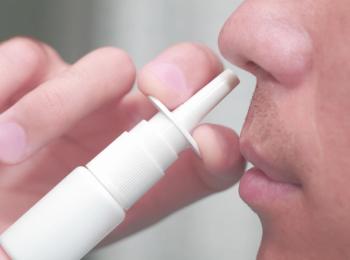
- A dose puzzle in progressive MS: Low-dose intranasal foralumab reduced brain inflammation on PET imaging, but the higher dose missed, which raises questions about the dose-response.