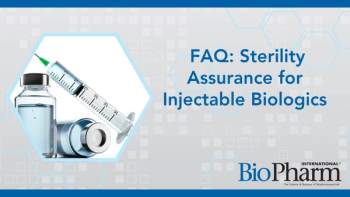
This FAQ explains how aseptic processing, contamination control, and validation protect patients amid sterile injectable failures.
A collaboration integrates Sartorius Stedim Biotech’s BIOSTAT STR bioreactors and Repligen’s XCell ATF cell-retention control technology to create simplified, scalable equipment for intensified cell culture.
Sartorius Stedim Biotech (SSB) and Repligen Corporation have entered into a collaboration agreement to integrate Repligen’s XCell ATF cell-retention control technology into SSB’s BIOSTAT STR large-scale, single-use bioreactors to create novel perfusion-enabled bioreactors, the companies announced in a Sept. 4, 2018 press release. A single control system for 50 L to 2000 L bioreactors used in perfusion cell culture applications is designed to control cell growth, fluid management, and cell retention in continuous and intensified bioprocessing and simplify the development and cGMP manufacture of biological drugs.
Through the partnership, SSB and Repligen will further collaborate to equip SSB’s recently launched ambr 250ht perfusion single-use mini bioreactor system with Repligen’s KrosFlo hollow-fiber filter technology. The bioreactor system will be sold by SSB as a complete single-use assembly. This design conserves hollow-fiber filter technology across scales, enabling users to fast-track development and scale up their cell culture perfusion processes.
Source: