
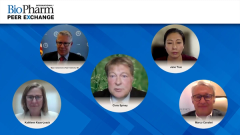
Feature|Videos|January 9, 2025
Reflecting on the COVID-19 Pandemic Response
Lessons from the COVID-19 response highlight regulatory collaboration, research expansion, and challenges in vaccine access and preparedness.
Advertisement
Episodes in this series
A lot can be learned from the COVID-19 response, including global regulatory collaboration, de-risking pharmaceutical development, and expanding research participation. This segment covers challenges such as sustaining preparedness and addressing vaccine access inequities.
Advertisement
Related to this article

A real-world study found evolocumab cut fatal or nonfatal heart attack risk 20% vs ezetimibe in adults with ASCVD and prior statin use.

FDA grants accelerated approval to Johnson & Johnson’s subcutaneous EGFR/MET bispecific Rybrevant Faspro for previously treated head and neck squamous cell carcinoma, T-Therapeutics raises a $133 million Series B to take TCR-CD3 bispecifics into clinical trials, and Alethio Therapeutics raises a $90 million Series A to advance its first-in-class G6B antibody for essential thrombocythemia.

Johnson & Johnson's amivantamab (Rybrevant Faspro) won accelerated FDA approval for pretreated recurrent head and neck cancer.
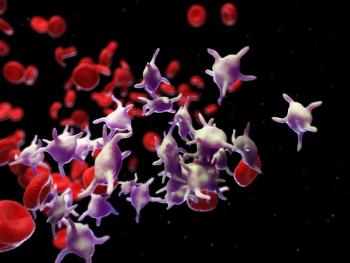
Oxford spinout Alethio Therapeutics closed a $90 million Series A to take ATX-011, a monoclonal antibody against the G6B receptor, into Phase 1/2a studies in essential thrombocythemia. It is also developing a G6B-targeted ADC for myelofibrosis.
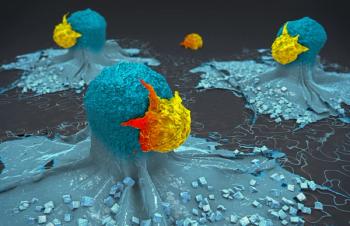
T-Therapeutics closed an oversubscribed $133 million Series B backed by Eli Lilly, JJDC, and others. The funding will take its first T-cell receptor bispecifics in cancer and autoimmune disease into clinical trials.
China’s NMPA grants priority review to Akeso’s PD-1/VEGF bispecific ivonescimab with chemotherapy for first-line biliary tract cancer, VeonGen Therapeutics aligns with FDA on a phase 3 design for its dual-AAV Stargardt gene therapy VG801, and Caldera Therapeutics’ IL-23p19×TL1A bispecific CLD-423 shows a half-life of more than 40 days in a phase 1a trial.
FDA’s draft framework would let sponsors add patient-specific genome editing variants to an approved BLA using in vitro data. Here is what the guidance proposes, what evidence it asks for, and what remains unresolved.

Healthy-volunteer data show sustained TL1A suppression and a profile supporting infrequent subcutaneous dosing. Caldera also licensed a second bispecific, targeting IL-17 and TL1A, from Qyuns Therapeutics.
Advertisement
Advertisement
Trending on BioPharm International
1
China Grants Ivonescimab Priority Review in Biliary Tract Cancer
2
T-Therapeutics Raises $133 Million to Take TCR Bispecifics Into the Clinic
3
Caldera’s IL-23p19×TL1A Bispecific CLD-423 Shows 40-Day Half-Life in Phase 1a, Supporting Dosing Every 8 to 12 Weeks
4
Boehringer Ingelheim Licenses Six Preclinical ADC and T-Cell Engager Programs From SBP Group in Deal Worth Up to $7 Billion
5