

“Delivery remains a critical determinant of therapeutic success, particularly as the industry expands into increasingly sophisticated modalities.” – Chris Lai, chairman and chief executive officer, METiS TechBio
News|Articles|October 20, 2026
METiS TechBio, Lilly Partner on AI-Designed LNPs for Tissue-Specific Delivery
Author(s)Emily Schoenthaler
METiS TechBio will apply its AI-driven AiLNP ionizable lipid platform to discover LNPs designed to deliver therapeutics beyond the liver, under a collaboration with Eli Lilly worth up to $1.1 billion in milestones.
Advertisement
METiS TechBio has entered a research collaboration with Eli Lilly and Company to discover lipid nanoparticle (LNP) delivery technologies designed to reach specific tissues, using METiS’ artificial intelligence-driven ionizable lipid discovery platform, AiLNP.¹ The companies aim to design LNPs that improve targeting and biodistribution of therapeutic payloads, with potential applications across multiple disease areas.¹
“Delivery remains a critical determinant of therapeutic success, particularly as the industry expands into increasingly sophisticated modalities,” said Chris Lai, chairman and chief executive officer of METiS TechBio.¹
Why is tissue-specific LNP delivery difficult?
According to METiS, LNPs have emerged as a powerful modality for delivering therapeutic payloads to target tissues and cells.¹ Directing them beyond the liver, however, remains a central engineering challenge. In a BioPharm International®
In the same interview, Dominik Witzigmann, PhD, co-founder and president of NanoVation Therapeutics, described that hepatic default as a challenge that “is a major barrier to reaching immune cells, stem cells, and lung tissue.”
The METiS-Lilly collaboration is aimed at this problem. According to METiS, the companies will work to discover and optimize LNP architectures that may enable improved tissue specificity, enhanced therapeutic performance, and broader applicability across disease areas.¹
How will AI be used in LNP design?
Ionizable lipids are a core component of LNPs, and METiS plans to apply generative and predictive AI to their rational design and optimization through its AiLNP platform.¹ AiLNP is one of several specialized platforms METiS has built on its core NanoForge platform, which the company says includes a library of more than 10 million lipids.² METiS’ other platforms include AiTEM for small-molecule formulation design and AiRNA for mRNA sequence design.² BioPharm International’s Drug Digest program on LNP engineering similarly noted that AI- and machine learning-driven discovery platforms are accelerating the identification and optimization of new LNP formulations.
Under the agreement, METiS will lead LNP discovery and optimization with AiLNP, while Lilly will contribute its expertise in drug discovery, development, and commercialization.¹ Neither company disclosed which therapeutic payloads, tissues, or disease areas the collaboration will target.¹,³
“By combining METiS’ AI-powered platform with Lilly’s scientific expertise and development capabilities, we aim to unlock a new generation of tissue-targeted delivery technologies that have the potential to transform how medicines reach patients,” Lai said.¹
What are the terms of the deal?
METiS characterized the agreement as focused on the research and discovery of novel LNP-based delivery solutions for tissue-specific delivery of therapeutic modalities.¹ METiS is eligible to receive an upfront payment in the low double-digit millions of US dollars and up to approximately $1.1 billion in development, regulatory, and commercial milestone payments.¹ The company is also eligible for single-digit tiered royalties on annual net sales of products resulting from the collaboration.¹
Who is METiS TechBio?
METiS, which trades on the Hong Kong Stock Exchange under the ticker 7666.HK, describes itself as an innovator in AI-powered drug delivery.¹ The company was founded in 2020 by three Massachusetts Institute of Technology alumni and operates research and development centers in Beijing, Hangzhou, and Cambridge, Massachusetts.²
Its clinical pipeline includes MTS-105, an mRNA candidate for liver cancer and liver metastases that has received FDA orphan drug designation, as well as MTS-004, an oral candidate for pseudobulbar affect, and MTS-201, an oral TGR5 agonist.²
References
- METiS TechBio.
METiS TechBio Announces Strategic Collaboration with Lilly to Advance Next-Generation Tissue-Specific LNP Delivery Technologies . Press release. Published October 19, 2026. Accessed October 20, 2026. - IPO Zaozhidao.
Metis TechBio clears key listing hurdle with AI nanodelivery focus . KrASIA. Published April 21, 2026. Accessed October 20, 2026. - Jacobus N.
METiS enters collaboration with Eli Lilly for next-generation tissue-specific LNP delivery technologies . Pharmaceutical Executive. Published October 20, 2026. Accessed October 20, 2026.
Advertisement
Related to this article
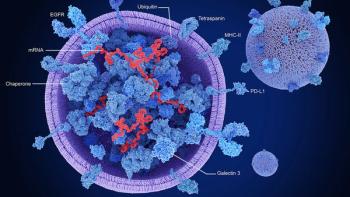
Inhaled EXO-CD24 kept 85% of patients with ARDS free of respiratory failure at day 7 vs 33.3% with placebo in a 90-patient phase 2b trial.

Interim phase 1 data presented at UEG Week 2026 showed Bionyra Pharma’s Fc-engineered anti-TL1A antibody BYN-002 suppressed soluble TL1A with a half-life supporting potential every-3-to-6-month maintenance dosing in IBD.

In the phase 3 SHINE-2 trial, half of pediatric patients who responded to mirikizumab induction were in clinical remission at week 52. Lilly plans to file for a pediatric UC label expansion.

Roche will take ex-China development of Hansoh’s two preclinical ADCs and multiple programs against Roche-proposed targets once Hansoh completes global phase 1a trials. The deal includes $400 million upfront and more than $15 billion in potential milestones.
As ArsenalBio, TScan, Bristol Myers Squibb, and others abandon ex vivo programs for in vivo engineering, early clinical data and platform differences point to both the promise and the unresolved safety, manufacturing, and regulatory questions of generating CAR-T cells inside the body.

Nuravax will test AV-1959R in a 160-adult phase 2 trial to see whether the amyloid vaccine can prevent Alzheimer disease before symptoms begin.
BMS's Dr Nathan Pennell outlines how biomarker testing barriers and trial diversity affect patient access to targeted oncology drugs.
Guselkumab (Tremfya) sustained perianal fistula healing through 1 year in Crohn disease, with remission climbing to 35% in one FUZION dosing arm.
Advertisement
Advertisement
Trending on BioPharm International
1
Regeneron's Libtayo Earns CHMP Nod for Expanded EU Dosing
2
Roche, Hansoh Sign Second ADC Pact Covering Preclinical and Roche-Selected Targets
3
Biomarker Testing Gaps Can Stall Targeted Oncology Therapy, BMS’s Dr Pennell Says
4
Lilly’s Omvoh Reaches 50% One-Year Remission in Pediatric Ulcerative Colitis
5