Insilica's Dr Thomas Luechtefeld argues process traceability, not benchmark accuracy alone, determines whether AI toxicology decisions can be trusted.
The company will open its first European manufacturing facility in Castlebar, Ireland.
On Feb. 1, 2019, Meissner Filtration Products, a developer, manufacturer, and supplier of microfiltration and single-use systems, announced plans to establish a new manufacturing facility in County Mayo, Ireland.
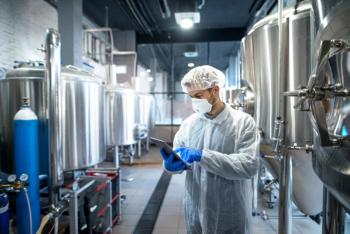
Meissner will expand an existing 34,000-ft2 advanced technology building constructed by the Industrial Development Authority (IDA) Ireland in Castlebar to 100,000 ft2. The company has also purchased the adjacent land to more than triple the facility’s current footprint, and plans to install a large, state-of-the-art cleanroom within the existing facility to be used for the manufacture of single-use systems (SUS). The new facility is expected to be operational in the first quarter of 2020. Initial operations will include SUS manufacturing, quality and regulatory, engineering, and customer service.
“We have seen substantial growth in our SUS portfolio over the past 10 years, and ensuring we have capacity in excess of customer demand is critical,” stated Christopher Meissner, CEO of Meissner Filtration Products, in a company press release. “Additionally, we acutely recognize the value of manufacturing proximate to our customer base as well as geographically diversifying our manufacturing footprint.”
Currently, Meissner has a manufacturing campus in Camarillo, CA, and a European logistics hub outside of Frankfurt, Germany. The company reports that the Castlebar facility will be its first manufacturing facility in Europe, creating over 150 jobs over the next five years.
Source: