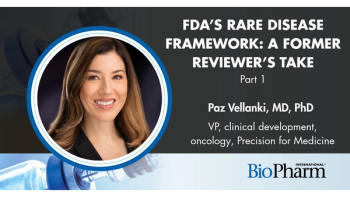
In the first part of a two-part interview, Paz Vellanki of Precision for Medicine explains what sponsors should bring to early FDA meetings and how manufacturing and assay readiness can delay rare disease trials.
GSK and TESARO have entered into a definitive agreement concerning GSK's acquisition of TESARO for an aggregate cash consideration worth approximately $5.1 billion.
GlaxoSmithKline (GSK) and TESARO, an oncology-focused biopharmaceutical company, have entered into a definitive agreement concerning GSK’s acquisition of TESARO for an aggregate cash consideration worth approximately $5.1 billion.
“The acquisition of TESARO will strengthen our pharmaceuticals business by accelerating the build of our oncology pipeline and commercial footprint, along with providing access to new scientific capabilities,” said Emma Walmsley, chief executive officer, GSK, in a Dec. 3, 2018
“Our strong belief is that PARP inhibitors are important medicines that have been under appreciated in terms of the impact they can have on cancer patients. We are optimistic that Zejula will demonstrate benefit in patients with ovarian cancer beyond those who are BRCA-positive as front-line treatment,” added Hal Barron, chief scientific officer and president, R&D, GSK. “We are also very excited that through this transaction, we will have the opportunity to work with an outstanding Boston-based oncology group with deep clinical development expertise and together we will explore Zejula’s efficacy beyond ovarian cancer into multiple tumour types to help many more patients.”
“This transaction marks the beginning of a new global partnership that will accelerate our oncology business and allow our mission of delivering transformative products to individuals living with cancer to endure,” explained Lonnie Moulder, chief executive officer, TESARO. “Our board and management team are very pleased to announce this transaction, and we are grateful to the management team at GSK for their tremendous vision and the opportunity to preserve and build upon the impact we have had in the cancer community to date.”
TESARO’s major marketed product is an oral poly ADP ribose polymerase (PARP) inhibitor, Zejula (niraparib), that is currently approved in both the United States and Europe as a treatment for adults with recurrent ovarian cancer who are responding to platinum-based chemotherapy. Additionally, the therapy is being investigated for use in other cancers, lung, breast, and prostate, both as a monotherapy and in combination with other drugs. Further to Zejula, TESARO has other assets in its oncology pipeline. These assets include antibodies that are directed against PD-1, TIM-3, and LAG-3 targets.
The acquisition transaction is expected to complete in the first quarter of 2019, subject to closing conditions.
Source: