

“These are two hard-to-treat, immune-excluded, cold cancers, which have historically proved unresponsive to immunotherapy.” – Niranjan Sardesai, PhD, president and chief executive officer, Geneos Therapeutics
News|Articles|October 21, 2026
Geneos Launches Phase 2 IMPACT31 Trial of Personalized DNA Cancer Vaccine to Prevent Liver Cancer Recurrence
Author(s)Emily Schoenthaler
Geneos Therapeutics has initiated a 90-patient randomized phase 2 trial comparing its personalized neoantigen DNA vaccine GNOS-PV02 with active surveillance in patients with high-risk hepatocellular carcinoma after surgery.
Advertisement
Geneos Therapeutics has initiated IMPACT31, a randomized phase 2 trial evaluating its personalized neoantigen DNA vaccine, GNOS-PV02, as a monotherapy to prevent recurrence in patients with high-risk hepatocellular carcinoma (HCC) who have undergone surgical resection with curative intent.¹ The multicenter global trial (NCT07722741) plans to enroll 90 patients and will compare the vaccine with active surveillance, the current standard of care after surgery.¹
“Most patients with HCC, particularly those with high-risk features at the time of surgery, experience disease recurrence following curative-intent resection, and there are currently no approved or effective therapies to prevent recurrence,” said Mark Yarchoan, MD, professor of medicine at Johns Hopkins University and a clinical investigator on the IMPACT31 trial.¹
How does Geneos’ personalized DNA vaccine work?
Geneos’ personalized immunotherapies for cancer (PICs) are built on DNA plasmids that each encode up to 40 tumor neoantigens, mutations found only in a patient’s tumor cells.¹ Each patient’s tumor is sequenced to identify these neoantigens, and a patient-specific vaccine is then produced using the company’s GT-EPIC platform.¹ According to Geneos, the treatment is designed to train the immune system to generate cancer-targeting CD4 and CD8 T cells while sparing healthy tissue.¹
In the earlier phase 1/2 trial of GNOS-PV02, the vaccine was coformulated with a plasmid encoding interleukin-12 (IL-12) as an adjuvant and administered intradermally, followed by electroporation.²
What data support the phase 2 trial?
IMPACT31 builds on results from a single-arm phase 1/2 trial in 36 patients with advanced HCC previously treated with a multityrosine kinase inhibitor, published in Nature Medicine in 2024.¹,² In that study, GNOS-PV02 was given in combination with the anti-PD-1 antibody pembrolizumab.²
The combination produced an objective response rate of 30.6% (11 of 36 patients), including complete responses in 8.3% (3 of 36).² No Grade 3 or higher treatment-related adverse events or dose-limiting toxicities were reported, and the most common treatment-related events were injection-site reactions.² Neoantigen-specific T cell responses were confirmed in 19 of 22 evaluable patients (86.4%).²
The authors noted that the single-arm design and small sample size limit how definitively the vaccine’s contribution can be distinguished from that of pembrolizumab.² IMPACT31 differs in design, testing the vaccine alone in the adjuvant setting against active surveillance.¹
Why target recurrence after HCC surgery?
Recurrence after resection remains a major problem in HCC. A 2023 review in Frontiers in Oncology reported that the recurrence rate within five years after surgery is as high as 70% and that there is no standardized postoperative management protocol worldwide.³
In a BioPharm International®
Who is leading clinical development?
Geneos also announced the appointment of Julie Rosenberg, MD, as chief medical officer.¹ Rosenberg has held leadership roles at Boehringer Ingelheim, Bristol Myers Squibb, Bayer Healthcare, and Pfizer, and most recently served as head of the oncology franchise at Linical, a contract research organization.¹
“The clinical data to date and the Geneos DNA vaccine platform are extremely compelling,” Rosenberg said.¹
What happens next?
The IMPACT31 trial will enroll patients at sites in the US and the Asia-Pacific region.¹ Geneos said its PIC approach is cancer-agnostic, and the company has previously evaluated its platform in glioblastoma in the adjuvant setting in addition to advanced HCC.¹
“IMPACT31 builds on encouraging safety and preliminary efficacy data from a prior phase 1/2 trial in patients with advanced HCC, published in Nature Medicine in 2024, as well as recent successes with personalized cancer vaccines in other tumor types,” Yarchoan said.¹
References
- Geneos Therapeutics.
Geneos Therapeutics Initiates IMPACT31 Phase 2 Randomized Clinical Trial Evaluating Neoantigen-Targeted Personalized DNA Immunotherapy for Cancer . Press release. PR Newswire. Published October 21, 2026. Accessed October 21, 2026. - Yarchoan M, Gane EJ, Marron TU, et al.
Personalized neoantigen vaccine and pembrolizumab in advanced hepatocellular carcinoma: a phase 1/2 trial . Nat Med. 2024;30:1044-1053. - Guo B, Chen Q, Liu Z, et al.
Adjuvant therapy following curative treatments for hepatocellular carcinoma: current dilemmas and prospects . Front Oncol. 2023.
Advertisement
Related to this article

Interim phase 1/2 data presented at Retina in Rio 2026 showed sustained visual improvements with Opus Genetics’ AAV8 gene therapy OPGx-LCA5 and improved retinal sensitivity with OPGx-BEST1 in inherited retinal diseases.

Interim phase 1 data presented at UEG Week 2026 showed Bionyra Pharma’s Fc-engineered anti-TL1A antibody BYN-002 suppressed soluble TL1A with a half-life supporting potential every-3-to-6-month maintenance dosing in IBD.

In the phase 3 SHINE-2 trial, half of pediatric patients who responded to mirikizumab induction were in clinical remission at week 52. Lilly plans to file for a pediatric UC label expansion.

Roche will take ex-China development of Hansoh’s two preclinical ADCs and multiple programs against Roche-proposed targets once Hansoh completes global phase 1a trials. The deal includes $400 million upfront and more than $15 billion in potential milestones.

The FDA approved Roche's satralizumab (Enspryng), an IL-6 receptor-targeting monoclonal antibody, for adults with thyroid eye disease based on the Phase 3 SatraGO-1 and SatraGO-2 trials, giving patients the first at-home subcutaneous treatment option.

The FDA expanded ImmunityBio’s Anktiva plus BCG to include patients with BCG-unresponsive non-muscle invasive bladder cancer with papillary-only tumors, extrapolating efficacy from the QUILT-3.032 carcinoma in situ cohort.

The FDA expanded Fast Track status for invikafusp alfa, Marengo Therapeutics’ TCR Vβ-targeting antibody-IL-2 fusion protein, from TMB-H colorectal cancer to TMB-H solid tumors regardless of tissue of origin.
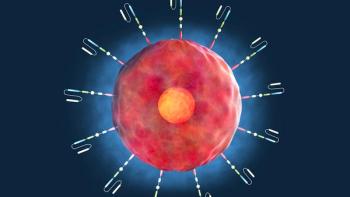
As ArsenalBio, TScan, Bristol Myers Squibb, and others abandon ex vivo programs for in vivo engineering, early clinical data and platform differences point to both the promise and the unresolved safety, manufacturing, and regulatory questions of generating CAR-T cells inside the body.
Advertisement
Advertisement
Trending on BioPharm International
1
Nuravax Alzheimer Vaccine AV-1959R Earns FDA Fast Track Designation
2
Nano24's Inhaled EXO-CD24 Cuts ARDS Mortality in Phase 2b Trial
3
METiS TechBio, Lilly Partner on AI-Designed LNPs for Tissue-Specific Delivery
4
The BioPharm Brief: Lung Injury Survival, Alzheimer Prevention, and Longer Dosing Intervals
5