Developers of innovative drug products dealing with protein formulations, nucleotide-based drugs, peptides, and poorly soluble molecules, face significant challenges in achieving efficient and scalable manufacturing solutions. Spray drying has emerged as a powerful and versatile manufacturing technology. It offers significant advantages for stabilizing complex and sensitive drug molecules while optimizing production processes. Join our panel of experts as they explore how spray drying can be applied to enhance the stability, bioavailability, and manufacturability of various molecules, including peptides, oligonucleotides, small molecules, monoclonal antibodies, and nutraceuticals. This session will cover the latest innovations in spray drying technology, and provide valuable insights into formulation development, process parameters optimization, and large-scale production. Attendees will also learn how to maintain molecular integrity during the spray drying process and leverage in-silico tools to streamline commercialization.
New clinical data highlight improved disease control, reduced eye bulging, and weight-loss benefits, potentially broadening options for patients with unmet needs.
Antisense oligonucleotides are reshaping drug design, from RNase H gapmers to inhaled delivery; this FAQ explains how they work and why trials still fail.
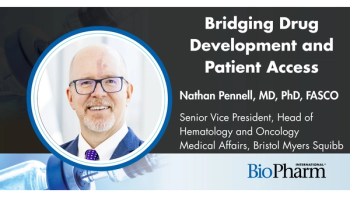
Bristol Myers Squibb's Nathan Pennell explains how the MRD endpoint supports accelerated approval in multiple myeloma without changing how clinicians monitor patients.