

New clinical trial updates highlight advances in RNA editing for alpha-1 antitrypsin deficiency, semaglutide data in MASH liver disease, and improved joint outcomes in psoriatic arthritis treatment comparisons.
New clinical trial updates highlight advances in RNA editing for alpha-1 antitrypsin deficiency, semaglutide data in MASH liver disease, and improved joint outcomes in psoriatic arthritis treatment comparisons.

Novo Nordisk presented new EASL 2026 data highlighting semaglutide’s liver safety profile and subgroup efficacy in metabolic dysfunction-associated steatohepatitis, reinforcing the growing role of GLP-1 therapies in chronic liver disease management.

UCB reported Week 16 data from the Phase 3 BE BOLD study showing Bimzelx outperformed risankizumab on the primary ACR50 endpoint in psoriatic arthritis, marking the first approved biologic to demonstrate superiority in joint outcomes in a head-to-head PsA trial.
Today’s BioPharm Brief covers how biopharma companies are leveraging next-generation platform technologies—from CNS-targeted gene therapy and AI-driven R&D to antibody-cleaving biologics partnerships—to improve therapeutic precision, reduce development barriers, and expand access to advanced medicines.

Preclinical ASGCT 2026 data suggest JCR Pharmaceuticals’ JUST-AAV platform may improve central nervous system delivery while reducing liver exposure in AAV-based gene therapies for rare neurodegenerative diseases.

Incyte and Edison Scientific have entered a strategic collaboration to integrate the Kosmos AI platform across Incyte’s research and development operations, reflecting the growing role of continuous-learning AI systems in biopharmaceutical drug discovery and translational medicine.
Today’s BioPharm Brief covers major developments in antibody-drug conjugates, early-stage HER2-positive breast cancer treatment, and the expanding biosimilars market.

Regeneron’s new partnership with Parabilis Medicines underscores growing industry interest in next-generation conjugate technologies designed to reach historically “undruggable” intracellular targets through peptide-enabled delivery systems.

FDA approvals for Enhertu in both neoadjuvant and adjuvant HER2-positive early breast cancer settings mark a major expansion of antibody-drug conjugates into curative-intent treatment, supported by pivotal Phase 3 DESTINY-Breast11 and DESTINY-Breast05 data.

Cell therapy QC bottlenecks stem from fragmented systems, for which scalable, automated ecosystems require systems-level redesign, digital integration, and mindset shift.
AstraZeneca reported encouraging bladder cancer data for Imfinzi plus BCG, Imviva shared early remission findings for allogeneic CAR-T therapy in lupus, and Biogen expanded its rare disease pipeline through its acquisition of Apellis Pharmaceuticals.
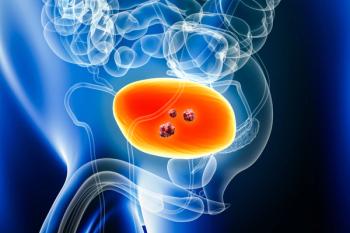
Exploratory analyses from the Phase 3 POTOMAC trial showed AstraZeneca’s Imfinzi plus BCG regimen reduced early high-risk recurrences and delayed cystectomy in patients with high-risk non-muscle-invasive bladder cancer.
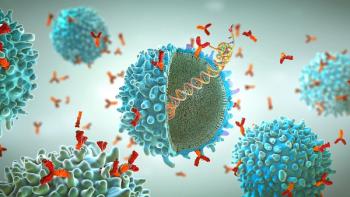
New Phase 1/2 findings presented at ASGCT 2026 suggest Imviva Biotech’s investigational allogeneic CAR-T therapy CTA313 may induce durable remission and immunosuppression-free disease control in systemic lupus erythematosus.
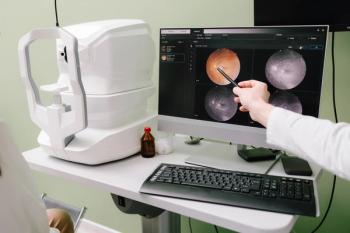
Biogen has completed its acquisition of Apellis Pharmaceuticals, adding complement-targeting therapies Empaveli and Syfovre to its portfolio and strengthening the company’s position in nephrology and rare disease therapeutics.
Today’s BioPharm Brief covers Phase III clinical trial advances in bladder cancer from AstraZeneca , new in vivo CAR-T financing from Create Medicines, and positive Duchenne muscular dystrophy gene therapy results from REGENXBIO.

REGENXBIO announced positive topline Phase 3 AFFINITY DUCHENNE trial results showing that investigational gene therapy RGX-202 achieved significant microdystrophin expression and demonstrated a correlation with functional improvement in patients with Duchenne muscular dystrophy.

AstraZeneca reported that the Phase 3 VOLGA trial demonstrated statistically significant improvements in event-free survival and overall survival with perioperative durvalumab plus neoadjuvant enfortumab vedotin in cisplatin-ineligible patients with muscle-invasive bladder cancer.

New analyses from Novo Nordisk’s Phase 3 OASIS 4 trial showed that adults taking oral Wegovy achieved substantial weight loss and improved physical mobility, reinforcing the potential of oral semaglutide in obesity management.

AstraZeneca reported positive Phase 3 CALYPSO data showing eneboparatide normalized serum calcium and reduced dependence on conventional supplements in adults with chronic hypoparathyroidism, supporting continued development of the investigational PTH receptor agonist.
Today’s BioPharm Brief covers a major gene therapy milestone, an FDA Breakthrough Therapy designation in rare cancer, and a multi-billion-dollar oncology partnership shaping global drug development pipelines.
AskBio has dosed the first participant in a Phase 1/2 clinical trial evaluating AB-1009, an investigational AAV-based gene therapy for late-onset Pompe disease.
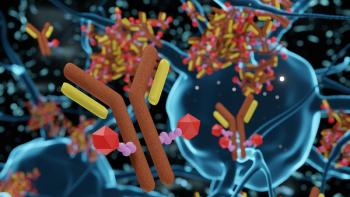
Servier received FDA Breakthrough Therapy designation for emiltatug ledadotin, a B7-H4-targeting antibody-drug conjugate being developed for patients with advanced adenoid cystic carcinoma.
Today’s podcast recaps news centered on FcRn modulation, biomarker-guided therapies, and accelerated ADC pathways, which all highlight precision-focused strategies for high-unmet-need diseases.
Zai Lab received FDA Fast Track designation for zocilurtatug pelitecan, a DLL3-targeting antibody-drug conjugate, advancing development of a potential new treatment option for extrapulmonary neuroendocrine carcinomas.

argenx secured expanded FDA approval for efgartigimod alfa-fcab and efgartigimod alfa and hyaluronidase-qvfc broadening access to all adult patients with generalized myasthenia gravis regardless of antibody status.
Today’s BioPharm Brief covers next-generation immunotherapy, scalable peptide manufacturing, and Johnson & Johnson’s dual-pathway approach to inflammatory bowel disease treatment.

Harbour BioMed has received FDA IND clearance to begin a Phase I trial of its B7H4xCD3 bispecific antibody HBM7004 for advanced solid tumors, advancing its pipeline of T cell–engaging cancer immunotherapies.
Johnson & Johnson reported Phase 2b results for its investigational dual-pathway co-antibody JNJ-4804, showing improved clinical remission and endoscopic outcomes in patients with refractory inflammatory bowel disease.

Merck scientists have published a new large-scale biocatalytic manufacturing approach for enlicitide decanoate, an investigational oral PCSK9 inhibitor, potentially advancing scalable production of macrocyclic peptide therapeutics for cardiovascular disease.
Today’s BioPharm Brief covers promising AML remission data from Aptevo, encouraging Duchenne muscular dystrophy trial results from Entrada Therapeutics, and a new GSK licensing deal expanding cardiometabolic RNA therapy development.