


Conference Coverage
Latest
Sep 02, 2026 | News
FAQ: Stability Testing for Complex Biologics
Ultragenyx Publishes 96-Week GENGLYCOS Gene Therapy Data for Glycogen Storage Disease
Sep 02, 2026

ArsenalBio Sheds Most of Staff, Pivots Entirely to In Vivo CAR T
Sep 02, 2026

NewBiologix and Synastra Partner on Stable AAV Manufacturing for Duchenne Gene Therapy
Sep 02, 2026

Teva's TEV '408 Meets Primary Endpoint in Phase 2a Celiac Disease Trial
Sep 02, 2026




Advertisement
Shorts
1:08
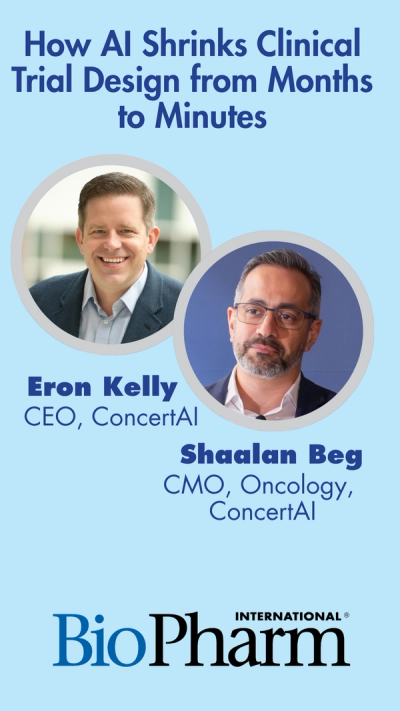
How AI Shrinks Clinical Trial Design from Months to Minutes
5 days ago
by
Emily Schoenthaler(+2 more)
0:42
Can Vaccines Overcome Cancer Immune Suppression?
6 days ago
by
Feliza Mirasol(+2 more)

0:35
The Manufacturing Challenge: Scaling Personalized Cancer Treatment
13 days ago
by
Feliza Mirasol(+2 more)
0:40
The Billion-Dollar Secret to a Successful Product Launch
13 days ago
by
Kirsten Detrick(+1 more)
0:43
How AI is Revolutionizing Clinical Trial Patient Matching
14 days ago
by
Eron Kelly(+2 more)

1:02
The Future of AI and Predictive Manufacturing in Pharma
14 days ago
by
Emily Schoenthaler(+1 more)

0:42
How Cancer Vaccines Create a Lifelong Immune 'Police Force'
15 days ago
by
Feliza Mirasol(+2 more)

0:51
Why Cancer Vaccines are the Future of Immunotherapy
20 days ago
by
Feliza Mirasol(+2 more)

0:34
How Nanophysics is Disrupting Modern Medicine
20 days ago
by
Laurent Levy(+1 more)
0:46
Confronting Major Challenges Before We Can Cure Type 1 Diabetes_pt.4
22 days ago
by
Feliza Mirasol(+1 more)
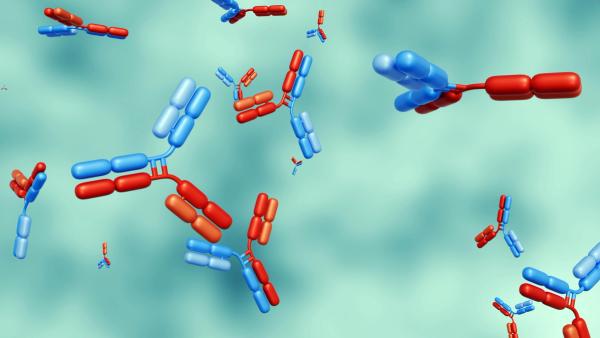
Analytics for Bispecific Antibody Product Release
Planning the analytical strategy for product release should be started as early as possible to ensure product quality and regulatory success.
FAQ: What You Need to Know About Analytical Method Validation
We answer readers’ top questions on limit of blank, limit of detection, limit of quantitation, acceptance criteria, and equivalence testing in analytical method validation.

Digital Standards Aim to Modernize Quality Assurance Without Compromising Confidence
As quality control labs move toward more connected, data-driven operations, digital technologies must be adopted in a way that upholds patient safety.

What FDA's AI Warning Letter Tells Us About GMP Accountability
An FDA warning letter to Purolea Cosmetics Lab shows that AI-assisted drafting can support documentation work only when the resulting document is subject to quality-system controls.

Expedited Regulatory Pathways for Biologics
This episode of the BioPharm Drug Digest will examine strategic triggers that have thus far won expedited regulatory review for biologics in development.

Videos

Advertisement
All News
Advertisement
Today’s BioPharm Brief covers a new first-line HER2 breast cancer approval in Europe, a $1.5 billion Roche deal, and new survival data for Ziihera in gastroesophageal cancer.

BeOne Medicines and Jazz Pharmaceuticals announced positive topline overall survival results from the second interim analysis of the Phase 3 HERIZON-GEA-01 trial, reinforcing the benefit of Ziihera-containing regimens just days after their FDA approval in first-line HER2-positive gastroesophageal adenocarcinoma.

GSK will begin a phase 3 trial in September 2026 for its investigational mRNA seasonal flu vaccine after phase II data showed stronger immune responses than licensed comparators. The candidate is designed to target both hemagglutinin and neuraminidase, a dual-antigen approach not yet tested in a late-stage mRNA flu trial.

SIM0660's dual CD79a/CD19 targeting aims to deepen B-cell depletion, supporting Roche's up-to-$1.53 billion bet on Simcere Zaiming's TCE platform.

AstraZeneca's Enhertu plus pertuzumab cut progression risk 44%, extending PFS past 3 years as the first new 1st-line HER2+ regimen in 10 years.
Today’s BioPharm Brief looks at a new treatment for essential thrombocythemia, a halted cancer vaccine trial, and updated COVID-19 vaccine approvals ahead of the 2026-2027 season.

Novavax's partners Sanofi and Takeda have received regulatory approvals for an XFG variant-adapted formulation of Nuvaxovid, the company's protein-based, non-mRNA COVID-19 vaccine, across the US, EU, and Japan for the 2026-2027 vaccination season, positioning Novavax to continue earning royalties without maintaining its own commercial infrastructure.
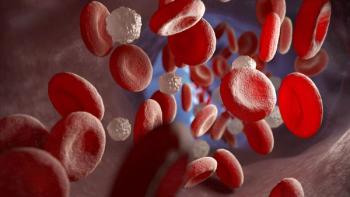
PharmaEssentia's ropeginterferon alfa-2b-njft (Besremi) cut ET response rates to 43% versus 6% for anagrelide, backing a first-in-decades FDA nod for a new rare blood cancer treatment.

LIlly reports that Taltz plus Zepbound helped 30.6% of psoriasis patients clear skin and lose 10%+ weight at 1 year, versus 4.4% on Taltz alone.

BioNTech has terminated the Phase 2 BNT122-01 trial of autogene cevumeran as an adjuvant monotherapy in ctDNA-positive resected colorectal cancer, following a DSMB recommendation citing a numerical imbalance in overall survival, while the drug's separate pancreatic cancer trial continues unaffected.
Advertisement
Today’s BioPharm Brief looks at a new cardiovascular indication for Mounjaro, a billion-dollar ADC deal, and a potential new biosimilar competitor for Kadcyla.

Eron Kelly, CEO of ConcertAI, and Shaalan Beg, MD, chief medical officer, oncology, ConcertAI, discuss how artificial intelligence (AI) can accelerate clinical trial design, patient identification, and site selection while maintaining trust in clinical data.

TSY-110 could become the first biosimilar rival to Roche's ado-trastuzumab emtansine (Kadcyla), a $2.5 billion HER2 breast cancer therapy.

DualityBio Licenses DUPAC ADC Payload Platform to Genentech in Deal Worth Up to More Than $1 Billion
DualityBio's DUP5 payload shrank tumors resistant to topoisomerase inhibitor ADCs, backing its new $1 billion-plus deal with Genentech.

The FDA has approved Lilly's tirzepatide (Mounjaro) to reduce major adverse cardiovascular events in adults with type 2 diabetes at high risk, based on the head-to-head SURPASS-CVOT trial showing non-inferiority to dulaglutide (Trulicity), making it the first GIP/GLP-1 receptor agonist with this indication.
Advertisement
Advertisement