
“Patients needing lifelong IG therapy for PID experience a significant burden of care. Improving the administration process can diminish the burden of care by substantively impacting the treatment experience.”
News|Articles|May 4, 2026
Takeda’s TAK-881 Shows Comparable Efficacy in PID Trial
Author(s)Feliza Mirasol
Listen
0:00 / 0:00
Key Takeaways
- Pharmacokinetic equivalence to Hyqvia was demonstrated via AUC₀–τ,ss geometric mean ratio 99.67% (90% CI, 95.10%–104.46%), supporting similar IgG exposure and expected immune protection.
- Reduced infusion volume versus Hyqvia could translate into shorter administrations, fewer infusion sites, and greater scheduling flexibility, addressing key adherence and quality-of-life constraints in lifelong IG replacement.
According to phase 2/3 trial data, Takeda’s TAK-881 demonstrates reduced infusion volume and shorter administration time while maintaining protective IgG levels in primary immunodeficiency patients.
Advertisement
Takeda has reported positive topline results from a pivotal phase 2/3 clinical trial evaluating TAK-881 [immune globulin subcutaneous (human), 20% solution (SCIG 20%) with recombinant human hyaluronidase], an i
PID encompass a group of more than 550 rare, chronic disorders characterized by impaired immune function, often requiring lifelong IG replacement therapy to prevent infections. Although current therapies are effective in maintaining immune protection, they are frequently associated with logistical challenges, including prolonged infusion times and high
How does TAK-881 compare to existing IG therapies?
The pivotal phase 2/3 clinical trial (TAK-881-3001) met its primary endpoint, demonstrating pharmacokinetic comparability between TAK-881 and immune globulin infusion (human) 10% with recombinant human hyaluronidase (Hyqvia), an established facilitated subcutaneous IG therapy from Takeda. Specifically, the study showed equivalent IgG exposure between the two treatments, reflected by a geometric mean ratio of 99.67% (90% CI: 95.10%–104.46%) for the areas under the concentration-time profiles over one dosing interval at steady state (AUC₀–τ,ss), which indicates that TAK-881 can deliver similar levels of immune protection.1
“These [p]hase 2/3 results showed the pharmacokinetic profile of TAK-881 was comparable to [Hyqvia] … while offering the potential advantages of fewer injection sites, a flexible treatment schedule and shorter infusion times,” said
What advantages could reduced infusion burden bring to patients?
A key differentiator highlighted in the trial is TAK-881’s potential to deliver the required IG dose in approximately half the infusion volume compared with Hyqvia, which may translate into shorter administration times and fewer infusion sites, according to the company.
For patients requiring lifelong IG therapy, such improvements could meaningfully affect quality of life and treatment adherence. Current IG therapies, while effective, often require frequent or lengthy infusions that can disrupt daily activities and impose logistical challenges on patients and caregivers, Takeda stated in its release.
“Patients needing lifelong IG therapy for PID experience a significant burden of care,” said
What are the broader implications for immunology drug development?
TAK-881 is designed to enhance absorption and enable administration of larger volumes at a single infusion site. This formulation approach reflects ongoing efforts in the field to optimize drug delivery mechanisms while maintaining therapeutic efficacy.
The trial enrolled both adult and pediatric patients aged two years and older, supporting potential applicability across a broad patient population. Takeda also indicated that ongoing extension studies will continue to evaluate long-term safety and tolerability.
Looking ahead, the company expects to submit regulatory applications for TAK-881 in the United States, European Union, and Japan in fiscal year 2026. These submissions will determine whether the therapy becomes available as an alternative option within the immunoglobulin treatment landscape, according to the company.
While the topline data suggest that TAK-881 may offer a comparable efficacy profile with potential administration advantages, further analyses and regulatory review will be required to fully assess its role in clinical practice. These results highlight continued innovation within plasma-derived therapies, for which advances in formulation and delivery contribute to improved patient experience without altering underlying mechanisms of action.
References
- Takeda. Takeda announces positive topline results from pivotal phase 2/3 clinical trial of TAK-881 in primary immunodeficiency disease (PID). Published May 4, 2026. Accessed May 4, 2026.
https://www.takeda.com/newsroom/press-releases/2026/tak-881-pid-topline-results/ - Immune Deficiency Foundation. Living with primary immunodeficiency. Accessed May 4, 2026.
https://primaryimmune.org/living-primary-immunodeficiency
Advertisement
Related to this article

Phase 1 HCXT-2001, an oral macrocyclic IL-23R peptide, could be paired with emvistegrast as a daily oral IBD treatment, according to Gilead.
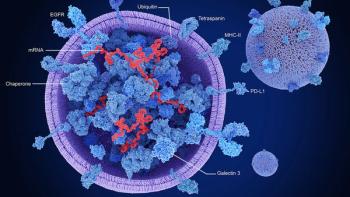
Inhaled EXO-CD24 kept 85% of patients with ARDS free of respiratory failure at day 7 vs 33.3% with placebo in a 90-patient phase 2b trial.

METiS TechBio will apply its AI-driven AiLNP ionizable lipid platform to discover LNPs designed to deliver therapeutics beyond the liver, under a collaboration with Eli Lilly worth up to $1.1 billion in milestones.

FNIH CEO Dr Julie Gerberding will open the October 25-28 meeting with a talk on using AI, adaptive trials, and alternative methods in drug development.

Roche gains exclusive global rights to ZW209, a DLL3×CD3×CD28 trispecific T-cell engager designed for CD28 co-stimulation. A phase 1 study in small cell lung cancer and other neuroendocrine tumors is underway.

Zylidac will test whether optogenetic cell lines that hit 21 g/L in small-scale CHO runs can deliver higher-yield complex biologics at GMP scale.

Revakinagene taroretcel (Encelto), the only FDA-approved MacTel therapy, slowed photoreceptor loss by up to 54.8% vs sham in phase 3 trials.
At PharmSci 360, Insilica CEO Thomas Luechtefeld will present on auditable agentic AI systems and how they are expanding computational toxicology beyond single predictive models.
Advertisement
Advertisement
Trending on BioPharm International
1
Treasury Proposes Adding Biotech to Outbound Investment Restrictions Under COINS Act
2
BioNTech, BMS to Pair Pumitamig With Trodelvy in Phase 3 First-Line TNBC Trial
3
TaiMed’s Anti-CD4 Antibody TMB-365 Reduces HIV Viral Load in Phase 1, Supporting Long-Acting Combination Regimens
4
FDA Grants Accelerated Approval to Ultomiris as First C5 Inhibitor for IgA Nephropathy
5