News|Articles|July 30, 2026

Kelun-Biotech's Sac-TMT Gains NMPA Review for First-Line Advanced TNBC Indication

Listen
0:00 / 0:00

Key Takeaways

  • NMPA accepted a first-line sac-TMT indication for recurrent/metastatic TNBC with PD-L1 CPS <10 or post–PD-1/PD-L1 early-stage recurrence, expanding beyond its current later-line TNBC positioning.
  • OptiTROP-Breast03, a randomized open-label phase 3 trial in systemic-therapy–naïve advanced TNBC, demonstrated statistically significant, clinically meaningful efficacy improvement over investigator’s choice chemotherapy.
SHOW MORE

Kelun-Biotech's sac-TMT has gained NMPA acceptance for a new first-line indication application in advanced triple-negative breast cancer.

Sichuan Kelun-Biotech Biopharmaceutical (Kelun-Biotech) announced that a new indication application for sacituzumab tirumotecan (sac-TMT, also known as SKB264/MK-2870) was accepted for review by the Center for Drug Evaluation of China's National Medical Products Administration (NMPA), for first-line treatment of patients with recurrent or metastatic triple-negative breast cancer (TNBC) who have a programmed dell death ligand 1 (PD-L1) combined positive score (CPS) below 10, or who have recurred after prior programmed cell death protein 1 (PD-1)/PD-L1 inhibitor therapy in the early stage. The decision marks the 6th indication application accepted by the NMPA for sac-TMT.1

Key facts

  • Sixth sac-TMT indication application accepted by NMPA
  • Indication: first-line, PD-L1 CPS <10 or post-PD-1/PD-L1 recurrence, TNBC
  • Based on phase 3 OptiTROP-Breast03 vs. chemotherapy
  • Included in NMPA priority review pathway
  • Four sac-TMT indications already approved/marketed in China
  • Licensed to Merck (MSD) outside Greater China since 2022

"For patients with PD-L1-negative advanced TNBC, the efficacy of traditional chemotherapy is limited, and there is an urgent clinical need for more effective and safer first-line treatment options," said Michael Ge, MD, CEO of Kelun-Biotech, in a company press release.1

What data support the application?

The acceptance is based on positive results from the randomized, open-label, multicenter phase 3 OptiTROP-Breast03 study, which evaluated sac-TMT against investigator's choice of chemotherapy in patients with unresectable recurrent or metastatic TNBC who had not received prior systemic therapy for advanced disease. The enrolled population included patients with PD-L1 CPS below 10 as well as those who had recurred after prior PD-1/PD-L1 inhibitor therapy in the early stage. The study showed statistically significant and clinically meaningful improvement in the key efficacy endpoint compared with chemotherapy.1

Sac-TMT previously received breakthrough therapy designation from the NMPA for first-line treatment of PD-L1-negative TNBC. This new application has also been included in the NMPA's priority review and approval process, representing the 6th sac-TMT application to enter that pathway.1


How does sac-TMT work?

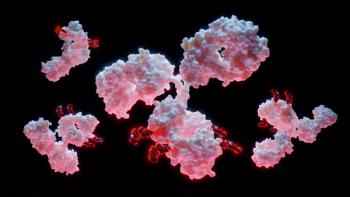
Sac-TMT is a TROP2-directed antibody-drug conjugate (ADC) built on a bifunctional linker with a drug-to-antibody ratio of 7.4.1 The anti-TROP2 monoclonal antibody sacituzumab binds tumor cells expressing TROP2, is endocytosed, and releases its payload, KL610023, a topoisomerase I inhibitor that induces DNA damage leading to cell-cycle arrest and apoptosis.1 Because KL610023 is membrane-permeable, it can also diffuse into the tumor microenvironment and act on neighboring tumor cells independent of TROP2 expression, a mechanism known as a bystander effect.1

What is the broader regulatory and commercial picture for sac-TMT?

Four sac-TMT indications are already approved and marketed in China, spanning TNBC, epidermal growth factor receptor-mutant non-small cell lung cancer (NSCLC), and HR-positive/HER2-negative breast cancer. Two of those indications are included in China's National Reimbursement Drug List.1

Sac-TMT has received 6 breakthrough therapy designations from the NMPA and is described as the first TROP2 ADC approved for marketing in lung cancer globally.1 In May 2022, Kelun-Biotech licensed exclusive rights to develop, manufacture, and commercialize sac-TMT outside Greater China to Merck & Co., known as MSD outside the United States and Canada.1 Kelun-Biotech has initiated 9 registrational clinical studies of sac-TMT in China, while MSD has initiated 17 ongoing global phase 3 studies evaluating sac-TMT as monotherapy or in combination with pembrolizumab or other anticancer agents across multiple tumor types.1

What does this indication mean for TNBC treatment more broadly?

TNBC lacks the estrogen, progesterone, and HER2 receptors that guide targeted therapy in other breast cancer subtypes,2 leaving chemotherapy as the primary first-line option for many patients and creating demand for ADC-based approaches that can improve on chemotherapy's efficacy and tolerability profile. A first-line indication in the PD-L1 CPS below 10 population would extend sac-TMT's use to patients earlier in the treatment course than its currently approved second-line-or-later TNBC indication, potentially reaching a larger share of the TNBC population that does not qualify for existing immunotherapy-based first-line regimens.

References

  1. Sichuan Kelun-Biotech Biopharmaceutical. NMPA accepts new indication application for sacituzumab tirumotecan (sac-TMT) as first-line treatment for advanced TNBC. News release. PR Newswire; July 30, 2026. Accessed July 30, 2026. https://www.prnewswire.com/news-releases/nmpa-accepts-new-indication-application-for-sacituzumab-tirumotecan-sac-tmt-as-first-line-treatment-for-advanced-tnbc-302838861.html
  2. National Breast Cancer Foundation. Triple-negative breast cancer. Updated June 11, 2026. Accessed July 30, 2026. https://www.nationalbreastcancer.org/triple-negative-breast-cancer/