

“We can evolve how the medicine is delivered to potentially reach even more patients through a more convenient subcutaneous option.”
News|Articles|April 8, 2026
Subcutaneous Tepezza Demonstrates Phase III Efficacy in Thyroid Eye Disease
Author(s)Emily Schoenthaler
Listen
0:00 / 0:00
Key Takeaways
- Subcutaneous teprotumumab-trbw achieved a 76.7% proptosis response at week 24 versus 19.6% with placebo, with a mean proptosis change of –3.17 mm versus –0.80 mm.
- Secondary endpoints showed statistically significant gains in overall response, Clinical Activity Score, and diplopia, alongside improved Graves’ Ophthalmopathy Quality of Life appearance subscale scores.
Subcutaneous Tepezza shows Phase 3 efficacy in thyroid eye disease, achieving 77% response, significant proptosis reduction, and improved patient outcomes.
Advertisement
A subcutaneous option may expand access and convenience while maintaining efficacy in Thyroid Eye Disease treatment. Amgen announced positive topline results from a
The randomized, placebo-controlled study met its primary endpoint, with 76.7% of patients receiving SC teprotumumab-trbw achieving a proptosis response, defined as a ≥2 mm reduction in eye bulging, at week 24, compared with 19.6% in the placebo arm (p<0.0001). The therapy also met a key secondary endpoint, showing a mean proptosis reduction of –3.17 mm versus –0.80 mm with placebo (p<0.0001).
“These results extend and support the best-in-class efficacy of Tepezza for people living with thyroid eye disease, now with subcutaneous administration delivering IV [intravenous]-level efficacy,” said Jay Bradner, executive vice president of research and development at Amgen, in a company press release.1 “We can evolve how the medicine is delivered to potentially reach even more patients through a more convenient subcutaneous option.”
Beyond the primary endpoint, the trial demonstrated statistically significant improvements across multiple secondary measures, including overall response rate, Clinical Activity Score, and diplopia outcomes. Patients also reported improved quality of life based on the Graves’ Ophthalmopathy Quality of Life appearance subscale. A numerical trend favoring teprotumumab-trbw was observed in visual functioning scores, though this did not reach statistical significance.
What is the significance of subcutaneous delivery in TED?
TED is a rare, progressive autoimmune condition that can lead to proptosis, double vision, pain, and potential vision loss. It is commonly associated with Graves' disease and is driven in part by activation of insulin-like growth factor-1 receptor (IGF-1R) signaling pathways.
Historically, teprotumumab-trbw has been administered intravenously and remains the only approved therapy for TED. While effective, IV administration can present
“Expanding administration options through subcutaneous delivery opens the possibility of a more accessible experience for patients,” said
Safety findings from the trial were consistent with the known profile of intravenous teprotumumab-trbw. The most common adverse events included muscle spasms, tinnitus, nausea, diarrhea, and weight decrease. Injection site reactions were generally mild to moderate and did not lead to treatment discontinuation.
What are the broader implications for treatment strategies?
The phase 3 results highlight a growing trend in biopharmaceutical development that involves optimizing not only therapeutic efficacy but also mode of delivery to improve patient experience and expand real-world use. SC formulations, particularly those delivered via
For Amgen, these findings support the clinical value of targeting IGF-1R in TED and may encourage future regulatory discussions aimed at broadening administration options for teprotumumab-trbw. If approved, the SC formulation could further establish the biologic as a foundational therapy in TED while improving treatment accessibility.
More broadly, the study underscores continued innovation in rare autoimmune diseases, for which advances in both mechanism-driven therapies and patient-centric delivery approaches are reshaping standards of care.
References
1. Amgen. Amgen announces positive topline phase 3 results for subcutaneous Tepezza in adults living with moderate-to-severe active thyroid disease. Published April 6, 2026. Accessed April 7, 2026.
2. Perros P, Hegedüs, L. Teprotumumab in thyroid eye disease: wonder drug or great divider? Eur Thyroid J. 2023 Jun 12;12(4):e230043. doi:
3. James D. Phase III IRAKLIA and Phase II IZALCO trials support sarclisa on-body delivery for relapsed/refractory multiple myeloma. Applied Clinical Trials. June 6, 2025.
Advertisement
Related to this article

Odyssey's 146-patient phase 2a trial will pair OD-001 with vedolizumab, targeting both innate and adaptive immune drivers of ulcerative colitis.

Caribou is halting vispa-cel and CB-011, allogeneic CAR-T therapies that showed up to 92% response rates, citing a difficult financing environment.

The FDA expanded ImmunityBio’s Anktiva plus BCG to include patients with BCG-unresponsive non-muscle invasive bladder cancer with papillary-only tumors, extrapolating efficacy from the QUILT-3.032 carcinoma in situ cohort.

The FDA expanded Fast Track status for invikafusp alfa, Marengo Therapeutics’ TCR Vβ-targeting antibody-IL-2 fusion protein, from TMB-H colorectal cancer to TMB-H solid tumors regardless of tissue of origin.
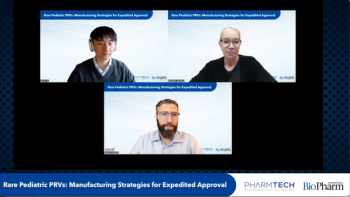
Nathan Edwards of Arya Consulting moderates a discussion with Elisabeth Gardiner of Tevard Biosciences and Donny Xu of the RTW Institute about rare disease treatment development and navigating the FDA’s Rare Pediatric Disease Priority Review Voucher Program.

Mirikizumab (Omvoh) achieved comprehensive disease control in 27.7% of UC patients and deep remission in 20.4% with Crohn disease at 1 year.

As ArsenalBio, TScan, Bristol Myers Squibb, and others abandon ex vivo programs for in vivo engineering, early clinical data and platform differences point to both the promise and the unresolved safety, manufacturing, and regulatory questions of generating CAR-T cells inside the body.

BNT113 plus pembrolizumab failed to significantly extend progression-free survival in a 285-patient HPV16-positive head and neck cancer trial.
Advertisement
Advertisement
Trending on BioPharm International
1
FDA Accepts BLA for Formycon and Zydus’ FYB206, the First Publicly Announced Keytruda Biosimilar Under Review
2
FDA Rare Disease Framework Initiative: What It Means for Drug and Biologic Development
3
BioNTech's BNT113 Misses PFS Goal in Head and Neck Cancer Trial
4
Gilead Taps Vir Biotechnology's PRO-XTEN Tech for Solid Tumors
5