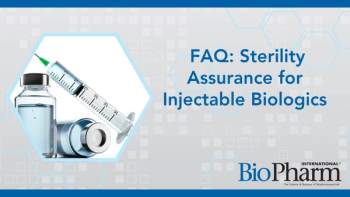
This FAQ explains how aseptic processing, contamination control, and validation protect patients amid sterile injectable failures.
SAFC (St. Louis, MO), a member of the Sigma-Aldrich Group, has announced a $29-million investment to significantly expand its drug substance capabilities in high-potency biologics at the Sigma-Aldrich facility in Jerusalem, Israel
SAFC (St. Louis, MO), a member of the Sigma-Aldrich Group, has announced a $29-million investment to significantly expand its drug substance capabilities in high-potency biologics at the Sigma-Aldrich facility in Jerusalem, Israel. The site enhancement will enable SAFC Pharma to provide process development and cGMP manufacturing to customers requiring large-scale, high-potency, toxic, or hazardous large molecule high potent active pharmaceutical ingredients (HPAPI).
The expansion, scheduled for completion in the first quarter of 2009, will focus production on secondary metabolites, cytotoxins, and large-molecule proteins. A 30,000-sq. ft. area of the new facility has been designed to be Biosafety Level 2 compliant, enabling manipulation of human pathogens. The new capabilities will expand SAFC Pharma’s HPAPI offering to include fermentation-derived HPAPI manufacturing, complementing the multistep organic synthesis flagship facility at its Madison, WI, location.