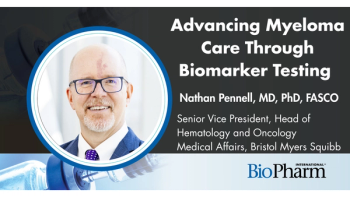
BMS's Dr Nathan Pennell outlines how biomarker testing barriers and trial diversity affect patient access to targeted oncology drugs.
Roche’s new test is the first available immunoassay that allows for simultaneous, independent determination of the hepatitis C virus antigen and antibody status.
Roche launched its Elecsys HCV Duo immunoassay (Elecsys) in July 2022, which is the first available immunoassay that allows for the simultaneous, independent determination of the hepatitis C virus (HCV) antigen and antibody status from a single human or serum sample, according to the company in a July 18, 2022 press release. This assay allows for the detection of the virus in the early stages of infection, or when a patient is recovering from the virus, or when a patient is showing signs of a chronic infection.
Elecsys uses dual detection of HCV core antigen and antibodies. According to the release, this allows it to enable significantly earlier diagnosis of active infection relative to antibody-only assays, as core antigen appears early in an infection and is a marker of ongoing viral replication. Earlier identification can lead to earlier intervention, less burden on the healthcare system, and better outcomes for patients.
“With improved hepatitis screening, healthcare systems have the opportunity to eliminate the disease through improved prevention, testing, and treatment services,'' said Thomas Schinecker, CEO, Roche Diagnostics, in the press release. “The addition of the Elecsys HCV Duo assay to our HCV testing portfolio can help in the fight to eliminate the hepatitis C virus. The launch of this innovative dual antigen and antibody diagnostic test underlines our commitment to support clinicians and their patients in reducing the impact of infectious diseases, where it’s needed most.”
According to the release, 58 million people were living with chronic HCV infection in 2019, but only 21% were aware of it. Additionally, 1.29 million people died of hepatitis C-related causes, such as cirrhosis or liver cancer. No vaccine is currently available for HCV, but effective treatment with antivirals can lead to a cure in 98% of patients.
Source:
about 4 years ago
Animal Models Are Seeing Upgrades to Tackle Complex Molecule Testingabout 4 years ago
La Jolla Institute for Immunology Acquires Carterra LSA Platformabout 4 years ago
Bio-Rad Expands Portfolio of Anti-Idiotypic Antibodiesabout 4 years ago
Discovery Life Sciences Acquires AllCellsover 4 years ago
PerkinElmer Introduces New Cytometry Management Serviceover 4 years ago
Merck Digital Sciences Studio Supports Early-Stage Startups