

Feature|Videos|December 2, 2024
Rare disease populations as pivotal proving grounds
Repairing nucleotide abnormalities for rare disease populations as pivotal proving grounds for transformative therapies.
Advertisement
Episodes in this series
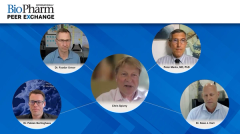
In this exclusive BioPharm International Peer Exchange video series, Chris Spivey, Director of Industry Relations and Strategic Partnerships, talks with industry experts about various aspects of Cell and Gene Therapies with a focus on reducing manufacturing bottlenecks by creating smaller automated footprint installations, better integrating analytics advances including harnessing artificial intelligence, and above all lowering barriers to access by lowering costs while improving timelines.
Advertisement
Related to this article

Rohit Tripathi, vice president of industry strategy, consumer packaged goods, and manufacturing at RELEX Solutions, explains where cold-chain planning still breaks down and why biopharma supply chain leaders should use AI to act on data sooner, with humans making the final call.

Zylidac will test whether optogenetic cell lines that hit 21 g/L in small-scale CHO runs can deliver higher-yield complex biologics at GMP scale.

Revakinagene taroretcel (Encelto), the only FDA-approved MacTel therapy, slowed photoreceptor loss by up to 54.8% vs sham in phase 3 trials.

BioNTech and Bristol Myers Squibb will replace chemotherapy with Gilead’s TROP2-directed ADC sacituzumab govitecan in the Phase 3 ROSETTA Breast-01 trial of PD-L1×VEGF-A bispecific pumitamig in PD-L1-low or -negative TNBC.

Alexion’s ravulizumab won accelerated approval to reduce proteinuria in adults with IgA nephropathy after the Phase 3 I CAN trial showed a 43.4% placebo-adjusted reduction at Week 34.
Sanofi breaks ground on an EU-backed insulin API plant in Frankfurt, Summit and ECOG-ACRIN launch a phase 2/3 trial of ivonescimab in first-line biliary tract cancer, and TaiMed’s anti-CD4 antibody TMB-365 lowers HIV viral load in phase 1.
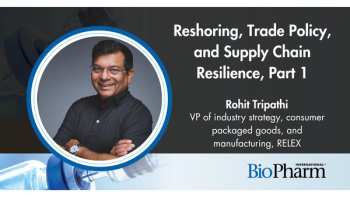
Rohit Tripathi, vice president of industry strategy, consumer packaged goods, and manufacturing at RELEX Solutions, explains what is driving biopharma reshoring, how USMCA uncertainty complicates sourcing for biologics, and where cold-chain visibility still breaks down.
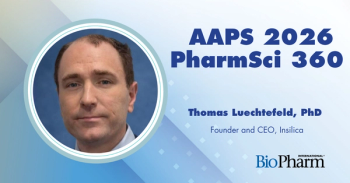
At PharmSci 360, Insilica CEO Thomas Luechtefeld will present on auditable agentic AI systems and how they are expanding computational toxicology beyond single predictive models.
Advertisement
Advertisement
Trending on BioPharm International
1
Sanofi Begins Construction of EU-Backed Insulin Plant in Frankfurt
2
Akeso's Ivonescimab Enters Phase 2/3 Biliary Tract Cancer Trial in US
3
TaiMed’s Anti-CD4 Antibody TMB-365 Reduces HIV Viral Load in Phase 1, Supporting Long-Acting Combination Regimens
4
Nano24's Inhaled EXO-CD24 Cuts ARDS Mortality in Phase 2b Trial
5