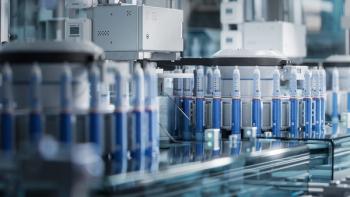
Backed by €400 million (US$449 million) in EU-cleared German aid, the new Frankfurt facility is designed to secure insulin supply for people with diabetes from 2032.
In 2026, AI and automation are anticipated to solve talent gaps and economic shifts to drive resilient drug discovery and manufacturing.
Key discussions expected to continue in biopharma from 2025 into 2026 center around shifting trends, such as reimagining
The biopharmaceutical industry is currently navigating a period of profound transformation, characterized by a transition from the urgent demands of the post-pandemic era to a more calculated, technology-driven future (1). Despite various
As the industry moves toward 2026, however, it faces a complex intersection of geopolitical headwinds, a chronic talent shortage, and the rapid integration of AI into both R&D and manufacturing, Langer says. Understanding these trends is critical for stakeholders to maintain competitive advantage in a market where
The economic climate for 2026 is
"The inability to predict and the requirement for more time, and the inability to create the flexibility to adjust, means people are just putting on [the] brakes," he observes. This uncertainty is compounded by potential legal shifts, such as a possible overturn of specific tariffs by the US Supreme Court (3), which forces companies to constantly re-evaluate their global supply chain strategies.
Despite this investment caution, the biopharma industry remains fundamentally healthy, Langer notes, saying, "the industry today is…very robust and strong based on what’s been experienced over the last number of decades."
Historically, such economic slowdowns do not indicate a permanent retreat but rather create pent-up demand that typically leads to accelerated growth once the political or economic climate stabilizes, Langer explains. This information is vital for the industry because it signals that although short-term capital expenditures may slow, the underlying requirement for innovation and capacity continues to build, Langer emphasizes.
As biopharmaceutical products become more complex—particularly with the rise of recombinant proteins and advanced modalities—traditional manual processes are becoming a bottleneck (4). AI is rapidly moving from an experimental phase to being woven into the fabric of discovery, development, and commercial execution (5).
In the realm of
Langer emphasizes that the most significant impact of AI in the near term may be in the "arcane" but essential world of documentation and quality management.
"Regulatory and documentation automation is most definitely on the books," Langer states, adding that AI can simplify labor-intensive tasks such as standard operating procedure (SOP) writing, deviation categorization, and SOP version tracking. The industry must determine whether it has the staff capable of "moving from, say, the manual batch release documentation to automation of batch release documentation," Langer adds.
This shift is essential for reducing human error and accelerating the release of critical therapies to market. Perhaps the most significant constraint on biopharmaceutical capacity is the ongoing difficulty in hiring and retaining skilled staff.
This is not a new problem, but it is intensifying as the industry grows faster than the workforce can be developed. Langer reports that "36% of the facilities out there are unable to hire their process development positions," and "28% can't hire the downstream production staff."
This problem is particularly acute in specialized areas such as cell and gene therapy and viral vector manufacturing, in which the required level of expertise often does not exist in the general workforce. Citing data from BioPlan Associates, Langer further highlights that, with only 28% of the global manufacturing staff residing in the United States, domestic policy and visa challenges are hindering access to the 72% of the workforce located internationally.
"Hiring difficulties are creating capacity constraints across the board and across regions," he warns.
To address this workforce skills gap, life sciences strategy consultant
By focusing on where humans create the most value—such as judgment, creativity, and relationship building—technology can be positioned as an enabler rather than a threat, she states. MacLennan also promotes a "skills-based model" in which the focus is on portable capabilities rather than a traditional curriculum vitae (CV).
"What you're looking for is capability, not for a CV...it has less impact than what you're capable of achieving," MacLennan explains.
In 2026, the definition of winning in biopharma is shifting from regulatory approval to market access, MacLennan says. Patent cliffs and increasing pressure from biosimilars are intensifying margin pressures, making what she calls "defendable differentiation" a requirement for any R&D investment. MacLennan notes that companies must focus on assets that are first-to-market or best-in-class, often utilizing biomarkers for selective populations.
A critical component of this strategy is early engagement with payers, MacLennan adds. She explains that companies historically waited until they had regulatory approval to address market access; however, current trends show that cross-functional teams must build payer thinking into their strategy as early as Phase II development.
MacLennan highlights this forward movement, saying, "Winning is about getting access, so it’s a shift."
Furthermore, life cycle management now requires a 10-year horizon (8). Instead of waiting for a product to enter the market to think about its future, companies are now planning for new formulations, delivery systems, and combination therapies a decade in advance, according to MacLennan. She adds that long-term planning is essential for maintaining the value of an asset throughout its entire lifecycle in a highly competitive environment.
In looking ahead into 2026, MacLennan identifies two major frontiers: oncology and cardio-metabolic health. In oncology, for example, the exploration of novel modalities like bispecific antibodies is yielding remarkable data, she says. She points out that "even with bispecifics at the moment in cancer...the data that we are seeing are significantly different in terms of progression-free survival." These new modalities are proving more effective at targeting tumors and fighting treatment resistance (9).
Meanwhile, the cardio-metabolic space, which covers diabetes, heart health, and blood pressure, is evolving, MacLennan observes. "This is probably the first space which is really going to start acting like a consumer-driven market," observes MacLennan, noting that daily data from apps and wearable devices will allow for faster innovation and a more continuous model of care (10).
Regulatory bodies like FDA are also driving innovation by shaping how AI is used in manufacturing and encouraging a move away from animal models toward more
As Langer and MacLennan demonstrate, the biopharma industry in 2026 is at a crossroads where manual tradition meets digital necessity. The reliance on manual batch release and traditional hiring models is no longer sustainable given the 36% vacancy rate in process development and the increasing complexity of new biologic modalities, they say.
From their perspective, the path forward requires a robust embrace of automation—not just in the production line, but in the analytical and documentation processes that ensure quality and compliance. As Langer observes, the biopharma industry has historically met its needs through innovation, and the current focus on continuous upstream automation reflects this.
"The industry is providing sufficient innovation necessary in these areas to meet the needs of the industry right now," he notes regarding the maturation of single-use technologies. By integrating AI-guided discovery, automated analytical testing, and a human-centric talent system, the industry can overcome current economic and workforce constraints to deliver the next generation of therapies.
Feliza Mirasol is the science editor for BioPharm International®.
9 months ago
Preparing Biopharma for 2026 and Beyond