

"Collaboration may cover up to 10 proposed monoclonal antibody (mAb) and/or antibody-drug conjugate (ADC) biosimilar assets, with the majority of programs at early development stages."¹
News|Events|August 17, 2026
Henlius and Sandoz Expand Biosimilars Collaboration to Cover Up to 10 mAb and ADC Assets
Author(s)Emily Schoenthaler
Listen
0:00 / 0:00
Shanghai Henlius Biotech has entered a strategic collaboration with Sandoz covering up to 10 proposed monoclonal antibody and antibody-drug conjugate biosimilar assets, deepening the companies' existing oncology biosimilars partnership with initial deals worth up to $322 million.
Advertisement
Shanghai Henlius Biotech has entered into a strategic collaboration with Sandoz covering up to 10 proposed monoclonal antibody and/or antibody-drug conjugate biosimilar products or components developed by Henlius.¹ The parties have signed collaboration terms for an initial three agreed products, with an option for one additional asset; most of the partnered products remain in early stages of development.¹ Under the agreement, Henlius grants Sandoz exclusive rights for registration and commercialization outside China for the covered products, while Henlius will lead development, manufacturing, and supply through its integrated biologics platform.¹
What assets are included, and what is this deal worth?
The initial assets covered under the agreement include HLX05-N, a proposed cetuximab biosimilar; HLX16, a proposed evolocumab biosimilar; and a proposed belimumab biosimilar, with Sandoz also holding an option for HLXTE-HAase1001, a recombinant human hyaluronidase.¹ Sandoz will pay Henlius an upfront payment, milestone payments, and a non-refundable option fee totaling up to $322 million, with up to $100.5 million in total invoiced amount expected for Henlius in 2026 based on the initial arrangements.¹ For HLX05-N, exclusive collaboration territory covers the US, Canada, the EU and additional European countries including the UK and Switzerland, Japan, Australia, and New Zealand, with semi-exclusive rights in parts of Asia and other markets; HLX16 and the belimumab biosimilar carry exclusive rights across all markets worldwide outside China.¹
How does this build on the companies' existing partnership?
This agreement deepens an oncology biosimilars collaboration the two companies established in April 2025, when they entered an exclusive commercialization partnership for HLX13, Henlius' proposed ipilimumab biosimilar, across 46 countries and regions including Europe and the US.¹ The expanded scope reflects a broader industry trend: high-value
What is the strategic significance for each company?
Sandoz brings a diversified portfolio of approximately 1,300 medicines, a presence in around 100 countries, and reach to more than 1 billion patients worldwide, along with an established track record in product registration, market access, and commercialization that the companies said will help incorporate ex-China market insights into product development and registration strategies from an early stage.¹ For Henlius, the collaboration is described as an important part of the company's globalization strategy, demonstrating its capabilities in biologics research and development, quality systems, international registration, large-scale manufacturing, and global supply.¹ Henlius has said it will continue combining independent advancement with strategic partnerships, based on the market potential and competitive landscape of individual products, to expand global commercialization of its biologics pipeline.¹
What is Henlius' broader position in oncology biosimilars?
Henlius has established regulatory approvals for 10 products across more than 60 countries and regions, including four products approved by the FDA and five approved by the European Commission.¹ The company has separately partnered with Organon on HLX11, a pertuzumab biosimilar that received both FDA approval and European Commission marketing authorization earlier in 2026.³ In an earlier statement about that partnership, Ping Cao, chief business development officer and senior vice president at Henlius, said, "This EU approval further expands our growing portfolio of approved biosimilar medicines in markets around the world and is a testament to our strong collaboration with Organon."³
References
Henlius and Sandoz enter strategic collaboration to unlock global value of biosimilars platform . News release. Henlius; August 17, 2026. Accessed August 17, 2026.Soaring off the patent cliff: preparing for the next wave of oncology biosimilars . Pharmacy Times. December 2025. Accessed August 17, 2026.Henlius and Organon gain EC approval for pertuzumab biosimilar . BioPharm International. May 16, 2026. Accessed August 17, 2026.
Advertisement
Related to this article
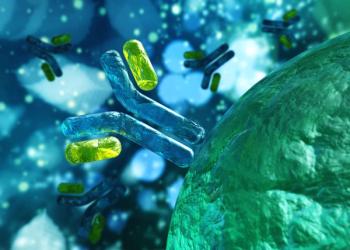
Roche will take ex-China development of Hansoh’s two preclinical ADCs and multiple programs against Roche-proposed targets once Hansoh completes global phase 1a trials. The deal includes $400 million upfront and more than $15 billion in potential milestones.
When large pharmaceutical companies deprioritize drug candidates, smaller developers may license or acquire them, but due diligence, deal structure, and trial planning determine whether a program can move forward.

EA2251, the 7th registrational trial of ivonescimab, will test it plus chemotherapy vs pembrolizumab or durvalumab regimens in first-line BTC.

Interim phase 1 data presented at UEG Week 2026 showed Bionyra Pharma’s Fc-engineered anti-TL1A antibody BYN-002 suppressed soluble TL1A with a half-life supporting potential every-3-to-6-month maintenance dosing in IBD.

In the phase 3 SHINE-2 trial, half of pediatric patients who responded to mirikizumab induction were in clinical remission at week 52. Lilly plans to file for a pediatric UC label expansion.

AVT29, a proposed aflibercept biosimilar to Eylea 8 mg, could extend retinal disease treatment intervals to 16 weeks, versus 8 weeks today.
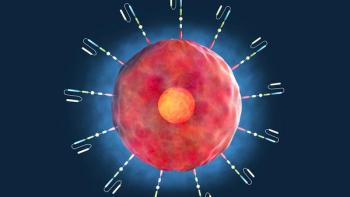
As ArsenalBio, TScan, Bristol Myers Squibb, and others abandon ex vivo programs for in vivo engineering, early clinical data and platform differences point to both the promise and the unresolved safety, manufacturing, and regulatory questions of generating CAR-T cells inside the body.
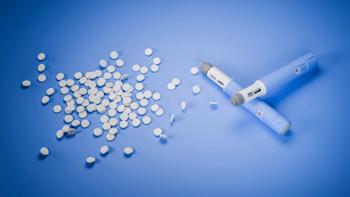
Viking Therapeutics has started two Phase 3 trials of once-daily oral VK2735, a dual GLP-1/GIP receptor agonist, in adults with obesity, with and without type 2 diabetes.
Advertisement
Advertisement
Trending on BioPharm International
1
Nuravax Alzheimer Vaccine AV-1959R Earns FDA Fast Track Designation
2
Nano24's Inhaled EXO-CD24 Cuts ARDS Mortality in Phase 2b Trial
3
Akeso's Ivonescimab Enters Phase 2/3 Biliary Tract Cancer Trial in US
4
Geneos Launches Phase 2 IMPACT31 Trial of Personalized DNA Cancer Vaccine to Prevent Liver Cancer Recurrence
5