Register Now: Engineering LNP's Beyond the Liver for Genetic Medicines
News|Articles|September 17, 2026

Dualitas Partners With Roche on Bispecific Antibody Discovery

Listen
0:00 / 0:00

Key Takeaways

  • DualScreen will evaluate >300,000 bispecific combinations via functional cell-surface screening to uncover synergistic activities and proximity biology mechanisms not accessible through conventional predetermined target-pair approaches.
  • Economics include $36.5 million upfront with additional research, development, and commercial milestones plus tiered royalties, with total deal value potentially reaching $1 billion.
SHOW MORE

Dualitas will screen over 300,000 bispecific combinations for Roche, backing a deal worth up to $1 billion in immunology research.

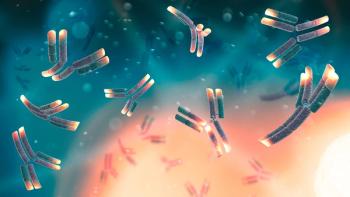
Dualitas Therapeutics has entered a research collaboration and license agreement with Roche to discover and develop novel bispecific antibodies (BsAbs) for immunology and inflammation (I&I) diseases using Dualitas's DualScreen bispecific discovery engine, Dualitas announced September 17, 2026.¹ The company will receive a $36.5 million upfront payment and is eligible for additional research, development, and commercial milestone payments plus tiered royalties. The deal is valued at potentially up to $1 billion.¹

Key facts

  • Companies: Dualitas Therapeutics; Roche
  • Technology: DualScreen bispecific discovery engine (proximity biology)
  • Scope: Functional screening of 300,000+ BsAb combinations
  • Disease area: Immunology and inflammation
  • Deal terms: $36.5 million upfront; up to $1 billion total with milestones and royalties
  • Deal structure: Dualitas discovers; Roche leads all subsequent development/commercialization
  • Company milestone: DTX-102 expected to enter clinic in 2027
  • Geography: US-based (South San Francisco); global collaboration

"We are thrilled to partner with Roche on this first-of-its-kind collaboration to functionally screen and develop novel proximity BsAbs at a scale that was previously unachievable," said Forbes Huang, co-founder, chief operating officer, and chief business officer of Dualitas, in a company press release.¹ The company’s DualScreen discovery engine has established a next-generation BsAb pipeline that will be entering the clinic next year for I&I diseases, according to Huang.

What will the collaboration screen for, and how does DualScreen work?

Under the agreement, Dualitas will use its DualScreen platform to functionally screen more than 300,000 novel bispecific antibody combinations, which the companies describe as one of the largest-scale bispecific discovery efforts to date.¹ Unlike traditional bispecific approaches that focus on pre-determined target pairs for incremental gains, DualScreen functionally screens entire cell surfaces across a vast range of targets and epitopes to identify candidates with synergistic activities that are unattainable with conventional therapeutics, accordig to Dualitas.¹ The discovery engine leverages the company's expertise in proximity biology. Roche will be responsible for all subsequent preclinical development, regulatory, manufacturing, and commercial activities for candidates arising from the collaboration.

What did Roche say about the deal?

"Bispecific antibodies remain central to Roche's portfolio strategy across many disease areas," said Boris L. Zaïtra, head of corporate business development at Roche, in the release.¹ "We are committed to continue pushing the boundaries of scientific innovation in immunology and inflammation diseases that will ultimately benefit patients through external partnerships."

How does this fit into Dualitas's broader pipeline?

"This collaboration with Roche underscores the enormous potential of Dualitas' technologies to identify BsAbs that harness novel proximity mechanisms that may deliver truly differentiated results to patients," said Karim Dabbagh, PhD, CEO and board member of Dualitas, in the release.¹ "Our internal pipeline of proximity engager BsAbs has already demonstrated the ability to drive amplified therapeutic effects that push the boundary of what conventional antibody therapies can achieve."

Dualitas's internal pipeline includes DTX-102, a BsAb pairing an anti-CD28 arm with a proximity engager for rheumatoid arthritis, which is undergoing investigational new drug-enabling studies and is expected to enter the clinic in 2027; DTX-103, targeting FcεRI for allergic diseases including asthma, food allergy, and chronic spontaneous urticaria; and DTX-101, targeting interleukin 2 receptor subunit beta for dermatologic and gastrointestinal autoimmune disease.²,³ In preclinical studies, DTX-102 showed substantially more potent activity and more favorable dosing potential compared with a commercially approved agent.³

What are the limitations?

This is a research and discovery-stage collaboration. No specific bispecific antibody candidates, targets, or development timelines resulting from the partnership were disclosed at the time of the announcement. The deal's full $1 billion value is contingent on research, development, and commercial milestones that are not necessarily guaranteed.

References

  1. Dualitas Therapeutics. Dualitas Therapeutics announces proximity biology research collaboration with Roche to discover and develop novel bispecific antibodies for I&I diseases. Press release. Published September 17, 2026. Accessed September 17, 2026. https://www.dualitastx.com/news/091726/
  2. Dualitas Therapeutics. Dualitas Therapeutics appoints Karim Dabbagh as chief executive officer to advance novel bispecific antibody pipeline toward the clinic. Press release. Published June 8, 2026. Accessed September 17, 2026. https://www.dualitastx.com/news/060826/
  3. Dualitas Therapeutics. DualScreen bispecific discovery engine. Accessed September 17, 2026. https://www.dualitastx.com/#dualscreen


Related to this article

Drug Digest: Expedited Regulatory Pathways for Biologics
Experts Harpreet Singh and Steven Quay discuss FDA expedited regulatory pathways for biologics, including Fast Track, Breakthrough Therapy, RMAT, Real-Time Oncology Review, and the National Priority Voucher Pilot Program, and explain how these mechanisms can accelerate development without lowering evidentiary standards.