

"I really think sponsors need to be engaging early on, beginning with the end in mind." Paz Vellanki, MD, PhD, vice president of clinical development, Precision for Medicine
News|Videos|October 1, 2026
Former FDA Oncology Reviewer Paz Vellanki on Novel Endpoints and Early FDA Engagement Under CDER's ARC Program
Author(s)Paz Vellanki, Emily Schoenthaler
Former FDA oncology reviewer Paz Vellanki, MD, PhD, of Precision for Medicine, discusses how CDER's ARC program supports novel end points such as ctDNA for rare diseases and why sponsors should engage FDA early.
Advertisement
In an interview with BioPharm International®,
How could ctDNA help rare tumor programs that lack validated end points?
Vellanki explains how circulating tumor DNA (ctDNA) could support drug development in rare cancers. "Oftentimes you don't have clinically validated endpoints for rare diseases. Is there a way to get an early look at tumor response using circulating tumor DNA?" she said. "That would be a great way to utilize ctDNA if we can help support drug development there."
The challenge, she notes, is generating enough evidence in small patient populations. One open question is whether data from more common tumor types could be extrapolated to rare diseases. She points to the Rare Disease Endpoint Advancement Pilot Program as a forum where sponsors can discuss novel end points with FDA.
Vellanki sees ARC's updated 5-year roadmap as building on the program's earlier pilots rather than changing course. "I wouldn't say that this is necessarily different than goals that FDA always has. I think they always encourage sponsors to come to FDA, talk with them about their drug development programs," she said.
Her main advice to sponsors is to engage FDA before the end point strategy is locked in. "I think the biggest misstep I was seeing is that the sponsors aren't reaching out to FDA," Vellanki said. She distinguished between an early-phase protocol that FDA deems "safe to proceed" and a trial whose data are meant "to support an approval of a drug or a biologic."
"I really think sponsors need to be engaging early on, beginning with the end in mind," Vellanki said.
About the Speaker
Paz Vellanki, MD, PhD, vice president of clinical development, oncology, Precision for Medicine
Paz Vellanki partners with life sciences companies on clinical development strategy and regulatory planning. Before joining Precision for Medicine, she served as associate director of the Division of Oncology 2 at the FDA where she oversaw drug development and regulatory decisions for therapeutics in lung cancer, head and neck cancer and rare tumors and molecular subsets of cancers.
Advertisement
Related to this article

Rohit Tripathi, vice president of industry strategy, consumer packaged goods, and manufacturing at RELEX Solutions, explains what is driving biopharma reshoring, how USMCA uncertainty complicates sourcing for biologics, and where cold-chain visibility still breaks down.
At PharmSci 360, Insilica CEO Thomas Luechtefeld will present on auditable agentic AI systems and how they are expanding computational toxicology beyond single predictive models.
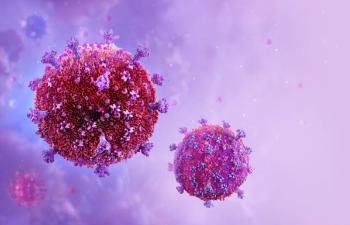
Phase 1 data presented at IDWeek 2026 show TaiMed Biologics’ host-directed antibody TMB-365 lowered HIV-1 RNA without resistance, as the company advances an antibody-only maintenance regimen with TMB-380.

Geneos Therapeutics has initiated a 90-patient randomized phase 2 trial comparing its personalized neoantigen DNA vaccine GNOS-PV02 with active surveillance in patients with high-risk hepatocellular carcinoma after surgery.
Emily Heffernan, director of new process technologies at Arcadis, explains what it takes to design a facility that can produce both lentiviral vectors and mRNA-LNPs, and how in vivo platforms change QC release testing.

METiS TechBio will apply its AI-driven AiLNP ionizable lipid platform to discover LNPs designed to deliver therapeutics beyond the liver, under a collaboration with Eli Lilly worth up to $1.1 billion in milestones.

Interim phase 1 data presented at UEG Week 2026 showed Bionyra Pharma’s Fc-engineered anti-TL1A antibody BYN-002 suppressed soluble TL1A with a half-life supporting potential every-3-to-6-month maintenance dosing in IBD.
BMS's Dr Nathan Pennell outlines how biomarker testing barriers and trial diversity affect patient access to targeted oncology drugs.
Advertisement
Advertisement
Trending on BioPharm International
1
Nuravax Alzheimer Vaccine AV-1959R Earns FDA Fast Track Designation
2
Nano24's Inhaled EXO-CD24 Cuts ARDS Mortality in Phase 2b Trial
3
Geneos Launches Phase 2 IMPACT31 Trial of Personalized DNA Cancer Vaccine to Prevent Liver Cancer Recurrence
4
The BioPharm Brief: Lung Injury Survival, Alzheimer Prevention, and Longer Dosing Intervals
5