

“We believe we have a highly differentiated delivery mechanism, including the ability to access quiescent satellite cells.” - Natarajan Sethuraman, PhD
News|Articles|May 7, 2026
Entrada Reports Early Functional Benefit in Phase 1/2 Duchenne Study of ENTR-601-44
Author(s)Emily Schoenthaler
Listen
0:00 / 0:00
Key Takeaways
- Cohort 1 (6 mg/kg IV ×3 over ~12 weeks) showed only mild–moderate TEAEs, no SAEs/discontinuations, and no clinically meaningful renal signals across eGFR, cystatin C, and magnesium.
- Dystrophin increased 2.36% over a 4.00% baseline and exon 44 skipping rose 2.31% over 2.66%, with low baseline dystrophin in younger participants potentially constraining magnitude.
Entrada Therapeutics reported positive topline Phase 1/2 data for ENTR-601-44 in Duchenne muscular dystrophy, showing favorable safety, increased dystrophin production, and statistically significant functional improvement in treated patients.
Advertisement
Entrada Therapeutics has reported positive topline results from Cohort 1 of its ongoing Phase 1/2 ELEVATE-44-201 study evaluating ENTR-601-44 in patients with Duchenne muscular dystrophy (DMD) amenable to exon 44 skipping. The data demonstrated favorable safety and tolerability alongside early signs of functional improvement and dystrophin restoration, supporting continued dose escalation in the study.1
The clinical-stage biotechnology company said all treatment-emergent adverse events were mild to moderate, with no serious adverse events, treatment discontinuations, or clinically meaningful kidney safety findings observed during the trial. Biomarkers including estimated glomerular filtration rate, Cystatin C, and magnesium remained within normal ranges and comparable to placebo-treated participants.1
Early Functional Signals Observed
The multiple ascending dose portion of the study enrolled ambulatory DMD patients between four and 20 years old with mutations amenable to exon 44 skipping. In Cohort 1, participants received three intravenous doses of 6 mg/kg ENTR-601-44 or placebo over approximately 12 weeks.
According to the company, treated participants demonstrated a 2.36% increase in dystrophin expression over a 4.00% baseline and a 2.31% increase in exon skipping over a 2.66% baseline. Although the absolute dystrophin increase was modest compared with some exon-skipping programs, Entrada emphasized that the cohort consisted of relatively young participants with low baseline dystrophin levels, a factor that can influence treatment response.
Notably, the company also reported statistically significant improvement in Time to Rise (TTR) velocity compared with placebo, a functional endpoint commonly used to assess disease progression in Duchenne. Entrada stated the improvement exceeded the minimal clinically important difference threshold by approximately 3.5-fold.1
“The topline results from Cohort 1 of the ELEVATE-44-201 study are promising,” said Laurent Servais, MD, professor of pediatric neuromuscular diseases at the University of Oxford and principal investigator of the study, in the company announcement. “Individuals with Duchenne are in urgent need of new treatments that can provide functional improvements while also offering a more targeted treatment option.”1
Pharmacokinetic Findings Shape Next Steps
Entrada said the study also revealed lower-than-expected plasma exposure in pediatric DMD participants compared with healthy adult volunteers. The company noted that the pharmacokinetic findings aligned with recently generated juvenile nonhuman primate data, prompting updated exposure modeling for future cohorts.
Based on those findings, Entrada has initiated dosing in Cohort 2 at an increased dose of 12 mg/kg and expects higher plasma exposure and potentially greater dystrophin production. Additional data from Cohort 2 and the open-label extension portion of Cohort 1 are expected by the end of 2026.
Company executives suggested the observed functional improvements may support differentiation within the increasingly competitive exon-skipping landscape.
“We believe we have a highly differentiated delivery mechanism, including the ability to access quiescent satellite cells,” said Natarajan Sethuraman, PhD, president of R&D at Entrada Therapeutics, in the release. “Access to satellite cells enables the repair of existing muscle fibers and importantly, the formation of new healthy fibers.”1
Growing Competition in Exon-Skipping Therapies
DMD remains an active area of neuromuscular drug development, particularly in exon-skipping therapies designed to restore partial dystrophin production. Several approved therapies target exon 51 skipping, while developers continue advancing programs for additional exon targets, including exon 44.
Exon-skipping therapies use antisense oligonucleotides to modify pre-mRNA splicing and enable production of shortened but functional dystrophin protein.2 Longitudinal studies of earlier exon-skipping agents have also highlighted the importance of functional endpoints such as ambulation and motor performance measures when evaluating clinical benefit in Duchenne muscular dystrophy.3
Entrada’s ENTR-601-44 uses the company’s proprietary Endosomal Escape Vehicle technology designed to improve intracellular delivery of oligonucleotide therapies. The therapy received Rare Pediatric Disease Designation from FDA in December 2025.
References
- Entrada Therapeutics. (2026, May 7). Entrada Therapeutics announces positive topline results from Cohort 1 of participants with Duchenne muscular dystrophy treated with ENTR-601-44 in Phase 1/2 ELEVATE-44-201 study. GlobeNewswire.
https://www.globenewswire.com/news-release/2026/05/07/3289797/0/en/entrada-therapeutics-announces-positive-topline-results-from-cohort-1-of-participants-with-duchenne-muscular-dystrophy-treated-with-entr-601-44-in-phase-1-2-elevate-44-201-study.html - Lim, K. R. Q., Maruyama, R., & Yokota, T. (2017 Feb 28). Eteplirsen in the treatment of Duchenne muscular dystrophy. Drug Design, Development and Therapy.
https://doi.org/10.2147/DDDT.S97635 - Mendell, J. R., Goemans, N., Lowes, L. P., Alfano, L. N., Berry, K., Shao, J., ... & Mercuri, E. (2015 Nov 17). Longitudinal effect of eteplirsen versus historical control on ambulation in Duchenne muscular dystrophy. Annals of Neurology.
https://doi.org/10.1002/ana.24555
Advertisement
Related to this article

Artiva Biotherapeutics will present data on AlloNK, an allogeneic, non-genetically modified NK cell therapy given with rituximab, in refractory rheumatoid arthritis, Sjögren disease and systemic sclerosis at ACR Convergence 2026, ahead of a planned phase 3 trial in rheumatoid arthritis.

Novartis has secured an exclusive worldwide license to ABO2203, Abogen's investigational mRNA-encoded CD19xCD3 T-cell engager designed to produce the bispecific inside the body to reset B cells in autoimmune disease. The agreement also includes options on other programs built on Abogen's RNA platform.
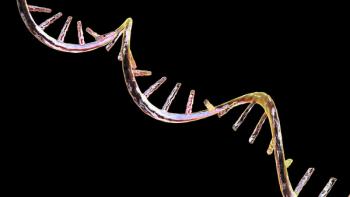
Following an FDA meeting, Wave Life Sciences plans a single 2-year registrational trial of WVE-006, its GalNAc-conjugated RNA editing oligonucleotide for alpha-1 antitrypsin deficiency, with a 1-year interim analysis that could support accelerated approval based on biomarkers.

IMVT-1402 (imeroprubart) failed to reach statistical significance on CLASI-A at Week 12 in a 57-patient proof-of-concept study, and Immunovant will stop development in cutaneous lupus erythematosus. The anti-FcRn antibody continues in five other autoimmune indications.
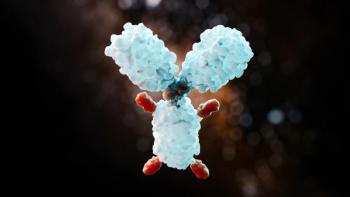
SOTIO Biotech's LRRC15-targeted antibody-drug conjugate SOT106 now holds both Orphan Drug and Fast Track Designations in soft tissue sarcoma and osteosarcoma. The company expects to start first-in-human testing later in 2026.
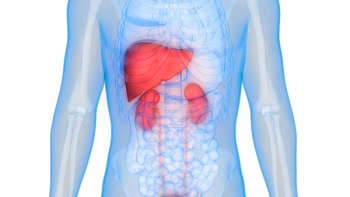
CSL and Alentis will co-develop lixudebart, an antibody targeting claudin-1, across 3 rare kidney and liver disease indications.

AL050 aims to treat GBA1-driven Parkinson disease by delivering a GCase enzyme across the blood-brain barrier.

Manufacturing remediation, not efficacy or safety data, is delaying US approval of Novo's h+emophilia A therapy denecimig.
Advertisement
Advertisement