

"They underscore our continued innovation in multiple myeloma and highlight the value of targeting alternative proteins, like GPRC5D, with the power of cell therapy to transform outcomes, laying the foundation for arlo-cel to become an important treatment option for this emerging group of patients who have been exposed to prior BCMA-targeted therapies."
— Lynelle B. Hoch, president, Cell Therapy Organization, Bristol Myers Squibb
News|Events|September 8, 2026
Bristol Myers Squibb's GPRC5D-Directed CAR T Cell Therapy Meets Primary Endpoint in Multiple Myeloma
Author(s)Emily Schoenthaler
Listen
0:00 / 0:00
Bristol Myers Squibb reported positive topline phase 2 results for arlocabtagene autoleucel, a potential first-in-class GPRC5D-directed CAR T cell therapy, in patients with quadruple-class exposed relapsed and refractory multiple myeloma who had already received a prior BCMA-targeted therapy.
Advertisement
Bristol Myers Squibb announced positive topline results from the registrational Phase 2 QUINTESSENTIAL trial (NCT06297226) of arlocabtagene autoleucel (arlo-cel; BMS-986393), a potential first-in-class autologous CAR T cell therapy directed against G protein-coupled receptor class C group 5 member D (GPRC5D), in adults with quadruple-class exposed relapsed and refractory multiple myeloma (RRMM).¹ The trial met its primary endpoint of overall response rate (ORR) in patients who had received four or more prior lines of therapy, including an immunomodulatory inhibitor, a proteasome inhibitor, an anti-CD38 therapy, and a BCMA-targeted therapy.¹ The trial also met the key secondary endpoint of complete response rate in that same quadruple-class exposed population, as well as key secondary endpoints of ORR and complete response rate in patients who had received three or more prior lines of therapy.¹ The safety profile of arlo-cel was consistent with that of other CAR T cell therapies and other GPRC5D-targeting therapies in multiple myeloma.¹ Full results will be presented at an upcoming medical meeting.¹
What is the significance of this trial's patient population?
QUINTESSENTIAL is the first pivotal trial to evaluate a therapy specifically in quadruple-class exposed RRMM patients who have already been treated with a prior BCMA-targeted therapy — a population with an especially high unmet need, since most currently available myeloma therapies target BCMA, leaving few options once that target has been exhausted.¹ GPRC5D expression on myeloma cells is independent of BCMA expression and is maintained even after prior BCMA-directed therapy, which is the biological rationale for pursuing it as an alternate target in this specific patient population.¹
Lynelle B. Hoch, president, Cell Therapy Organization, Bristol Myers Squibb, said, "As combination treatment regimens are now frequently used in earlier lines of therapy, an increasing number of people with multiple myeloma are quadruple-class exposed and resistant to currently available therapies earlier in the treatment journey, creating a critical need for new therapeutic approaches. These topline results support arlo-cel's potential benefit for patients while showing a safety profile consistent with expectations."¹
How does GPRC5D compare with other myeloma targets, and who else is pursuing it?
GPRC5D is a receptor expressed on plasma cells in multiple myeloma with limited expression on healthy cells, a profile that has made it an increasingly validated therapeutic target across several modalities.² Johnson & Johnson's talquetamab, a GPRC5D-targeting bispecific antibody,
Manufacturing strategy remains a defining challenge across advanced cell therapies broadly. Miguel Forte, MD, PhD, chief executive officer of Kiji Therapeutics and president of the International Society for Cell and Gene Therapy,
What happens next?
Full QUINTESSENTIAL results will be presented at an upcoming medical meeting.¹ Arlo-cel is also being evaluated in earlier-phase combination studies pairing it with other myeloma therapies, including alnuctamab, mezigdomide, and iberdomide.⁴ Bristol Myers Squibb has not disclosed a regulatory filing timeline based on these topline results.
References
- Bristol Myers Squibb.
Bristol Myers Squibb Announces Positive Topline Results from Registrational Phase 2 QUINTESSENTIAL Trial of the Potential First-in-Class GPRC5D-Directed CAR T Cell Therapy, Arlocabtagene Autoleucel, in Patients with Quadruple-Class Exposed Relapsed and Refractory Multiple Myeloma . Press release. Published September 8, 2026. Accessed September 8, 2026. - Rodriguez-Otero P, van de Donk NWCJ, Pillarisetti K, et al. GPRC5D as a Novel Target for the Treatment of Multiple Myeloma: A Narrative Review. Blood Cancer J. 2024;14(1):24.
doi:10.1038/s41408-023-00966-9 . - Mirasol F.
Why Product-Specific Strategies Matter in Advanced Therapy Manufacturing (Part 3) . BioPharm International. Published October 16, 2025. Accessed September 8, 2026. - ClinicalTrials.gov.
A Study to Evaluate the Safety, Effectiveness and Tolerable Dose of Arlocabtagene Autoleucel (BMS-986393) in Novel Combinations in Participants With Relapsed and/or Refractory Multiple Myeloma . NCT06121843. Accessed September 8, 2026.
Advertisement
Related to this article
As ArsenalBio, TScan, Bristol Myers Squibb, and others abandon ex vivo programs for in vivo engineering, early clinical data and platform differences point to both the promise and the unresolved safety, manufacturing, and regulatory questions of generating CAR-T cells inside the body.
Backed by €400 million (US$449 million) in EU-cleared German aid, the new Frankfurt facility is designed to secure insulin supply for people with diabetes from 2032.

In the phase 3 SHINE-2 trial, half of pediatric patients who responded to mirikizumab induction were in clinical remission at week 52. Lilly plans to file for a pediatric UC label expansion.
Gilead will develop up to three PRO-XTEN T-cell engagers discovered by Vir Biotechnology for solid tumors in a deal worth up to $1.74 billion.

EA2251, the 7th registrational trial of ivonescimab, will test it plus chemotherapy vs pembrolizumab or durvalumab regimens in first-line BTC.

Interim phase 1 data presented at UEG Week 2026 showed Bionyra Pharma’s Fc-engineered anti-TL1A antibody BYN-002 suppressed soluble TL1A with a half-life supporting potential every-3-to-6-month maintenance dosing in IBD.
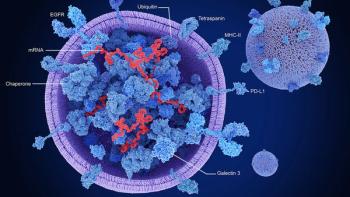
Inhaled EXO-CD24 kept 85% of patients with ARDS free of respiratory failure at day 7 vs 33.3% with placebo in a 90-patient phase 2b trial.

Nuravax will test AV-1959R in a 160-adult phase 2 trial to see whether the amyloid vaccine can prevent Alzheimer disease before symptoms begin.
Advertisement
Advertisement
Trending on BioPharm International
1
Nuravax Alzheimer Vaccine AV-1959R Earns FDA Fast Track Designation
2
Nano24's Inhaled EXO-CD24 Cuts ARDS Mortality in Phase 2b Trial
3
Akeso's Ivonescimab Enters Phase 2/3 Biliary Tract Cancer Trial in US
4
Geneos Launches Phase 2 IMPACT31 Trial of Personalized DNA Cancer Vaccine to Prevent Liver Cancer Recurrence
5