

The oncology field has moved toward targeted treatments guided by biomarkers that identify the patients most likely to benefit. The process can break down at several points, however. Tissue must be collected in sufficient amounts and processed correctly, the right test must be ordered, and results must reach clinicians who can interpret them.
Commentary|Videos|October 19, 2026
Biomarker Testing Gaps Can Stall Targeted Oncology Therapy, BMS’s Dr Pennell Says
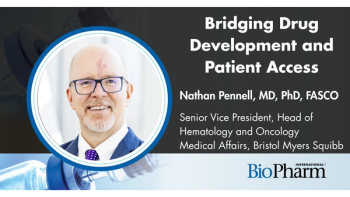
BMS's Dr Nathan Pennell outlines how biomarker testing barriers and trial diversity affect patient access to targeted oncology drugs.
Advertisement
In the second segment of an interview with BioPharm International®,
Dr Pennell notes that the oncology field has moved toward
"It's tremendously exciting, but it only works if you can actually identify the right patient," Dr Pennell emphasizes.
Addressing these barriers requires the entire cancer community, he stresses. For example, BMS works with practitioners, patient advocacy organizations, health systems, and pathology organizations to help ensure that pathologists are comfortable with assays, that interventionalists can collect tissue, and so clinicians can order and interpret tests. The company also provides educational materials and tests whether efforts work in practice. Dr Pennell explains that development and biomarker strategies must be discussed together early so the community is ready at approval.
Why does clinical trial diversity matter for targeted oncology drugs?
Trials must represent the patients who will receive treatment, Dr Pennell states. This approach means locating trials in the communities where patients receive care and ensuring investigators reflect those populations. BMS has exceeded its goal in this area, with more than 60% of its US clinical trial sites located in diverse communities, which the company defines as comprising at least 30% non-white population, Dr Pennell says.
In multiple myeloma, Dr Pennell notes that expanding options complicates treatment selection. No single treatment suits every patient, he points out, and progression-free survival alone does not decide the choice. Comorbidities, treatment goals, side effects, preferences, and distance to a tertiary care center matter, he stresses. In his role, Dr Pennell says that medical affairs provides unbiased, non-promotional education so physicians and patients can decide together.
About the speaker
Nathan Pennell, MD, PhD, FASCO, Senior Vice President, Head of Hematology and Oncology Medical Affairs, Bristol Myers Squibb
In his role at Bristol Myers Squibb, Dr Pennell leads medical strategy and works to translate pipeline innovation into progress for people living with cancer. He previously spent nearly 2 decades at Cleveland Clinic, directing its Lung Cancer Medical Oncology Program, serving as its vice chair of clinical research, and authoring more than 100 peer-reviewed publications in journals such as the New England Journal of Medicine, Nature, and The Lancet. Dr Pennell is a former American Society of Clinical Oncology (ASCO) board member and former editor in chief of the ASCO Educational Book.
Advertisement
Related to this article

Odyssey's 146-patient phase 2a trial will pair OD-001 with vedolizumab, targeting both innate and adaptive immune drivers of ulcerative colitis.

Antisense oligonucleotides are reshaping drug design, from RNase H gapmers to inhaled delivery; this FAQ explains how they work and why trials still fail.
Bristol Myers Squibb's Nathan Pennell explains how the MRD endpoint supports accelerated approval in multiple myeloma without changing how clinicians monitor patients.

In the phase 3 SHINE-2 trial, half of pediatric patients who responded to mirikizumab induction were in clinical remission at week 52. Lilly plans to file for a pediatric UC label expansion.

Guselkumab (Tremfya) sustained perianal fistula healing through 1 year in Crohn disease, with remission climbing to 35% in one FUZION dosing arm.

Roche will take ex-China development of Hansoh’s two preclinical ADCs and multiple programs against Roche-proposed targets once Hansoh completes global phase 1a trials. The deal includes $400 million upfront and more than $15 billion in potential milestones.

EST-201 and EST-101 target the genetic root cause of ADPKD, a disease affecting more than 8 million people worldwide, with trials starting 2027-2028.

Mirikizumab (Omvoh) achieved comprehensive disease control in 27.7% of UC patients and deep remission in 20.4% with Crohn disease at 1 year.
Advertisement
Advertisement
Trending on BioPharm International
1
FDA Approves Roche’s Enspryng as First At-Home Subcutaneous Treatment for Thyroid Eye Disease
2
Estuary Biotherapeutics Launches With $103 Million for ADPKD Gene Therapy
3
BioPharm Brief: Gene Therapy Progress, FDA Approval, and $103M Funding
4
Opus Genetics’ OPGx-LCA5 Gene Therapy Shows Sustained Vision Gains Ahead of Phase 3
5