News|Articles|October 30, 2026

BioMarin Licenses Subcutaneous Fabry ERT From GC Biopharma, Hanmi

Key Takeaways

  • BioMarin licensed worldwide rights, excluding Korea, to the Fabry disease therapy HM15421/GC1134A from GC Biopharma and Hanmi.
  • BioMarin will pay $70 million up front, with up to $405 million more in milestones plus royalties.
SHOW MORE

HM15421/GC1134A could become the first subcutaneous enzyme replacement therapy for Fabry disease, with BioMarin paying $70 million upfront.

BioMarin Pharmaceutical (BioMarin) announced on October 29, 2026, that it has entered into an exclusive worldwide license agreement with GC Biopharma and Hanmi Pharm to develop and commercialize HM15421/GC1134A, an investigational long-acting enzyme replacement therapy (ERT) for Fabry disease.¹ The agreement covers all territories except Korea, where GC and Hanmi will retain commercialization rights.¹

Key facts

  • Drug: HM15421/GC1134A (GC Biopharma/Hanmi Pharm; licensed to BioMarin)
  • Class: long-acting recombinant α-Gal A enzyme replacement therapy
  • Indication: Fabry disease
  • Route: subcutaneous
  • Trial: NCT06858397; phase 1/2, open label
  • Up-front payment: $70 million
  • Milestones: up to $405 million, plus tiered royalties
  • Territory: worldwide, excluding Korea
  • Regulatory status: orphan drug designation (FDA, 2024)

"This agreement reflects our growing commitment to the Fabry community, building on the acquisition of Amicus earlier this year," said Alexander Hardy, president and CEO of BioMarin, in a company press release.¹ "HM15421/GC1134A has the potential to offer a new way of treating Fabry disease, and we believe it could be an important option for patients. As we continue to add to our clinical portfolio, both through internal research and external programs, HM15421/GC1134A is an excellent fit and could allow us to reach a new generation of patients with Fabry beyond those with mutations amenable to treatment with [Galafold]."¹

What are the terms of the agreement?

BioMarin will make an up-front payment of $70 million.¹ GC and Hanmi are jointly eligible to receive up to an additional $405 million upon completion of certain development and commercial milestones, plus tiered royalties on net sales.¹ Following an ongoing phase 1/2 study, BioMarin will assume sole responsibility for all subsequent clinical development, manufacturing, and commercialization outside Korea.¹

What is HM15421/GC1134A?

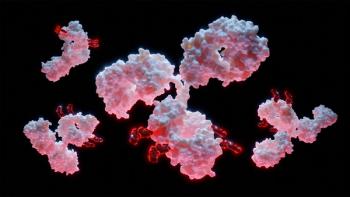
HM15421/GC1134A is a human recombinant alpha-galactosidase A (α-Gal A) enzyme. It is designed to extend half-life and improve stability relative to currently available ERTs, supporting subcutaneous dosing.¹ According to BioMarin, it has the potential to be the first subcutaneous ERT for Fabry disease.¹ The company said the candidate showed differentiated efficacy in preclinical studies across measures including renal function, vascular health, and peripheral nervous system outcomes.¹ FDA granted HM15421/GC1134A orphan drug designation in 2024.¹


The phase 1/2 study (NCT06858397) is an open-label, nonrandomized proof-of-concept trial sponsored by GC Biopharma, with Hanmi as a collaborator. It plans to enroll 18 adults with Fabry disease across low-, mid-, and high-dose cohorts of subcutaneous HM15421/GC1134A.² The primary endpoint is the incidence and nature of adverse events over 48 weeks.²

How does the deal fit BioMarin's Fabry portfolio?

BioMarin completed its acquisition of Amicus Therapeutics, valued at approximately $4.8 billion, in April 2026.³ The deal added migalastat (Galafold), the first oral treatment for Fabry disease, and the Pompe disease therapy cipaglucosidase alfa-atga (Pombiliti) plus miglustat (Opfolda).³ Because migalastat is used only in patients whose GLA mutations are amenable to the drug, an ERT could give BioMarin a Fabry option for patients outside that group.¹

Why does a subcutaneous option matter in Fabry disease?

Fabry disease is a rare, X-linked lysosomal storage disorder caused by variants in the GLA gene that reduce α-Gal A activity.¹ The resulting buildup of globotriaosylceramide (GL-3) in lysosomes is believed to cause symptoms including pain, kidney failure, and increased risk of heart attack and stroke.¹ The reported annual incidence of 1 in 100,000 may underestimate the disease's true prevalence, and heterozygous females can have symptoms ranging from very mild to severe.⁴ ERT using recombinant human α-Gal A is a disease-specific treatment.⁴ If its clinical profile is confirmed, a long-acting, subcutaneously administered enzyme could offer patients an alternative to currently available ERTs.¹

What are the limitations?

HM15421/GC1134A remains in early clinical development, and no clinical efficacy or safety data have been reported. The ongoing study's primary endpoint is safety, not efficacy. Efficacy claims are based on preclinical studies, which may not predict outcomes in patients. The companies did not disclose dosing frequency, the milestone schedule, or royalty rates, and most of the deal's value depends on future milestones.

References

  1. BioMarin Pharmaceutical. BioMarin enters into exclusive worldwide license agreement with GC Biopharma and Hanmi Pharm for investigational next-generation enzyme replacement therapy, adding a second potential treatment for Fabry disease. Press release. Published October 29, 2026. Accessed October 30, 2026. https://www.biomarin.com/news/press-releases/biomarin-enters-into-exclusive-worldwide-license-agreement-with-gc-biopharma-and-hanmi-pharm-for-investigational-next-generation-enzyme-replacement-therapy-adding-a-second-potential-treatment-for-fab/
  2. A proof-of concept study to assess safety and tolerability of HM15421/GC1134A in patients with Fabry disease. ClinicalTrials.gov; NCT06858397. Updated November 4, 2025. Accessed October 30, 2026. https://clinicaltrials.gov/study/NCT06858397
  3. BioMarin Pharmaceutical. BioMarin completes acquisition of Amicus Therapeutics. Press release. Published April 27, 2026. Accessed October 30, 2026. https://www.biomarin.com/news/press-releases/biomarin-completes-acquisition-of-amicus-therapeutics/
  4. Germain DP. Fabry disease. Orphanet J Rare Dis. 2010;5:30. doi:10.1186/1750-1172-5-30

Related to this article