

"This collaboration marks an important milestone for Aceso and for the continued development of potential new approaches for cystic fibrosis."
— Thomas Tran, CEO and co-founder, Aceso Therapeutics
News|Events|September 8, 2026
Aptar Pharma and Aceso Therapeutics Partner to Advance Inhaled Antisense Oligonucleotide for Cystic Fibrosis
Author(s)Emily Schoenthaler
Listen
0:00 / 0:00
Aptar Pharma's Nanopharm business will lead inhaled formulation development and device assessment for ACT-101, Aceso Therapeutics' antisense oligonucleotide candidate designed to correct CFTR protein function in cystic fibrosis patients carrying the F508del mutation.
Advertisement
Aptar Pharma announced a collaboration with Aceso Therapeutics, a Montpellier, France-based biotech, to advance ACT-101, an antisense oligonucleotide (ASO) candidate designed to target the underlying disease mechanisms of cystic fibrosis (CF).¹ The program will be supported by Nanopharm, Aptar Pharma's specialist inhalation development services business, which will lead formulation development and device assessment activities for Aceso's clinical development roadmap.¹ The work complements Aptar Pharma's broader biologics compatibility program, which systematically evaluates how complex biologic molecules — including nucleic acids, peptides, proteins, and their associated nanoparticle-based delivery systems — interact with the company's pulmonary and nasal delivery platforms.¹
Gemma Budd, general manager of Nanopharm, said, "Cystic fibrosis remains a devastating disease with significant unmet need. Partnering with Aceso Therapeutics enables us to apply our formulation and inhalation science expertise to an innovative oligonucleotide asset. We are proud to contribute our expertise to this early-stage development program."¹ Thomas Tran, CEO and co-founder of Aceso Therapeutics, said, "By partnering with Nanopharm, Aceso Therapeutics aims to accelerate the development of ACT-101 towards clinical evaluation, exploring its potential through direct delivery to the lung. Nanopharm's proven track record in inhaled and nasal drug product development, combined with the wider scientific depth within Aptar Pharma, gives us confidence as we continue to advance our ASO platform."¹
How does ACT-101 work, and who is it designed for?
ACT-101 is built on Aceso's proprietary PTGR platform, which the company describes as designed to restore gene expression in genetic diseases, developed over more than a decade of academic research in collaboration with the PhyMedExp laboratory.¹ ACT-101 is designed to act on CFTR pre-mRNA processing rather than the DNA sequence itself, aiming to correct or improve CFTR protein output in CF patients who carry the F508del mutation — the disease's most common genetic driver.² F508del is by far the most common disease-causing CFTR mutation, found in roughly 70% of CF alleles in Caucasian populations, though its frequency varies substantially by geography and population.³
Why is inhaled delivery significant for this class of therapy?
Delivering nucleic acid-based therapeutics directly to the lung carries formulation challenges distinct from systemic or injectable administration.
How does this fit into the broader oligonucleotide therapeutics landscape?
Investment in oligonucleotide-based therapeutics has accelerated across the industry.
Why does cystic fibrosis represent a significant unmet need?
CF is a rare, inherited disease that causes severe damage to the lungs, digestive system, and other organs, affecting approximately 100,000 people worldwide, according to the American Lung Association.¹ CF results from mutations in the CFTR gene, which normally regulates chloride transport across epithelial tissue in the lungs, pancreas, and other organs; when CFTR is reduced or dysfunctional, the resulting disruption in ion transport drives the multisystem disease pathology seen in CF.³ CFTR modulator therapies have improved outcomes for many CF patients with specific mutations over the past decade, though gaps in available treatment options remain across the range of CFTR mutations — the space Aceso's ASO platform is positioned to address.
What happens next?
Nanopharm will lead formulation development and device assessment for ACT-101 to support Aceso's clinical development roadmap.¹ As an early-stage program, no timeline for clinical trial initiation was disclosed.
References
- Aptar Pharma.
Aptar and Aceso Therapeutics Announce Collaboration to Advance Inhaled Antisense Oligonucleotide Therapy for Cystic Fibrosis . Press release. Published September 7, 2026. Accessed September 8, 2026. - Law R.
Aptar Pharma to Support Aceso's Inhaled Cystic Fibrosis Candidate's Advance . Pharmaceutical Technology. Published September 7, 2026. Accessed September 8, 2026. - Ferec C, Cutting GR. Assessing the Disease-Liability of Mutations in CFTR. Cold Spring Harb Perspect Med. 2012;2(12):a009480.
doi:10.1101/cshperspect.a009480 . - Challener C.
Increasing mRNA Product Stability with Lyophilization . BioPharm International. Published February 1, 2024. Accessed September 8, 2026. - Lavery P.
Novartis Acquisition of Regulus Therapeutics is Complete . BioPharm International. Published June 25, 2025. Accessed September 8, 2026.
Advertisement
Related to this article

Zylidac will test whether optogenetic cell lines that hit 21 g/L in small-scale CHO runs can deliver higher-yield complex biologics at GMP scale.

Backed by €400 million (US$449 million) in EU-cleared German aid, the new Frankfurt facility is designed to secure insulin supply for people with diabetes from 2032.

METiS TechBio will apply its AI-driven AiLNP ionizable lipid platform to discover LNPs designed to deliver therapeutics beyond the liver, under a collaboration with Eli Lilly worth up to $1.1 billion in milestones.
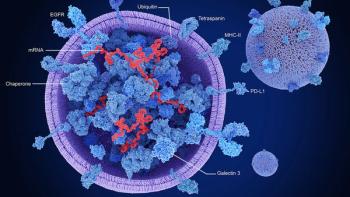
Inhaled EXO-CD24 kept 85% of patients with ARDS free of respiratory failure at day 7 vs 33.3% with placebo in a 90-patient phase 2b trial.

In the phase 3 SHINE-2 trial, half of pediatric patients who responded to mirikizumab induction were in clinical remission at week 52. Lilly plans to file for a pediatric UC label expansion.

Interim phase 1/2 data presented at Retina in Rio 2026 showed sustained visual improvements with Opus Genetics’ AAV8 gene therapy OPGx-LCA5 and improved retinal sensitivity with OPGx-BEST1 in inherited retinal diseases.
Nathan Edwards of Arya Consulting moderates a discussion with Elisabeth Gardiner of Tevard Biosciences and Donny Xu of the RTW Institute about rare disease treatment development and navigating the FDA’s Rare Pediatric Disease Priority Review Voucher Program.

Rohit Tripathi, vice president of industry strategy, consumer packaged goods, and manufacturing at RELEX Solutions, explains where cold-chain planning still breaks down and why biopharma supply chain leaders should use AI to act on data sooner, with humans making the final call.
Advertisement
Advertisement
Trending on BioPharm International
1
Sanofi Begins Construction of EU-Backed Insulin Plant in Frankfurt
2
TaiMed’s Anti-CD4 Antibody TMB-365 Reduces HIV Viral Load in Phase 1, Supporting Long-Acting Combination Regimens
3
Akeso's Ivonescimab Enters Phase 2/3 Biliary Tract Cancer Trial in US
4
Zylidac Bio to Scale Prolific's Optogenetic Cell Line Platform to GMP
5