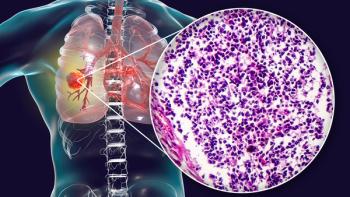
AbbVie announced on October 27, 2026, that it has submitted a biologics license application (BLA) to FDA for etentamig (ABBV-383), an investigational second-generation B-cell maturation antigen (BCMA) x CD3 bispecific antibody T-cell engager, for adults with relapsed or refractory multiple myeloma.¹ The intravenously administered therapy is given monthly after a single step-up dose, and the submission is supported by the phase 3 CERVINO trial.¹
Key facts
- Drug: etentamig (ABBV-383; AbbVie)
- Class: BCMA x CD3 bispecific T-cell engager
- Indication: relapsed/refractory multiple myeloma (adults)
- Trial: CERVINO (NCT06158841); phase 3
- Primary endpoints met: ORR 74.0% vs 45.7%; 60% PFS risk reduction
- Dosing: monthly after a single step-up dose
- Safety: CRS 28.3%, all grade 1 or 2
- Regulatory status: BLA submitted (FDA)
"Patients deserve therapeutic options that are not only effective, but also support the realities of when, where and how they receive treatment," said Daejin Abidoye, MD, vice president and therapeutic area head, oncology, solid tumor and hematology, AbbVie, in a company press release.¹
What did the CERVINO trial show?
The global, multicenter, randomized, open-label CERVINO trial (NCT06158841) compared etentamig with investigator's choice of standard available therapies (SAT) in 393 patients with triple-class exposed relapsed or refractory multiple myeloma who had received at least 2 prior lines of therapy.¹,² SAT options were carfilzomib plus dexamethasone, elotuzumab plus pomalidomide and dexamethasone, or selinexor plus bortezomib and dexamethasone.¹
Etentamig met both dual primary endpoints. The overall response rate was 74.0% with etentamig vs 45.7% with SAT, and the therapy reduced the risk of disease progression or death by 60%.¹ In topline results announced on September 3, 2026, AbbVie reported a PFS hazard ratio of 0.40 (95% confidence interval, 0.29-0.54; p<.0001).³ Key secondary endpoints include overall survival, depth of response, measurable residual disease negativity, disease symptoms, and physical functioning.¹
How safe was etentamig with monthly dosing?
The most common treatment-emergent adverse events (TEAEs), occurring in at least 25% of etentamig-treated patients, were cytokine release syndrome (CRS), hypogammaglobulinemia, neutropenia, and anemia.¹ Discontinuations related to TEAEs occurred in 3.6% of patients receiving etentamig vs 14% receiving SAT.¹