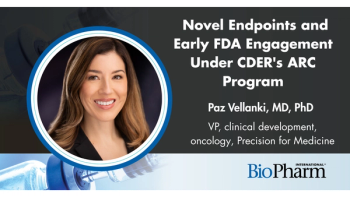
Former FDA oncology reviewer Paz Vellanki, MD, PhD, of Precision for Medicine, discusses how CDER's ARC program supports novel end points such as ctDNA for rare diseases and why sponsors should engage FDA early.
New regulatory decisions, manufacturing partnerships, and financing pressures are reshaping access, supply, and development pathways for emerging advanced therapies.
New data and partnerships are advancing brain-penetrant enzyme therapy, targeted antibodies, flexible obesity dosing, and frontline lymphoma treatment strategies.
CaseBioscience joins an ARPA-H effort to develop room-temperature cell therapy preservation, Novartis licenses an mRNA-encoded T-cell engager from Abogen, and AstraZeneca, Daiichi Sankyo, and Summit plan to combine Datroway with ivonescimab.
Artiva Biotherapeutics will present data on AlloNK, an allogeneic, non-genetically modified NK cell therapy given with rituximab, in refractory rheumatoid arthritis, Sjögren disease and systemic sclerosis at ACR Convergence 2026, ahead of a planned phase 3 trial in rheumatoid arthritis.
Novartis has secured an exclusive worldwide license to ABO2203, Abogen's investigational mRNA-encoded CD19xCD3 T-cell engager designed to produce the bispecific inside the body to reset B cells in autoimmune disease. The agreement also includes options on other programs built on Abogen's RNA platform.