
"Companies that get hurt in periods like this usually are the ones that treat legal uncertainty, like we have right now, as permission, and it's not."
Commentary|Videos|October 2, 2026
Amino Acid Count Determines Retatrutide's Biologic or Drug Classification
Author(s)Feliza Mirasol, Dustin Robinson
LumaLex Law's Dustin Robinson explains why retatrutide compounding remains illegal regardless of the Seventh Circuit's pending classification ruling.
Advertisement
Robinson says the case centers on whether retatrutide's amino acid count places it above or below the 40-amino-acid threshold separating biologics from drugs, a distinction that determines 3 outcomes: market exclusivity length (12 years for biologics versus 5 for drugs), the pathway for competitor entry, and whether the molecule can legally be compounded. Biologics, he explains, can never be compounded under sections 503A or 503B of the Federal Food, Drug, and Cosmetic Act (FDCA).1
How did an earlier court ruling land on retatrutide's regulatory classification?
An earlier court ruling held that only alpha amino acids count toward the 40-count threshold, upholding FDA’s measurement method. However, the court rejected FDA's use of that same method to determine whether the retatrutide molecule is analogous to a protein, reasoning that Robinson says is circular. Robinson emphasizes that this earlier ruling created a second, undefined legal pathway to biologic status before the US Court of Appeals for the Seventh Circuit
"Companies that get hurt in periods like this usually are the ones that treat legal uncertainty, like we have right now, as permission, and it's not," Robinson says.
Robinson emphasizes that retatrutide is not approved and is not on FDA's compounding list, meaning it cannot legally be compounded today regardless of how the Seventh Circuit rules. He notes that Lilly has filed lawsuits against compounders under state consumer protection and unfair competition laws rather than directly under the FDCA, a strategy he says exposes companies to private damages claims, legal fees, and injunctive relief.
About the speaker
Dustin Robinson, Esq., CPA, Founding Partner, LumaLex Law
Licensed in Florida as an attorney, certified public accountant, and real estate agent, Robinson brings a rare, fully integrated legal–financial–business perspective to every engagement. His practice focuses on corporate structuring, regulatory strategy, transactions, capital formation, and high-stakes commercial litigation for growth-stage and emerging-market companies across a wide range of industries.
References
- FDA. Mixing, Diluting, or Repackaging Biological Products Outside the Scope of an Approved Biologics License Application: Guidance for Industry. Published January 2018. Accessed October 1, 2026.
https://www.fda.gov/regulatory-information/search-fda-guidance-documents/mixing-diluting-or-repackaging-biological-products-outside-scope-approved-biologics-license fda+1 - Eli Lilly and Company v Robert Kennedy, Jr., No. 26-1301 (7th Cir argued September 24, 2026). Oral argument recording. US Court of Appeals for the Seventh Circuit. Accessed October 1, 2026.
https://media.ca7.uscourts.gov/oralArguments/oar.jsp?caseyear=26&casenumber=1301&listCase=List+case
Advertisement
Related to this article
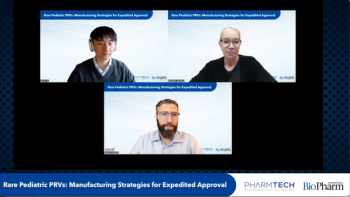
Nate Edwards of Arya Consulting moderates a discussion with Elisabeth Gardiner of Tevard Biosciences and Donny Xu of the RTW Institute about the regulatory and manufacturing hurdles facing rare disease drug developers.

Nuravax will test AV-1959R in a 160-adult phase 2 trial to see whether the amyloid vaccine can prevent Alzheimer disease before symptoms begin.

Alexion’s ravulizumab won accelerated approval to reduce proteinuria in adults with IgA nephropathy after the Phase 3 I CAN trial showed a 43.4% placebo-adjusted reduction at Week 34.
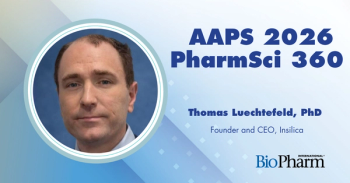
At PharmSci 360, Insilica CEO Thomas Luechtefeld will present on auditable agentic AI systems and how they are expanding computational toxicology beyond single predictive models.
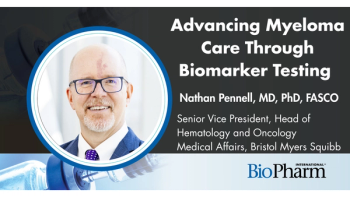
BMS's Dr Nathan Pennell outlines how biomarker testing barriers and trial diversity affect patient access to targeted oncology drugs.

The FDA approved Roche's satralizumab (Enspryng), an IL-6 receptor-targeting monoclonal antibody, for adults with thyroid eye disease based on the Phase 3 SatraGO-1 and SatraGO-2 trials, giving patients the first at-home subcutaneous treatment option.

FNIH CEO Dr Julie Gerberding will open the October 25-28 meeting with a talk on using AI, adaptive trials, and alternative methods in drug development.
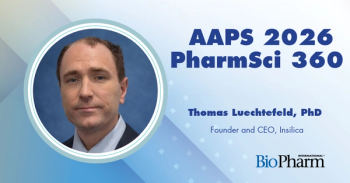
Insilica's Dr Thomas Luechtefeld argues process traceability, not benchmark accuracy alone, determines whether AI toxicology decisions can be trusted.
Advertisement
Advertisement
Trending on BioPharm International
1
Treasury Proposes Adding Biotech to Outbound Investment Restrictions Under COINS Act
2
FDA Approves On-Body Injector Induction for Skyrizi in Crohn's Disease
3
Zymeworks Licenses DLL3-Targeted Trispecific T-Cell Engager ZW209 to Roche in Deal Worth Up to $813 Million
4
Gilead to Buy Oral IL-23R Peptide HCXT-2001 for $1.275 Billion
5