Anurag Rathore, PhD, professor of chemical engineering at IIT Delhi, explains how his team is making antibody manufacturing more efficient and replacing costly raw materials to cut monoclonal antibody costs to about $10 per gram.
Rohit Tripathi, vice president of industry strategy, consumer packaged goods, and manufacturing at RELEX Solutions, explains where cold-chain planning still breaks down and why biopharma supply chain leaders should use AI to act on data sooner, with humans making the final call.
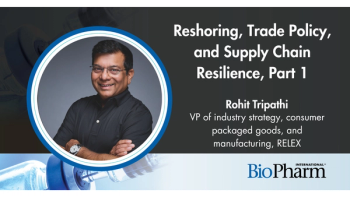
Rohit Tripathi, vice president of industry strategy, consumer packaged goods, and manufacturing at RELEX Solutions, explains what is driving biopharma reshoring, how USMCA uncertainty complicates sourcing for biologics, and where cold-chain visibility still breaks down.
Emily Heffernan, director of new process technologies at Arcadis, explains what it takes to design a facility that can produce both lentiviral vectors and mRNA-LNPs, and how in vivo platforms change QC release testing.
At AAPS PharmSci 360, Thermo Fisher Scientific scientists described how predictive modeling guides technology selection for poorly soluble drugs, and outlined plans to bring solvent-free KinetiSol technology to commercial scale in 2027.
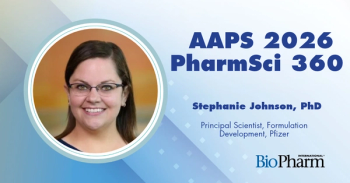
Speaking at AAPS PharmSci 360, Dr Stephanie Johnson, a principal formulation scientist at Pfizer, details how platform formulations save time before commitment, shift risk downstream, and what AI tools need to earn trust.
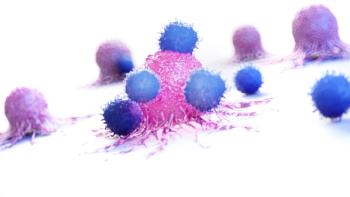
Phase 1b data at ESMO 2026 show the TCR-based T-cell engager produced durable responses in PRAME-high melanoma, with 91% of patients alive at one year in the recommended dose range.