

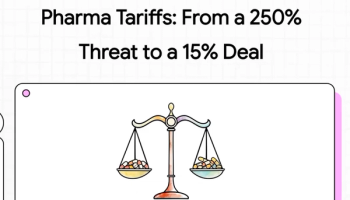
The US-EU pharma tariff cap has been finalized at 15%, impacting manufacturing, supply chain, and quality and promoting domestic production and resilience.
Christopher Cole is Associate Editorial Director for BioPharm International®, Pharmaceutical Technology®, and Pharmaceutical Technology Europe™.
The US-EU pharma tariff cap has been finalized at 15%, impacting manufacturing, supply chain, and quality and promoting domestic production and resilience.
Survey responses indicate that bio/pharma faces tariff-driven rising costs and supply strain, with firms aiming to boost compliance and diversification and seeking stable trade and R&D support.
Dave Miller, PhD, explains how early formulation planning, novel platforms, and tailored approaches secure long-term protection against generics.
Dave Miller, PhD, explains how environmental audits, waste reduction, and supply chain security are reshaping priorities in pharmaceutical manufacturing.
Dave Miller, PhD, discusses how shifting drug manufacturing to domestic CDMOs can improve quality, reduce rework, and enhance long-term efficiency.

The Phase 2 trial failure highlights the need for Biopharma to optimize R&D, ensure manufacturing resilience, and adapt to evolving regulations.
Dave Miller, PhD, explains how a development-first approach, scientific depth, and regulatory trust build lasting partnerships in the CDMO space.
Dave Miller, PhD, discusses how tailored solutions, trust, and lifecycle planning are redefining partnerships in bio/pharmaceutical development.

FDA reinstates Vinay Prasad to lead CBER as gene therapy safety concerns spotlight regulatory challenges in biotech manufacturing.

Help us get a better picture of how new tariffs and trade policy have impacted you and your organization.

Germany-based biotech boosts animal-free supplement production, enabling greater scalability and supply security for next-gen cell therapies worldwide.

Prasad’s short FDA tenure brought stricter review standards for gene and COVID vaccines, sparking biotech concern and political backlash.

Imfinzi’s application is supported by Phase III trial data showing improved pathologic complete response in early-stage gastric cancer.

US pharma firms face higher drug costs, delayed launches, and compliance risks from proposed sectoral tariffs, prompting urgent supply chain reviews.

FDA’s recent CRLs for Replimune’s RP1 and others spotlight growing scrutiny on manufacturing, analytical rigor, and tech transfer in immunotherapy development.

US pharma tariffs may start low and rise, risking drug shortages, higher costs, and pressure on generics amid reshoring push.

Tariffs on APIs and finished drugs could take effect as early as August 1, with accelerated investigations raising urgency for supply chain planning.
Minimize contamination in cell therapy manufacturing with isolators, staff protocols, sterile materials, and validated suppliers for process integrity.

Biopharma job cuts surge in 2025, hitting R&D, manufacturing, and commercial roles and causing professionals to face shifting priorities and tighter pipelines.


The IL-36 inhibitor is being explored for additional inflammatory skin conditions, aiming to expand treatment options for underserved patient groups.

Trump’s tax bill could reshape drug R&D, manufacturing, Medicaid access, clinical trials, and biotech funding, impacting strategy across the bio/pharmaceutical industry.

Once limited to experimental vaccine platforms, messenger RNA (mRNA) is now taking center stage across the entire biotech landscape.

Regulatory shift reflects maturation of CAR-T field and impacts biopharm manufacturing, development, and discovery.

The biotech company urges government action to support newborn genome screening, emphasizing the need for rare disease care, testing, and family resources.

Lilly expands into genetic medicines with Verve's in vivo gene-editing therapies, aiming to replace chronic cardiovascular treatments with single-dose care.
Tevard Biosciences CEO Daniel Fischer discusses tackling Dravet syndrome with a scalable, mutation-targeted approach and building a mission-led company culture.