

“Structure really is risk management at the end of the day.”
— Sebastian Andersen, CEO and founder, ClarityNorth Partners
News|Videos|September 3, 2026
What’s Driving Biopharma Deal Strategy in 2026?
Author(s)Emily Schoenthaler, Sebastian Andersen
Sebastian Andersen, CEO and founder of ClarityNorth Partners, discusses 2026 biopharma dealmaking, including M&A trends, oncology deal activity, Lilly’s acquisition strategy, and how transaction structure can help companies manage risk.
Advertisement
In the first segment of a two-part interview with BioPharm International®,
Andersen says the absence of a $30 billion-plus deal does not necessarily indicate that boards are hesitant to pursue large transactions. Instead, he sees greater precision in capital deployment, with buyers more willing to spend when an asset addresses a clear pipeline or portfolio need without creating excessive integration and execution risk.
What can biopharma companies learn from Lilly’s dealmaking strategy?
While mid-cap companies cannot replicate Lilly’s scale, Andersen says they can apply the principles behind its approach by being selective about what they acquire and
“The principle is definitely more transferable than the scale itself,” Andersen says.
Andersen also cautions against reading too much into six months of deal data. While oncology represented 41% of first-half deal value, he says the shift does not necessarily signal a fundamental retreat from cardiometabolic disease, which remains strategically important to pharmaceutical pipelines.
“Structure really is risk management at the end of the day,” Andersen says.
Stay tuned for Part 2, where Andersen discusses additional factors shaping biopharma dealmaking and what companies should be watching in the second half of 2026.
Advertisement
Related to this article
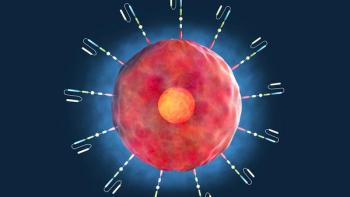
As ArsenalBio, TScan, Bristol Myers Squibb, and others abandon ex vivo programs for in vivo engineering, early clinical data and platform differences point to both the promise and the unresolved safety, manufacturing, and regulatory questions of generating CAR-T cells inside the body.

Viking Therapeutics has started two Phase 3 trials of once-daily oral VK2735, a dual GLP-1/GIP receptor agonist, in adults with obesity, with and without type 2 diabetes.

The FDA has accepted Pierre Fabre Pharmaceuticals’ resubmitted BLA for tabelecleucel, an allogeneic T-cell immunotherapy for EBV+ post-transplant lymphoproliferative disease. The FDA’s target action date is March 31, 2027.
Antisense oligonucleotides are reshaping drug design, from RNase H gapmers to inhaled delivery; this FAQ explains how they work and why trials still fail.
Genglycos, the gene therapy that earned the voucher, will fund new Ultragenyx therapies for other rare and ultra-rare diseases.
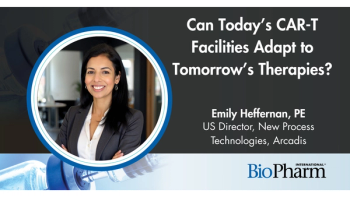
Emily Heffernan of Arcadis explains how facility scale, equipment, containment, and quality testing differ across ex vivo cell therapy, viral vector, and mRNA-LNP manufacturing.
FDA expands Anktiva’s bladder cancer indication, Alvotech and Advanz submit a proposed Eylea 8 mg biosimilar in Europe, and Lilly reports new remission data for Omvoh in inflammatory bowel disease.

AVT29, a proposed aflibercept biosimilar to Eylea 8 mg, could extend retinal disease treatment intervals to 16 weeks, versus 8 weeks today.
Advertisement
Advertisement
Trending on BioPharm International
1
FDA Accepts BLA for Formycon and Zydus’ FYB206, the First Publicly Announced Keytruda Biosimilar Under Review
2
FDA Rare Disease Framework Initiative: What It Means for Drug and Biologic Development
3
BioNTech's BNT113 Misses PFS Goal in Head and Neck Cancer Trial
4
Gilead Taps Vir Biotechnology's PRO-XTEN Tech for Solid Tumors
5