

Suppliers bring knowledge of how impurities in raw materials and media can influence cell line performance and viral vector quality, which is information developers and manufacturers may not independently possess.
News|Videos|July 30, 2026
Supplier–Developer Collaboration and Manufacturing Simplification Are Keys to Unlocking Gene Therapy's Full Potential, says FUJIFILM Biosciences’ Brandon Pence
Author(s)Feliza Mirasol, Brandon Pence
Collaboration between suppliers and developers, as well as viral vector manufacturing simplification, are becoming critical to CGT's commercial future, says Brandon Pence of FUJIFILM Biosciences.
Advertisement
In the continuation of his interview with BioPharm International® at the 2026
Pence frames manufacturing simplification as the biopharmaceutical industry's primary strategic imperative for viral vector-based gene therapies. He notes that the perceived high cost of individual gene therapies must be evaluated against the lifelong cost of
Why is open supplier–developer collaboration critical to standardizing CGT manufacturing platforms?
Pence identifies trace element impurities as 1 specific area in which
"That sharing of information, that knowledge between the two organizations, always leads to a better outcome," Pence states.
He draws a parallel to the development of monoclonal antibody manufacturing, in which the open collaboration between suppliers and developers over several decades has produced the standardized, scalable platforms the industry relies on today. He notes that CGTs are at an analogous inflection point. The key challenge, he acknowledges, is that open information sharing conflicts with the proprietary technology interests that remain central to competitive differentiation in the space.
BIO 2026 occurred June 22–25 in San Diego.
To explore more of our conference coverage,
About the speaker
Brandon Pence, President and Chief Operating Officer, FUJIFILM Biosciences
Pence joined FUJIFILM Biosciences in his current role in 2024. He has direct oversight of teams in global manufacturing and quality, finance, R&D, human resources, and all commercial operations for the business. Prior to joining FUJIFILM Biosciences, he was vice president of Business Development and Strategy at Avantor Sciences and has held vice president/general manager positions at Thermo Fisher Scientific leading a variety of businesses including Cell Biology, Purification, and Pharma Analytics. Prior to that, Pence led market development and strategy for GE Healthcare’s bioprocessing division (now known as Cytiva). Pence is a graduate of Utah State University and started his career as a scientist working in the development of cell culture processes for mammalian and insect cells prior to moving into business-focused roles.
Advertisement
Related to this article
Gilead will develop up to three PRO-XTEN T-cell engagers discovered by Vir Biotechnology for solid tumors in a deal worth up to $1.74 billion.
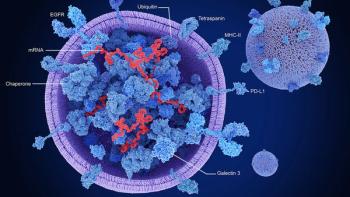
Inhaled EXO-CD24 kept 85% of patients with ARDS free of respiratory failure at day 7 vs 33.3% with placebo in a 90-patient phase 2b trial.

Nuravax will test AV-1959R in a 160-adult phase 2 trial to see whether the amyloid vaccine can prevent Alzheimer disease before symptoms begin.
BMS's Dr Nathan Pennell outlines how biomarker testing barriers and trial diversity affect patient access to targeted oncology drugs.

In the phase 3 SHINE-2 trial, half of pediatric patients who responded to mirikizumab induction were in clinical remission at week 52. Lilly plans to file for a pediatric UC label expansion.

Guselkumab (Tremfya) sustained perianal fistula healing through 1 year in Crohn disease, with remission climbing to 35% in one FUZION dosing arm.

Roche will take ex-China development of Hansoh’s two preclinical ADCs and multiple programs against Roche-proposed targets once Hansoh completes global phase 1a trials. The deal includes $400 million upfront and more than $15 billion in potential milestones.

Interim phase 1/2 data presented at Retina in Rio 2026 showed sustained visual improvements with Opus Genetics’ AAV8 gene therapy OPGx-LCA5 and improved retinal sensitivity with OPGx-BEST1 in inherited retinal diseases.
Advertisement
Advertisement
Trending on BioPharm International
1
Regeneron's Libtayo Earns CHMP Nod for Expanded EU Dosing
2
Roche, Hansoh Sign Second ADC Pact Covering Preclinical and Roche-Selected Targets
3
Biomarker Testing Gaps Can Stall Targeted Oncology Therapy, BMS’s Dr Pennell Says
4
The BioPharm Brief: New Approval, Pediatric Progress, and Durable Remission
5