Pharmaceutical and biopharmaceutical companies are navigating tightening regulations, rising R&D costs, and intensifying competition, prompting a comprehensive reassessment of their production systems. By leveraging advanced analytics and modern technologies across the product lifecycle—from discovery through approval—organizations can enhance efficiency, strengthen quality and consistency, and enable more agile, data-driven manufacturing. This eBook examines how advanced analytical tools complement traditional methods to support faster, more confident decision-making within increasingly complex development and manufacturing environments.
Gilead agrees to acquire PepStar’s oral IL-23R peptide program for $1.275 billion, Zymeworks licenses its DLL3-targeted trispecific T-cell engager ZW209 to Roche, and the US Treasury proposes adding biotechnology to its outbound investment restrictions.
FNIH CEO Dr Julie Gerberding will open the October 25-28 meeting with a talk on using AI, adaptive trials, and alternative methods in drug development.
Roche gains exclusive global rights to ZW209, a DLL3×CD3×CD28 trispecific T-cell engager designed for CD28 co-stimulation. A phase 1 study in small cell lung cancer and other neuroendocrine tumors is underway.
A Treasury proposed rule would restrict certain US investments in biotechnology in China and other countries of concern, raising questions about how cross-border licensing and joint venture deals will be treated.
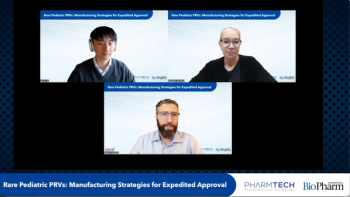
Nate Edwards of Arya Consulting moderates a discussion with Elisabeth Gardiner of Tevard Biosciences and Donny Xu of the RTW Institute about the regulatory and manufacturing hurdles facing rare disease drug developers.