

In addition, auditable systems must show which databases were queried, what results were returned, and whether the process succeeded. Such systems are nearing adoption for real-world decisions and already support research direction, data gap identification, and testing prioritization.
Commentary|Videos|October 21, 2026
Insilica’s Dr Luechtefeld Discusses Moving Computational Toxicology Beyond Predictive Models
Author(s)Feliza Mirasol, Thomas Luechtefeld

At PharmSci 360, Insilica CEO Thomas Luechtefeld will present on auditable agentic AI systems and how they are expanding computational toxicology beyond single predictive models.
Advertisement
In an interview with BioPharm International® ahead of the American Association of Pharmaceutical Scientists’s (AAPS) 2026
Dr Luechtefeld explains that
Dr Luechtefeld says
"It's going to be more and more important that people can trace information, trace decision making, and ground everything to truth," Dr Luechtefeld asserts.
Why are single predictive models no longer enough for toxicology decisions?
Dr Luechtefeld points out that the computational models that dominated the past decade are becoming a smaller part of a larger ecosystem. Quantitative structure-activity relationship (QSAR) models and molecular simulation retain value, he explains, but the decision context must broaden. When extensive experimental data exist for a chemical, he adds, those data should inform the decision rather than a QSAR prediction.
In addition, auditable systems must show which databases were queried, what results were returned, and whether the process succeeded, Dr Luechtefeld says. Such systems are nearing adoption for real-world decisions and already support research direction, data gap identification, and testing prioritization, he emphasizes. He expects significant changes within 1 to 2 years in how toxicology teams work.
About the speaker
Thomas Luechtefeld, PhD, Founder and CEO, Insilica
In addition to his role at Insilica, Dr Luechtefeld, is also the creator of ToxIndex, an AI platform for chemical and product safety assessment. ToxIndex coordinates specialized agents across thousands of databases, more than 100 million regulatory and scientific documents, and hundreds of predictive models. The platform assembles this evidence into structured risk assessments. Each claim retains its source, version, and audit history, allowing an assessor to inspect the evidence behind a conclusion and evaluate its relevance to a specific context of use. Dr Luechtefeld holds a PhD in Environmental Health Engineering from the Johns Hopkins Bloomberg School of Public Health. His research on chemical safety data, predictive toxicology, and integrated testing strategies has appeared in Toxicological Sciences, ALTEX, and Regulatory Toxicology and Pharmacology. He also contributes to the European Union Horizon ONTOX project and the National Science Foundation-funded BioBricks open knowledge graph for chemical safety.
Advertisement
Related to this article

This FAQ explains how aseptic processing, contamination control, and validation protect patients amid sterile injectable failures.

argenx's acquisition of Unnatural Products adds macrocyclic peptides that could yield oral or long-acting treatments for immune-mediated diseases.

Bimekizumab-bkzx (Bimzelx) produced ACR50 joint responses in 54.9% of psoriatic arthritis patients at week 24 vs 43.8% with risankizumab.

A real-world study found evolocumab cut fatal or nonfatal heart attack risk 20% vs ezetimibe in adults with ASCVD and prior statin use.

Johnson & Johnson's amivantamab (Rybrevant Faspro) won accelerated FDA approval for pretreated recurrent head and neck cancer.
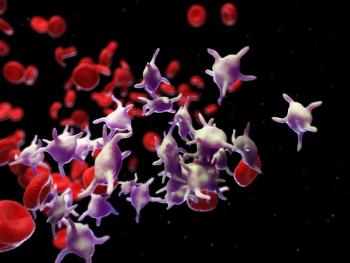
Oxford spinout Alethio Therapeutics closed a $90 million Series A to take ATX-011, a monoclonal antibody against the G6B receptor, into Phase 1/2a studies in essential thrombocythemia. It is also developing a G6B-targeted ADC for myelofibrosis.
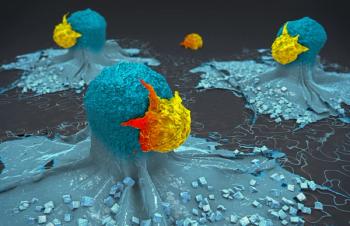
T-Therapeutics closed an oversubscribed $133 million Series B backed by Eli Lilly, JJDC, and others. The funding will take its first T-cell receptor bispecifics in cancer and autoimmune disease into clinical trials.
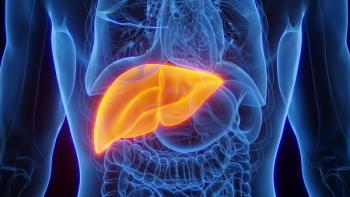
Akeso won NMPA priority review for ivonescimab plus chemotherapy in first-line biliary tract cancer after a phase 3 win over durvalumab plus chemo.
Advertisement
Advertisement
Trending on BioPharm International
1
Updates on Simtra BioPharma Solutions’ Bloomington Capacity Expansions
2
argenx Agrees to Buy Unnatural Products in Up to $1.15 Billion Deal
3
J&J’s Dual-Antigen Bispecific Regimen Achieves 73% PSA Response in Advanced Prostate Cancer
4
Janux’s JANX011 T-Cell Engager Shows Deep B-Cell Depletion in Phase 1 Healthy Volunteer Study
5