The development of biologics, from initial molecule selection to commercial product, presents
complex challenges related to stability, manufacturability, and immunogenicity. Skipping essential risk
assessments can lead to costly consequences, including reformulation, reduced shelf life, additional testing,
regulatory delays, or even project termination. Download this article to learn more about how a structured,
data-driven developability workflow can de-risk biologics during early stages of development.
Boehringer Ingelheim licenses six preclinical ADC and T-cell engager programs from Sino Biopharmaceutical in a deal worth up to $7 billion, Spyre Therapeutics drops anti-TL1A antibody SPY072 in rheumatic diseases after phase 2 misses and turns to hidradenitis suppurativa, and Biora Therapeutics gets ethics approval for a first-in-human trial of its BioJet oral adalimumab capsule.
As access to low Earth orbit expands, space-based research is opening possibilities in drug discovery, formulation, and manufacturing. In Part 1, the authors look at how microgravity changes biology and chemistry in ways that can’t be reproduced on Earth and where it fits from target discovery to life cycle management.
The half-life-extended antibody failed its primary endpoints in two Phase 2 SKYWAY sub-studies, so Spyre is dropping it in rheumatic diseases and moving it into a combination trial in hidradenitis suppurativa.
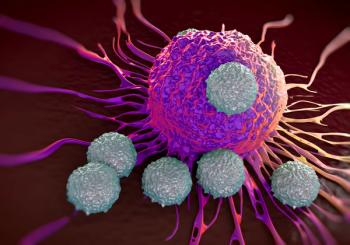
Boehringer Ingelheim will pay Sino Biopharmaceutical $358 million upfront and near-term for options on six biologic oncology programs, deepening a partnership that began in 2024.
A former CIA officer, Pacific Research Institute economists, and industry groups say Treasury's proposed COINS Act biotechnology restrictions are too broad, while the National Security Commission on Emerging Biotechnology backs the move. Comments are due December 7, 2026.