
"The strong commitment and support of our shareholder Astorg demonstrates their strategic vision for CordenPharma to become the leading CDMO for complex modalities, such as peptides, by offering fully integrated end-to-end services from APIs to drug products, for both injectable and oral dosage forms."
— Michael Quirmbach, Ph.D., president and CEO, CordenPharma Group (from a separate, earlier press release, not this week's announcement)
News|Events|September 11, 2026
CordenPharma Commits €80M to Expand Sterile Injectable Manufacturing Capacity to 500 Million Units Annually
Author(s)Emily Schoenthaler
Listen
0:00 / 0:00
CordenPharma is expanding its Caponago, Italy site with a €80 million multi-year investment and new aseptic fill-finish lines, aiming to reach 500 million sterile injectable units of annual capacity to meet rising demand across peptide, biologic, LNP, and oligonucleotide-based drug products.
Advertisement
CordenPharma is expanding sterile injectable manufacturing capacity at its FDA- and EMA-approved Caponago (Milan), Italy site through two parallel investments.¹ First, the company committed a multi-year €80 million ($93 million) investment in a new facility, anchored by a €13 million acquisition of an 11,000-square-meter commercial building and 26,000 square meters of adjacent land, finalized July 28, 2026, expanding the site's footprint by more than 50%.¹ The new space can accommodate a minimum of four aseptic fill-finish lines, four visual inspection lines, and four additional packaging lines, with options for customer-owned lines, large-scale lyophilization, and auto-injector assembly.¹ Second, CordenPharma has added two new aseptic fill-finish isolator lines to an existing operational area at Caponago over the past two years: a clinical and small-scale commercial combination line for pre-filled syringes, vials, and cartridges, and a high-speed line capable of producing more than 500,000 units per day.¹ Combined, the investments are projected to bring the site's total capacity to 500 million injectable units annually, with the new isolator lines targeted for completion in mid-2027 and 2028.¹
Michael Quirmbach, Ph.D., president and CEO of CordenPharma Group, said, "The support of our shareholders, Astorg, underscores our commitment to advancing sterile injectable manufacturing at CordenPharma Caponago. This strategic investment strengthens our leadership in the manufacture of drug products using complex modalities and enhances our end-to-end supply capabilities to meet rising global demand for injectable outsourcing, ultimately enabling partners to bring vital drug products in key therapeutic areas to patients more efficiently."¹
What kinds of drug products will the expanded capacity support?
The Caponago facility is designed to serve peptide, lipid nanoparticle (LNP), small molecule, biologic, and oligonucleotide-based injectable therapeutics, with customers gaining access to injectable solutions integrated with LNP manufacturing capabilities on the same campus.¹ CordenPharma said the expanded capacity is intended to address rising global demand for sterile injectable outsourcing across oncology, obesity, diabetes, and inflammatory disease, spanning complex modalities including peptide-based GLP-1 therapeutics, oligonucleotides, LNPs, biosimilars, and other biologics.¹
How does this expansion fit into CordenPharma's broader investment pattern?
The Caponago expansion is the latest in a series of large, complex-modality investments CordenPharma has made under ownership by Astorg, the private equity firm that acquired the company in 2022 to accelerate its growth as a CDMO.¹ In July 2024, CordenPharma announced a roughly €900 million ($983 million) investment to expand its peptide manufacturing platform across its Colorado, US site and new European facilities, its largest single capital commitment to date at the time.² Quirmbach described that investment's rationale in terms that echo his comments on this week's injectable expansion: "The strong commitment and support of our shareholder Astorg demonstrates their strategic vision for CordenPharma to become the leading CDMO for complex modalities, such as peptides, by offering fully integrated end-to-end services from APIs to drug products, for both injectable and oral dosage forms."² CordenPharma has separately built out LNP-specific capabilities, including a 2024 partnership with Certest to access an ionizable lipids platform intended to support xRNA and xDNA therapeutic candidates from early clinical phase through commercial manufacturing.³ This pattern reflects a CDMO consolidating capacity specifically around the complex, non-small-molecule modalities — peptides, LNPs, oligonucleotides, and biologics — that dominate its stated growth strategy, with the new Caponago injectable lines serving as the drug-product complement to that upstream API and formulation investment.
How does this fit into broader industry demand for injectable capacity?
CordenPharma's expansion also reflects a sector-wide capacity buildout among sterile injectable CDMOs.
That demand is also being pulled from the clinical side, as more biologics move toward self-administered, subcutaneous formats that rely on exactly the kind of pre-filled syringe and auto-injector capacity CordenPharma is building. Dr. Juby Jacob-Nara, senior vice president and chief medical officer at Celltrion USA,
What happens next?
Completion of the new isolator lines at Caponago is targeted for mid-2027 and 2028, respectively, with the broader facility expansion positioning CordenPharma to support customers from early-phase development through large-scale commercial production.¹
References
- CordenPharma.
CordenPharma Boosts Aseptic Fill-Finish Capacity to 500 Million Sterile Injectable Units Per Year . Press release. Published September 10, 2026. Accessed September 11, 2026. - Haigney S.
CordenPharma Expands its Peptide Platform in the US and Europe . BioPharm International. Published July 17, 2024. Accessed September 11, 2026. - Mirasol F.
CordenPharma Partners with Certest to Develop Ionizable Lipids for LNP Formulations . BioPharm International. Published June 11, 2024. Accessed September 11, 2026. - Haigney S.
Simtra BioPharma Solutions Expands Sterile Fill/Finish Manufacturing Site . BioPharm International. Published February 28, 2024. Accessed September 11, 2026. - Challener C.
Advances in Digitalization and Automation of Aseptic Processing . BioPharm International. Published June 7, 2025. Accessed September 11, 2026. Subcutaneous Infliximab Shows Promise for Durable, Patient-Centered IBD Care . BioPharm International. Published May 26, 2026. Accessed September 11, 2026.
Advertisement
Related to this article

In the phase 3 SHINE-2 trial, half of pediatric patients who responded to mirikizumab induction were in clinical remission at week 52. Lilly plans to file for a pediatric UC label expansion.

Rohit Tripathi, vice president of industry strategy, consumer packaged goods, and manufacturing at RELEX Solutions, explains where cold-chain planning still breaks down and why biopharma supply chain leaders should use AI to act on data sooner, with humans making the final call.

Zylidac will test whether optogenetic cell lines that hit 21 g/L in small-scale CHO runs can deliver higher-yield complex biologics at GMP scale.

Revakinagene taroretcel (Encelto), the only FDA-approved MacTel therapy, slowed photoreceptor loss by up to 54.8% vs sham in phase 3 trials.
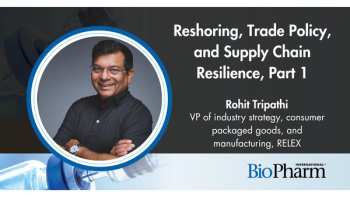
Rohit Tripathi, vice president of industry strategy, consumer packaged goods, and manufacturing at RELEX Solutions, explains what is driving biopharma reshoring, how USMCA uncertainty complicates sourcing for biologics, and where cold-chain visibility still breaks down.
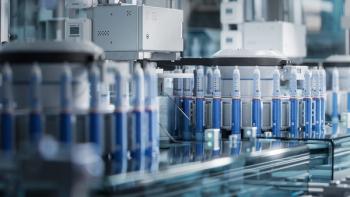
Backed by €400 million (US$449 million) in EU-cleared German aid, the new Frankfurt facility is designed to secure insulin supply for people with diabetes from 2032.

EA2251, the 7th registrational trial of ivonescimab, will test it plus chemotherapy vs pembrolizumab or durvalumab regimens in first-line BTC.

METiS TechBio will apply its AI-driven AiLNP ionizable lipid platform to discover LNPs designed to deliver therapeutics beyond the liver, under a collaboration with Eli Lilly worth up to $1.1 billion in milestones.
Advertisement
Advertisement
Trending on BioPharm International
1
BioNTech, BMS to Pair Pumitamig With Trodelvy in Phase 3 First-Line TNBC Trial
2
Zylidac Bio to Scale Prolific's Optogenetic Cell Line Platform to GMP
3
FDA Grants Accelerated Approval to Ultomiris as First C5 Inhibitor for IgA Nephropathy
4
Sanofi Begins Construction of EU-Backed Insulin Plant in Frankfurt
5