Register Now - Every Drop Matters: Reducing Product Loss in Sterile Filtration
News|Podcasts|October 16, 2026

BioPharm Brief: Gene Therapy Progress, FDA Approval, and $103M Funding

Opus Genetics reports sustained vision gains with gene therapy, the FDA approves Roche’s Enspryng for at-home treatment of thyroid eye disease, and Estuary Biotherapeutics launches with $103 million to develop gene therapies for polycystic kidney disease.

Welcome to The BioPharm Brief, your daily snapshot of developments shaping the biopharmaceutical industry. Today, we’re looking at new gene therapy data, an at-home treatment option for thyroid eye disease, and a major funding boost for kidney disease research.

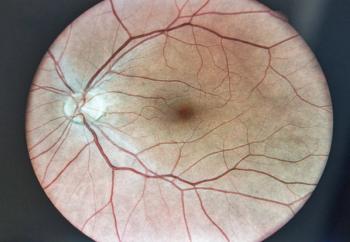
First, Opus Genetics reported sustained vision improvements with its investigational gene therapy OPGx-LCA5 in an early-stage study of patients with an inherited retinal disease that can cause severe vision loss. Improvements in visual function were observed through 24 months in adults, supporting plans to advance the therapy into Phase 3 at the lowest dose tested.

Next, the FDA has approved Roche’s Enspryng, a subcutaneous monoclonal antibody, as the first at-home treatment option for adults with thyroid eye disease. The approval gives patients a way to receive treatment by injection at home after training, offering an alternative to infusion-based care. The decision was supported by two Phase 3 trials, although only one met its primary endpoint.

And finally, Estuary Biotherapeutics has launched with $103 million in financing to develop gene therapies for autosomal dominant polycystic kidney disease, or ADPKD. Its two programs target the underlying genetic causes of the disease, with EST-201 expected to enter clinical trials in 2027 and EST-101 in 2028. The approach aims to restore key proteins in kidney cells rather than simply slow disease progression.

That’s today’s BioPharm Brief. For analysis and expert insights, please visit BioPharmInternational.com.

Key takeaways

  • Gene therapy advances: Opus Genetics reported sustained vision improvements through 24 months with OPGx-LCA5, supporting plans for a Phase 3 trial.
  • At-home treatment option: The FDA approved Roche’s Enspryng as the first at-home subcutaneous treatment for thyroid eye disease.
  • Major funding for kidney disease: Estuary Biotherapeutics launched with $103 million to advance gene therapies for autosomal dominant polycystic kidney disease.


Related to this article

The BioPharm Brief: A First for Streamlined Biosimilar Approval, a Head-to-Head Bispecific Trial in Wet AMD, and In Vivo KIR-CAR T
Biocon’s pertuzumab biosimilar Pebrilzo becomes the first biosimilar approved under EMA’s tailored clinical approach, Visara doses the first patient in a phase 2b trial comparing its VEGF-A/ANG-2 bispecific VIS-101 with aflibercept in wet AMD, and Verismo Therapeutics licenses Stanford’s PACK-IT technology for in vivo KIR-CAR T therapies.
The BioPharm Brief: FDA’s Fast-Track Pilot Reportedly Stalls, a Long-Acting Bispecific for Atopic Dermatitis, and a Twice-Yearly Obesity Approach
FDA has reportedly shelved its Commissioner’s National Priority Voucher pilot and paused publishing complete response letters, Zai Lab’s IL-13/IL-31Rα bispecific ZL-1503 shows a 40- to 50-day half-life that points to dosing every 12 weeks, and Wave Life Sciences reports 1-year INLIGHT data for its INHBE-silencing siRNA WVE-007 in obesity.
The BioPharm Brief: An AI-Designed Multibody ADC Enters the Clinic, Blackstone Backs Pfizer’s Monthly GLP-1, and enGene Readies a Bladder Cancer BLA
FDA clears the IND for Biolojic Design’s BD200, an AI-designed Trop2/Nectin-4 multibody ADC; Blackstone Life Sciences agrees to provide Pfizer up to $1.5 billion to develop its monthly GLP-1 receptor agonist berobenatide; and enGene Therapeutics plans a year-end BLA for detalimogene voraplasmid in BCG-unresponsive non-muscle invasive bladder cancer.
The BioPharm Brief: FDA Designations for a Bispecific CAR-T, a BLA for Friedreich’s Ataxia, and Phase 2b MASH Data for Efinopegdutide
FDA grants RMAT and Fast Track designations to AbelZeta’s CD20/CD19 bispecific CAR-T prizlon-cel in relapsed or refractory large B-cell lymphoma, Larimar Therapeutics completes a BLA seeking accelerated approval of nomlabofusp for Friedreich’s ataxia, and Merck’s GLP-1/glucagon receptor agonist efinopegdutide meets its primary endpoint in a phase 2b MASH trial.
Close-up of a clear IV infusion bag filled with pale yellow fluid, with a pink awareness ribbon printed on its front, against a gray background. | Image Credit: © Olga - stock.adobe.com
The European Commission has authorized Biocon’s pertuzumab biosimilar Pebrilzo as a HER2-positive breast cancer treatment, the first biosimilar cleared under EMA’s tailored clinical approach, which relies on analytical and pharmacokinetic data in place of a comparative efficacy trial. The EU biosimilar approval follows FDA approval of Pebrilzo two days earlier.