

“TL1A has emerged as one of the most important targets in inflammatory bowel disease and other TL1A-driven diseases.” – Frédéric Marrache, MD, PhD, MBA, chief executive officer, Bionyra Pharma
News|Articles|October 20, 2026
Bionyra’s Long-Acting Anti-TL1A Antibody BYN-002 Shows Roughly 80-Day Half-Life in Phase 1
Author(s)Emily Schoenthaler
Interim phase 1 data presented at UEG Week 2026 showed Bionyra Pharma’s Fc-engineered anti-TL1A antibody BYN-002 suppressed soluble TL1A with a half-life supporting potential every-3-to-6-month maintenance dosing in IBD.
Advertisement
Bionyra Pharma’s long-acting anti-TL1A monoclonal antibody BYN-002 (TL-001) showed a terminal half-life of roughly 78 to 82 days and sustained suppression of its target in healthy volunteers, according to interim phase 1 results presented at United European Gastroenterology (UEG) Week 2026 in Barcelona.¹,² The company said the data support potential every-3-to-6-month maintenance dosing as it develops the antibody for inflammatory bowel disease (IBD) and other TL1A-driven diseases.¹
“These interim phase 1 results provide compelling evidence that BYN-002 combines potent TL1A pathway inhibition with a pharmacokinetic profile that may enable highly convenient dosing intervals,” Frédéric Marrache, MD, PhD, MBA, chief executive officer of Bionyra Pharma, said in a press release.¹
What is BYN-002, and how is it engineered?
BYN-002 is a humanized IgG1 monoclonal antibody against TL1A.² TL1A is a cytokine that signals through the receptor DR3 and drives mucosal inflammation in IBD, and it has also been linked to intestinal fibrosis, as BioPharm International®
According to the poster, BYN-002 carries YTE substitutions in its Fc region to extend half-life and LALA substitutions to reduce Fc-mediated effector functions.² Bionyra licensed BYN-002 and a TL1A×IL-23p19 bispecific antibody, BYN-003 (TL-003), from TrueLab Biopharmaceutical and holds exclusive worldwide rights outside Greater China.¹
What did the phase 1 study show?
The ongoing randomized, double-blind, placebo-controlled study (NCT06867796) is evaluating safety, pharmacokinetics, pharmacodynamics, and immunogenicity in healthy volunteers.¹ In the single ascending dose (SAD) portion, 24 participants received intravenous BYN-002 and 8 received placebo.² In the multiple ascending dose (MAD) portion, 12 participants received BYN-002 and 4 received placebo, with intravenous doses on Days 1, 15, and 29.² According to Bionyra, the interim results met all primary objectives of the study.¹
Pharmacokinetics were dose-proportional, with preliminary terminal half-life estimates of 77.8 to 82.0 days in the MAD cohorts and 35.7 to 78.2 days in the SAD cohorts.¹,² Free soluble TL1A remained below the lower limit of quantification across all dose levels evaluated.¹
No treatment-related serious adverse events, infusion reactions, deaths, or treatment-related discontinuations were reported.¹ The most common adverse events in the SAD cohorts were upper respiratory tract infection and headache, and adverse events in the MAD cohorts were mostly Grade 1 or 2.² One Grade 3 and one Grade 4 adverse event occurred in the MAD portion, and both were judged unrelated to treatment.²
Anti-drug antibodies (ADAs) were observed primarily in the lower-dose cohorts.¹ Through Day 85, the poster reported ADAs in 7 of 23 SAD participants (30.4%) and 1 of 11 MAD participants (8.3%), with no treatment-enhanced ADA responses.² The investigators noted that the half-life estimates remain preliminary.²
Why does dosing frequency matter in IBD?
Bionyra is positioning BYN-002’s extended pharmacokinetics as a way to reduce the treatment burden of maintenance therapy.¹ Convenience has been a recurring theme in BioPharm International’s coverage of IBD biologics. In an
“TL1A has emerged as one of the most important targets in inflammatory bowel disease and other TL1A-driven diseases, and we are excited by the profile emerging from this study and its ability to deliver durable target suppression and improved convenience,” Marrache said.¹
What happens next?
Bionyra said the findings support continued clinical development of BYN-002 in IBD and other TL1A-driven diseases.¹ BYN-003, the company’s bispecific antibody built on BYN-002 as a backbone, entered a Phase 1 study in April 2026.³
References
- Bionyra Pharma.
Bionyra Pharma Announces Positive Interim Phase 1 Results for BYN-002, a Long-Acting Anti-TL1A Antibody . Press release. Business Wire. Published October 20, 2026. Accessed October 20, 2026. - Petkova M, Lei R, Li Z, et al.
BYN-002 (TL-001), a next-generation anti-TL1A antibody demonstrating potent neutralization, extended pharmacokinetics, durable TL1A suppression and favorable immunogenicity: interim Phase 1 SAD/MAD results . Late-breaking poster LBP27 presented at: UEG Week 2026; Barcelona, Spain. Accessed October 20, 2026. - Sofinnova Partners.
Bionyra Pharma launches with USD165 million oversubscribed Series A to advance clinical-stage pipeline of next-generation biologics for immune-mediated inflammatory diseases . Published June 22, 2026. Accessed October 20, 2026.
Advertisement
Related to this article

In the phase 3 SHINE-2 trial, half of pediatric patients who responded to mirikizumab induction were in clinical remission at week 52. Lilly plans to file for a pediatric UC label expansion.

Roche will take ex-China development of Hansoh’s two preclinical ADCs and multiple programs against Roche-proposed targets once Hansoh completes global phase 1a trials. The deal includes $400 million upfront and more than $15 billion in potential milestones.

As ArsenalBio, TScan, Bristol Myers Squibb, and others abandon ex vivo programs for in vivo engineering, early clinical data and platform differences point to both the promise and the unresolved safety, manufacturing, and regulatory questions of generating CAR-T cells inside the body.

METiS TechBio will apply its AI-driven AiLNP ionizable lipid platform to discover LNPs designed to deliver therapeutics beyond the liver, under a collaboration with Eli Lilly worth up to $1.1 billion in milestones.
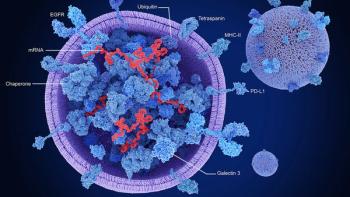
Inhaled EXO-CD24 kept 85% of patients with ARDS free of respiratory failure at day 7 vs 33.3% with placebo in a 90-patient phase 2b trial.

Nuravax will test AV-1959R in a 160-adult phase 2 trial to see whether the amyloid vaccine can prevent Alzheimer disease before symptoms begin.
BMS's Dr Nathan Pennell outlines how biomarker testing barriers and trial diversity affect patient access to targeted oncology drugs.
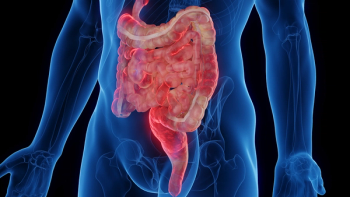
Guselkumab (Tremfya) sustained perianal fistula healing through 1 year in Crohn disease, with remission climbing to 35% in one FUZION dosing arm.
Advertisement
Advertisement
Trending on BioPharm International
1
Regeneron's Libtayo Earns CHMP Nod for Expanded EU Dosing
2
Roche, Hansoh Sign Second ADC Pact Covering Preclinical and Roche-Selected Targets
3
Biomarker Testing Gaps Can Stall Targeted Oncology Therapy, BMS’s Dr Pennell Says
4
Lilly’s Omvoh Reaches 50% One-Year Remission in Pediatric Ulcerative Colitis
5