

“The disparity between investment and operational return highlights a critical reality: the primary bottleneck to AI adoption in life sciences is not algorithmic sophistication, but organizational readiness and data architecture. As industry moves definitively from theoretical hype to practical execution, the focus of chief information officers and clinical operations leaders has narrowed sharply onto the foundational challenge of clinical data harmonization.”
Commentary|Events|July 6, 2026
The Agentic Pivot: Moving from AI Experimentation to Operational Transformation in Biopharma
Author(s)Partha Anbil
Listen
0:00 / 0:00
AI adoption is no longer an abstract innovation exercise, but has become a critical lever for survival across the pharmaceutical landscape, characterized by compressed competitive windows and soaring development costs.
Advertisement
The life sciences industry has officially entered the era of the agentic pivot. For the past three years, pharmaceutical companies, from top-tier global entities to specialized small- and medium-sized enterprises (SMEs) have been caught in an exploratory holding pattern with artificial intelligence.
Pilot programs proliferated, proof-of-concept algorithms were evaluated in isolated silos, and boardrooms debated the theoretical promise of generative AI. However, as we move through 2026, the landscape has fundamentally shifted. The mandate is no longer about proving that AI works; it is about scaling AI to achieve disciplined, measurable operational transformation.1
This transition is particularly acute for pharmaceutical SMEs. While large pharmaceutical companies have the capital to invest broadly across the AI spectrum, mid-market developers, contract development and manufacturing organizations (CDMOs), and specialized biotech firms face a Darwinian reset.
For these organizations, AI adoption is not an abstract innovation exercise but a critical lever for survival in an environment characterized by compressed competitive windows and soaring development costs.2 Yet, despite the urgency, the successful integration of AI into core business processes remains elusive for many.
Recent industry data indicates that while the AI pharmaceutical market is projected to reach $6.16 billion this year, only 22% of life sciences leaders report having successfully scaled AI beyond the pilot stage.3,4
The disparity between investment and operational return highlights a critical reality: the primary bottleneck to AI adoption in life sciences is not algorithmic sophistication, but organizational readiness and data architecture.5 As industry moves definitively from theoretical hype to practical execution, the focus of chief information officers and clinical operations leaders has narrowed sharply onto the foundational challenge of clinical data harmonization.
This is widely recognized as a central strategic imperative that dictates the speed and efficacy of the entire drug development pipeline.
Data Harmonization Imperative
In the modern clinical and commercial environment, data is generated at an unprecedented velocity and across a bewildering array of modalities. A single clinical trial may aggregate data from traditional electronic data capture (EDC) systems, longitudinal electronic health records (EHRs), patient-reported outcomes via electronic clinical outcome assessments (eCOA), continuous physiological monitoring from wearables, and high-resolution medical imaging.6
For pharmaceutical SMEs attempting to leverage AI for business development, pharmacovigilance, or clinical operations, this fragmented data ecosystem presents an existential threat. Historically, the process of cleaning, mapping, and harmonizing this data has been a manual, labor-intensive endeavor.
Data scientists and clinical data managers within SMEs often spend up to 80% of their time wrangling data rather than extracting actionable insights.6 This inefficiency fundamentally undermines the value proposition of artificial intelligence.
An AI model, regardless of its computational power, cannot generate reliable predictions or automate workflows if the underlying data is siloed, unstructured, or of inferior quality. To overcome this, the industry is witnessing a strategic architectural evolution from traditional data warehouses to dynamic “lakehouse” models.6
These modern infrastructures balance the rigorous data governance required for regulatory compliance with the flexibility needed to process unstructured, multi-modal data. The goal is to adhere to FAIR principles assuring that data is Findable, Accessible, Interoperable, and Reusable.6
In 2026, the solution to the harmonization bottleneck is increasingly being found in AI itself. Advanced AI-driven data harmonization suites and agentic orchestrators are now being deployed to automatically ingest, profile, and cleanse clinical data across diverse sources without manual ETL (Extract, Transform, Load) coding.6
These semi-autonomous systems utilize large language models (LLMs) to map disparate datasets to control global vocabularies, such as the Observational Medical Outcomes Partnership (OMOP) Common Data Model and the Clinical Data Interchange Standards Consortium (CDISC).6 By implementing these automated pipelines, organizations are reporting up to a 75% reduction in the time required to achieve actionable insights, accelerating decision-making processes across the entire drug development continuum.6
For a pharmaceutical SME evaluating external product lists for business development or assessing clinical trial feasibility, this acceleration is genuinely transformative. It fundamentally alters the resource allocation within the organization, allowing human experts to transition from functioning as data janitors to operating as strategic decision-makers focused on higher-order analytical tasks.
Navigating the Regulatory Labyrinth
As data harmonization capabilities mature, the next significant hurdle for AI operationalization is regulatory compliance. The life sciences industry operates under rigorous standards for product quality and patient safety, and regulatory ambiguity has historically been a major inhibitor of AI adoption, particularly for SMEs lacking expansive legal and compliance departments.
However, the regulatory landscape in 2026 has gained unprecedented clarity, albeit with higher compliance bars. In January 2025, the FDA released its pivotal draft guidance, “Considerations for the Use of Artificial Intelligence to Support Regulatory Decision-Making for Drug and Biological Products.”7
This framework established a risk-based credibility assessment for AI models, shifting the regulatory focus from the technology itself to the “context of use.” Under this paradigm, the level of required disclosure and validation scales with the model’s influence on decision-making and the potential consequences for patient safety.
For high-risk applications—such as AI models used in clinical trial management, endpoint adjudication, or pharmaceutical manufacturing—sponsors must provide comprehensive details regarding the model’s architecture, training data sources, and validation metrics.7
Furthermore, the international regulatory environment is converging. In January 2026, the FDA and the European Medicines Agency (EMA) jointly published the “Guiding Principles of Good AI Practice in Drug Development,” establishing a unified transatlantic approach to AI oversight.8
Concurrently, the European Union’s AI Act, which entered into force in 2024, approaches its critical compliance deadline in August 2026 for standalone high-risk AI systems.9
For pharmaceutical SMEs, this evolving regulatory framework necessitates a proactive approach to AI deployment. The FDA’s explicit emphasis on transparency and explainability means that opaque “black box” algorithms are increasingly untenable for any critical regulatory submissions or clinical decision support tools.7
To navigate this environment successfully, organizations must implement robust AI governance frameworks aligned with Good Practice (GxP) requirements. These governance structures must ensure comprehensive auditability, clear data provenance tracking, and continuous life-cycle monitoring mechanisms designed to detect data drift or algorithmic degradation over time.10
Pragmatic Deployment: Augmentation vs. Automation
Faced with the dual challenges of data harmonization and regulatory compliance, how should pharmaceutical SMEs proceed? The consensus emerging among industry leaders in 2026 is a strategy of pragmatic, use-case-specific deployment, distinguishing carefully between processes suitable for full automation and those requiring human-in-the-loop augmentation.11
Research into AI adoption within pharmaceutical SMEs reveals that the value of AI is highly process dependent. Workflows can generally be categorized based on their regulatory exposure and the complexity of the underlying data.11
Commercial and Business Development: The Automation Opportunity
In less heavily regulated domains, such as business development and commercial portfolio screening, there is significant potential for full Intelligent Process Automation (IPA).11 SMEs frequently receive extensive product lists from external developers seeking partnership or acquisition.
Manually evaluating these lists against internal strategic criteria, market trends, and pharmacovigilance databases is incredibly time-consuming.11 By deploying AI-driven agentic workflows, SMEs can automate the initial stages of data handling and product evaluation.
Natural language processing (NLP) algorithms can rapidly parse unstructured product dossiers, extract key variables (e.g., active substance, dosage form, mechanism of action), and compare them against internal databases using rule-based logic.11 This mitigates the need for manual triage, allowing business development teams to focus their expertise on high-value strategic negotiations rather than administrative data entry.
Supply Chain and Purchasing: Predictive Machine Learning
The purchasing and supply chain functions represent another area ripe for machine learning intervention. Demand prediction in the pharmaceutical sector is notoriously complex, characterized by numerous variables and seasonal fluctuations.11
The absence of efficient data pipelines often requires manual intervention to update Enterprise Resource Planning (ERP) systems. By integrating machine learning models with automated data pipelines, SMEs can uncover hidden patterns in historical sales and inventory data to generate highly accurate demand forecasts.
This predictive capability directly impacts financial performance by optimizing inventory levels, preventing stock-outs of critical medicines, and reducing the capital risks associated with overstocking short-shelf-life products.11
Regulated Clinical and Safety Workflows: Governed Augmentation
Conversely, in highly regulated processes—such as clinical trial endpoint adjudication, regulatory medical writing, or the evaluation of adverse event reports—full automation is rarely viable in the current environment.11 The non-deterministic nature of generative AI and the paramount importance of absolute correctness demand a different approach.
In these contexts, SMEs are adopting AI as an augmentation tool—a sophisticated recommendation engine that accelerates human work rather than replacing it.11 For example, in the creation of clinical study reports or the processing of pharmacovigilance signals, Retrieval-Augmented Generation (RAG) architectures can be utilized to rapidly synthesize vast amounts of literature and internal data into draft documents.11
However, these systems must be strictly governed by human oversight. The AI serves to reduce the “blank page” problem and expedite abstract analysis, but a human expert remains accountable for the final output and regulatory compliance.11
The Path Forward for SMEs
The trajectory of the biopharma industry in 2026 makes one thing clear: AI is no longer a peripheral innovation; it is a core operational competency. The market is rewarding organizations that can translate AI from theoretical models into practical workflow enhancements.12
For pharmaceutical SMEs, the path forward requires a disciplined, sequential approach. The foundational step is resolving the data harmonization bottleneck. Without a unified, FAIR-compliant data architecture, AI initiatives will inevitably stall.
Organizations must invest in modern lakehouse infrastructures and automated harmonization pipelines to ensure that their data is AI-ready.6
Secondly, SMEs must align their AI strategies with the evolving regulatory landscape. The FDA and EMA’s focus on model credibility and context of use dictates that AI governance cannot be an afterthought. Establishing clear protocols for model validation, explainability, and life-cycle monitoring is essential for mitigating compliance risks.7
Finally, SMEs should prioritize pragmatic deployments that offer clear operational returns. By starting with high-friction, lower-risk workflows like business development screening or supply chain forecasting, organizations can build internal AI capabilities and demonstrate value.11
As data maturity and regulatory confidence grow, these capabilities can be carefully expanded into more highly regulated clinical and safety domains through human-supervised augmentation.11
The Darwinian reset of 2026 will separate the organizations that merely experiment with AI from those that use it to fundamentally rewire their operations. For pharmaceutical SMEs, the imperative is clear: harmonize the data, govern the models, and execute with precision.
Disclaimer: The views expressed in the article are those of the authors and not of the organizations they represent.
About the Author
Partha Anbil is at the intersection of the Life Sciences industry and Management Consulting. He has over 30+ years of experience in Life Sciences. He is also a Life Sciences industry advisor at MIT, his alma mater. He held senior leadership roles at WNS, IBM, Booz & Company, Symphony, IQVIA, KPMG Consulting, and PWC. Mr. Anbil has consulted with and counseled Health and Life Sciences clients on structuring solutions to address strategic, operational, and organizational challenges. He is a diplomat/fellow at MIT CSAIL. He is a healthcare expert member of the World Economic Forum (WEF). He was a member of the IBM Industry Academy, a very selective group of professionals inducted into the academy by invitation only, the highest honor at IBM.
References
1. Scrip Asks... What Does 2026 Hold for Biopharma? Part 5: AI And Operational Excellence. Citeline Insights. February 11, 2026.
2. Biopharma In 2026: From Darwinian Reset to Disciplined Growth. Citeline Insights. December 8, 2025.
3. Artificial Intelligence in Pharmaceutical Market Size & Share Analysis. Mordor Intelligence. February 2026.
4. 2026 Life Sciences and Health Care Executive Outlook. Deloitte. 2026.
5. Data Governance: Do You Have What It Takes to Realize the Promise of AI? Citeline In Vivo. April 20, 2026.
6. The Data Harmonization Imperative: How AI Is Solving Clinical Research’s Biggest Bottleneck. Applied Clinical Trials Online. June 4, 2026.
7. AI Drug Development: FDA Releases Draft Guidance. Foley & Lardner LLP. January 15, 2025.
8. Artificial Intelligence for Drug Development. U.S. Food and Drug Administration (FDA). May 1, 2026.
9. EU AI Act High-Risk Compliance: Pharma & Medical Devices. IntuitionLabs. June 9, 2026.
10. Factors Hindering AI Adoption in Life Sciences: 2023–2026. IntuitionLabs. January 31, 2026. https://intuitionlabs.ai/articles/ai-adoption-life-sciences-barriers
11. Artificial Intelligence in Pharmaceutical SMEs: Leveraging AI in the Business Processes. KTH Royal Institute of Technology. 2024.
12. 20 Voices: What Does 2026 Hold for Biopharma? Citeline In Vivo. February 23, 2026.
Advertisement
Related to this article
Antisense oligonucleotides are reshaping drug design, from RNase H gapmers to inhaled delivery; this FAQ explains how they work and why trials still fail.

The FDA expanded Fast Track status for invikafusp alfa, Marengo Therapeutics’ TCR Vβ-targeting antibody-IL-2 fusion protein, from TMB-H colorectal cancer to TMB-H solid tumors regardless of tissue of origin.
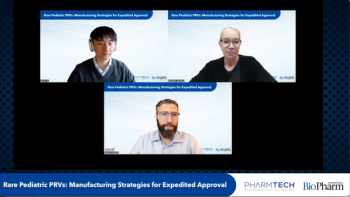
Nathan Edwards of Arya Consulting moderates a discussion with Elisabeth Gardiner of Tevard Biosciences and Donny Xu of the RTW Institute about rare disease treatment development and navigating the FDA’s Rare Pediatric Disease Priority Review Voucher Program.

Mirikizumab (Omvoh) achieved comprehensive disease control in 27.7% of UC patients and deep remission in 20.4% with Crohn disease at 1 year.
The FDA launches a new rare disease development initiative, BioNTech’s BNT113 misses a progression-free survival endpoint, and Viking Therapeutics begins Phase III trials of its oral obesity candidate.

As ArsenalBio, TScan, Bristol Myers Squibb, and others abandon ex vivo programs for in vivo engineering, early clinical data and platform differences point to both the promise and the unresolved safety, manufacturing, and regulatory questions of generating CAR-T cells inside the body.

FDA’s rare disease framework effort will revisit evidence expectations and manufacturing review, with public input starting Oct. 28.

BNT113 plus pembrolizumab failed to significantly extend progression-free survival in a 285-patient HPV16-positive head and neck cancer trial.
Advertisement
Advertisement
Trending on BioPharm International
1
FDA Accepts BLA for Formycon and Zydus’ FYB206, the First Publicly Announced Keytruda Biosimilar Under Review
2
FDA Rare Disease Framework Initiative: What It Means for Drug and Biologic Development
3
BioNTech's BNT113 Misses PFS Goal in Head and Neck Cancer Trial
4
Gilead Taps Vir Biotechnology's PRO-XTEN Tech for Solid Tumors
5