
“Antibody specificity remains essential, but payload mechanism, linker release and antigen-mediated internalization all shape whether selective delivery translates into a treatment profile patients can remain on. We must match the targeting selectivity of the antibody with the mechanistic and biological selectivity of the payload.”
Commentary|Events|July 7, 2026
Why ADC Payload Design Needs to Move Beyond Cytotoxicity
Author(s)Allan Jordan, PhD, Josh Greally, PhD
Listen
0:00 / 0:00
Because antibody-drug conjugates sit at the interface of antibody biology and small-molecule pharmacology, payload-led design brings those disciplines together, earlier.
Advertisement
Antibody-drug conjugates (ADCs) are designed to deliver potent therapeutic small molecules directly to tumor microenvironment, yet tolerability is often shaped by what happens after antigenic target engagement and payload release. Once the payload is released, selectivity is lost, potentially resulting in systemic exposure of the cytotoxic payload and off-target toxicity.
For developers working on next-generation ADCs, payload design is an integral part of the tolerability strategy, rather than a final component choice.
Antibody specificity remains essential, but payload mechanism, linker release and antigen-mediated internalization all shape whether selective delivery translates into a treatment profile patients can remain on. We must match the targeting selectivity of the antibody with the mechanistic and biological selectivity of the payload.
This article examines why the field is moving beyond familiar cytotoxic payloads and how more selective payload design can support safer ADC programs with clearer differentiation.
Familiar cytotoxic payloads leave a familiar exposure problem
Many ADCs still rely on a narrow set of non-selective cytotoxic payload classes, including microtubule inhibitors, DNA damage agents and topoisomerase inhibitors. These agents remain attractive because they can kill tumor cells at low intracellular concentrations and have shown clinical efficacy.
The limitation is that high potency may not also translate into patient tolerability when considering a non-selective payload. A cytotoxic payload that damages dividing cells can still affect healthy tissue if it is released systemically.
Reliance on familiar payload classes also creates a differentiation problem, alongside a safety problem. When programs use the same cytotoxic mechanisms across different antigens and indications, the target strategy may change while the payload-related exposure questions remain constant.
Widening the therapeutic window requires developers to understand all mechanisms involved from administration to clearance, paying particular attention to ADME properties of the ADC and the free payload both simultaneously and separately.
Payload selectivity adds another layer of control
A more selective ADC strategy pairs antibody targeting with an active drug designed around tumor-selective biology. Sygnature describes this as “selectivity squared,” with one layer of specificity coming from antibody delivery and a second from the payload’s own mechanism.
The move from generic cytotoxicity toward targeted small molecules makes this second layer of selectivity more impactful. If the released species acts on a tumor-specific dependency, mutation-driven pathway or disease-associated mechanism, unintended exposure may not carry the same risk as a payload designed to kill any dividing cell.
Selectivity depends on the payload retaining enough activity after release and the mechanistic target being present in the cells likely to encounter the active species. This approach also opens the door to reconsidering “fallen angel” compounds.
Some small molecules fail as standalone therapies because systemic exposure creates unacceptable toxicity, poor pharmacokinetics or insufficient tissue distribution. If the target biology remains strong, antibody delivery may change the exposure pattern enough to make the molecule viable as an ADC payload.
The original failure mode determines whether a rescue strategy is credible. A compound with weak target validation remains a poor candidate, even if it can be conjugated.
A molecule with strong target engagement and an exposure problem offers a more plausible starting point because antibody delivery addresses the limitation that made the free-drug format unsuitable.
ADC payloads demand changes to familiar medicinal chemistry priorities
Traditional small-molecule optimization often aims to improve systemic stability and maintain exposure for long enough to drive efficacy. ADC payload optimization can require a different balance because the antibody provides the long-circulating delivery function.
In this context, high systemic clearance of the cleaved payload can be useful. If premature release occurs, a payload designed with metabolic soft spots will degrade before creating sustained off-target exposure.
At the same time, the payload still retains sufficient potency, permeability and intracellular activity once released into the target cell. The functionalization of the small molecule to accommodate a linker is also a critical parameter that requires careful considerations.
The linker attachment point has to preserve the pharmacology and allow the released species to act in the intended manner. If a viable handle is not present in the molecule one must be introduced.
And, if this is not done correctly, it can result in the steric and/or electronic properties of the molecule being altered, resulting in loss of efficacy. Attachment site, released-species identity and payload mechanism must be considered as part of the medicinal chemistry process and SAR.
Linker design controls when payload exposure begins
The linker determines when antibody-directed delivery gives way to active payload exposure. A labile linker can release payload before the ADC has localized to the tumor, while a linker that is too stable can limit the amount of active drug released following internalization.
Cleavable linkers can support release in the cancer cells or the tumor microenvironment, dependent on cleavage mechanism. Utilizing a cleavable linker results in a more predictable payload release when the ADCs enters the appropriate environment; this also facilitates the release of the correct, unmodified parent molecule.
However, the more labile nature of cleavable linkers can lead to premature payload release and off-target toxicity through systemic payload exposure. Non-cleavable linkers create a different development profile.
They can support greater systemic stability limiting premature payload release but this does come at a cost, as lysosomal proteolytic degradation of the antibody is required to release the payload, which a lower percentage of ADCs will undergo.
Further to this, the liberated payload will also contain the linker and conjugated amino acids may alter payload activity. Inclusion of the linker into the released payload will also limit the cell permeability in turn reducing/removing any bystander effect.
Target-payload fit determines whether the system works
A viable ADC depends on more than payload potency and strong antibody binding. Antigen density, internalization rate, receptor recycling and shedding all influence whether the conjugate reaches the compartment where payload release occurs.
All of the mechanistic factors need to be understood in the design of a successful ADC. Whilst the antigen dictates delivery, the payload mechanism needs to match the biology of the tumor cells exposed to the released species.
In heterogeneous tumors, this may demand a controlled bystander activity, especially where antigen-low cells coexist. For targeted payloads, developers also need to confirm that the mechanistic target is present in the exposed cell population, rather than assuming tumor localization will be enough.
Mechanistic assays test whether the route holds
The combination of small molecule payloads and antibody targeting vectors makes ADCs a significantly more versatile modality than each of the components alone. From antigen engagement to payload target engagement there are several mechanistic steps to result in efficacy, these include: binding, internalization, linker cleavage, correct payload release and endosomal escape.
These all must be interrogated to build a true picture of how efficacious an ADC is and where it can be optimized. This approach utilizes assay across biophysical, in vitro and in vivo for PDPK endpoints.
These readouts turn payload selection from a potency decision into a systems-level development question. They also help teams distinguish between the different reasons why a construct underperforms, such as weak internalization, poor linker processing or a released species that fails to reach or engage the intended intracellular target.
Because ADCs sit at the interface of antibody biology and small-molecule pharmacology, payload-led design brings those disciplines together, earlier. Developers can then evaluate delivery, release and mechanism as connected parts of the same construct.
For next-generation ADC programs, that integration gives teams a stronger basis for selecting payloads that are potent after release and better matched to the exposure profile required to widen the therapeutic window and support treatment regimens that patients can better tolerate.
About the Authors
Allan Jordan, PhD, is Vice President of Oncology Drug Discovery at Sygnature Discovery. He has extensive experience developing targeted therapeutics and advancing integrated drug discovery programs. Drawing on a background in medicinal chemistry, he focuses on optimizing payload properties and designing antibody-drug conjugates to improve clinical tolerability, ensuring that novel therapeutics can successfully navigate the complexities of late-stage development.
Josh Greally, PhD, is ADC Lead at Sygnature Discovery. With a foundation in medicinal chemistry, bioconjugation and ADC discovery, he guides the strategic design of next-generation antibody-drug conjugates. He specializes in taking a holistic approach to ADC development, matching antigen biology with novel payloads to overcome clinical tolerability issues and enhance targeted delivery mechanisms. Ultimately helping to bridge the gap between early discovery and successful IND submission.
Advertisement
Related to this article
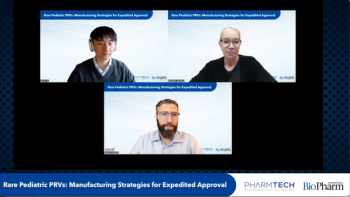
Nathan Edwards of Arya Consulting moderates a discussion with Elisabeth Gardiner of Tevard Biosciences and Donny Xu of the RTW Institute about rare disease treatment development and navigating the FDA’s Rare Pediatric Disease Priority Review Voucher Program.

Zylidac will test whether optogenetic cell lines that hit 21 g/L in small-scale CHO runs can deliver higher-yield complex biologics at GMP scale.

Revakinagene taroretcel (Encelto), the only FDA-approved MacTel therapy, slowed photoreceptor loss by up to 54.8% vs sham in phase 3 trials.

BioNTech and Bristol Myers Squibb will replace chemotherapy with Gilead’s TROP2-directed ADC sacituzumab govitecan in the Phase 3 ROSETTA Breast-01 trial of PD-L1×VEGF-A bispecific pumitamig in PD-L1-low or -negative TNBC.

Alexion’s ravulizumab won accelerated approval to reduce proteinuria in adults with IgA nephropathy after the Phase 3 I CAN trial showed a 43.4% placebo-adjusted reduction at Week 34.
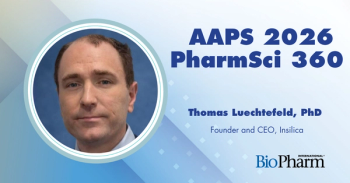
At PharmSci 360, Insilica CEO Thomas Luechtefeld will present on auditable agentic AI systems and how they are expanding computational toxicology beyond single predictive models.
Phase 1 data presented at IDWeek 2026 show TaiMed Biologics’ host-directed antibody TMB-365 lowered HIV-1 RNA without resistance, as the company advances an antibody-only maintenance regimen with TMB-380.

Dr Julie Gerberding and Dr David Berry will headline the October 25-28 New Orleans meeting, which adds a USP standards workshop and AI, organoid tracks.
Advertisement
Advertisement
Trending on BioPharm International
1
BioNTech, BMS to Pair Pumitamig With Trodelvy in Phase 3 First-Line TNBC Trial
2
Zylidac Bio to Scale Prolific's Optogenetic Cell Line Platform to GMP
3
FDA Grants Accelerated Approval to Ultomiris as First C5 Inhibitor for IgA Nephropathy
4
Sanofi Begins Construction of EU-Backed Insulin Plant in Frankfurt
5